

A burst supply line behind a toilet can release far more water than most homeowners expect in just a few minutes. The difference between a minor cleanup and costly water damage often comes down to one simple question: do you know how to find water shutoff valves before an emergency happens?
Every homeowner and adult occupant should know where the main water shutoff is located, how to operate it, and which fixtures have their own local valves. In Central Florida, where many homes have shutoff components in garages, exterior utility areas, or irrigation-adjacent plumbing setups, locations can vary widely. A quick walkthrough now can save valuable time when a leak appears.
Start With the Main Water Shutoff Valve
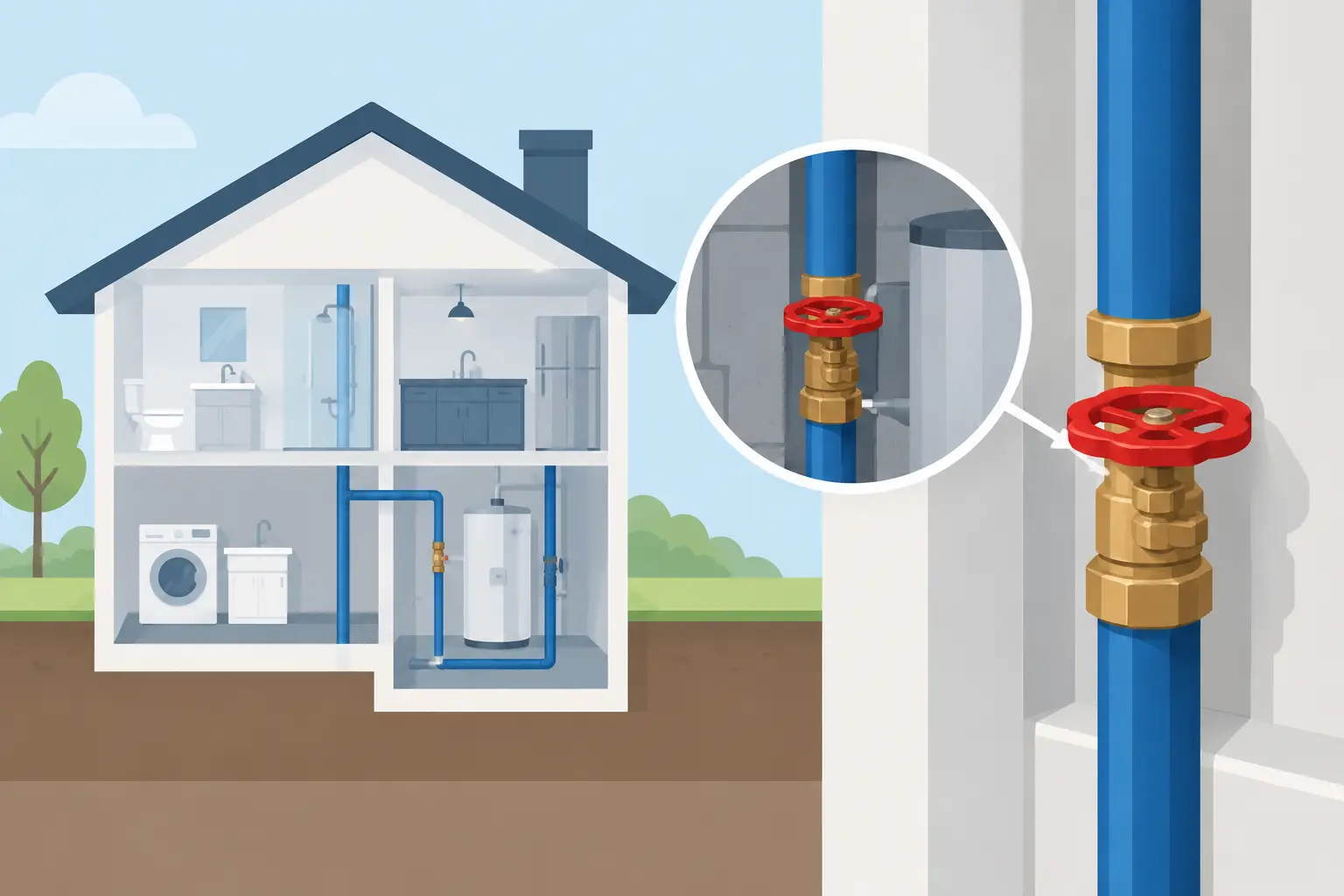
Your home’s main water shutoff valve controls the water supply to nearly every plumbing fixture indoors. Closing it stops fresh water from entering the house, although water already in the pipes may continue to drain for a short time.
In many Tampa-area homes, the main shutoff is found where the water line enters the structure. Look first in the garage, utility room, laundry room, mechanical closet, or along an exterior wall near the water meter. In older homes, it may be located in a crawl space, near the front of the home, or inside a small access panel.
The valve usually looks like either a round wheel handle or a straight lever. A wheel-style gate valve typically closes by turning clockwise. A lever-style ball valve closes when the handle is perpendicular to the pipe and opens when it is parallel. Do not force a valve that is badly corroded, stuck, or leaking around the stem. It may break or begin leaking more heavily when disturbed.
Once you locate it, make sure everyone in your household who may be home during the day knows where it is. Keep the area clear of storage boxes, shelving, lawn equipment, and other obstacles that could slow you down during a plumbing emergency.
Check Near the Water Heater
The water heater area is another common place to look, particularly when the home has a dedicated utility closet or garage installation. You may find a valve on the cold-water supply line feeding the water heater. This valve does not generally shut off water to the entire house, but it can stop water flowing into the water heater if the unit or its connected piping is leaking.
If a water heater is leaking from the tank itself, turning off its cold-water supply is a smart first step. For an electric water heater, shut off power at the breaker after addressing the water supply. For a gas unit, avoid adjusting gas components unless you know exactly what you are doing. A qualified plumber can help assess the issue safely.
How to Find Water Shutoff Valves for Individual Fixtures
Local fixture shutoff valves are designed for smaller, contained problems. They let you stop water at a toilet, sink, washing machine, dishwasher, refrigerator, or water heater without shutting down the entire home.
For toilets, look behind the fixture near the floor. The shutoff valve is usually on the wall or floor where a small supply line connects to the tank. Turn the handle clockwise to close it. If the toilet continues to run, overflows, or has a damaged supply line, this is the valve you want first.
For bathroom and kitchen sinks, check inside the cabinet beneath the basin. Most sinks have two small valves: one for hot water and one for cold water. Close the appropriate valve if only one supply line is leaking. If you cannot tell which line is involved, close both.
Washing machine valves are typically behind the appliance in a recessed box or at the wall connections. Because washing machine hoses are under pressure and can fail without warning, it is wise to turn these valves off when leaving for an extended trip. A refrigerator ice maker line may have a small valve behind the refrigerator, beneath a nearby sink, or in a cabinet. Dishwasher shutoffs are often located under the kitchen sink.
Not every fixture has a working local valve, especially in older homes. If the valve is missing, seized, or leaking, use the main shutoff until a plumber can repair or replace it.
Look for the Water Meter Shutoff Outside
If you cannot find an indoor main shutoff, the water meter is the next place to check. In many Central Florida neighborhoods, the meter sits in a covered box near the street, sidewalk, or property line. The box may be plastic, concrete, or composite material and may be marked “water” or “meter.”
There may be a customer-side shutoff valve in or near the meter box. This can stop water to the house, but meter boxes can contain dirt, insects, standing water, and utility-owned equipment. Avoid turning valves on the utility side of the meter or tampering with a locked meter. If you are unsure which valve is yours, contact your water utility or a licensed plumbing professional for guidance.
Some properties also have separate irrigation systems. An irrigation shutoff controls sprinklers, not the water inside your home. It may be near the backflow preventer, pump, or irrigation control equipment. Do not assume this is the main water shutoff just because it is near the meter.
Test the Valve Before You Need It
Finding a valve is only half the job. A valve that has not moved in years may not close fully when you need it most. Testing your main shutoff periodically helps you identify trouble early.
Choose a calm time when no one needs to shower, run the dishwasher, or use the washing machine. Turn the main valve off slowly, then open a cold-water faucet inside the home. Water should stop flowing after pressure drains from the line. Turn the valve back on slowly and check the surrounding area for drips.
If the valve will not turn, does not fully stop the water, or leaks when operated, schedule service rather than forcing it. Replacing an aging shutoff valve is usually far less disruptive than dealing with a failed valve during a slab leak, burst pipe, or overflowing toilet.
A professional can also identify whether your plumbing has pressure concerns, outdated gate valves, deteriorated supply lines, or other conditions that increase the risk of water damage. ACS Home Services can inspect shutoff valves, diagnose active leaks, and make clear recommendations for repairs that protect your home.
What to Do During an Active Leak
When water is actively escaping, prioritize safety and containment over troubleshooting. If water is near outlets, appliances, electrical panels, or extension cords, stay clear of the area and do not stand in pooled water. Shut off power only if you can safely reach the breaker panel without crossing wet areas.
For a leak at one fixture, close the local shutoff first. For a major leak, an unknown source, water coming through a ceiling, or water that will not stop, close the main water shutoff. Then open a faucet at the lowest practical point in the home to relieve pressure and help drain the lines.
Move valuables, towels, rugs, and furniture away from the affected area when safe to do so. Take photos for insurance documentation, but do not delay turning off the water to capture them. Once the water is off, call for professional plumbing service, especially if the leak is inside a wall, beneath flooring, near a water heater, or connected to a sewer line.
A Few Details That Prevent Big Problems
Labeling makes a real difference in an emergency. Use a waterproof tag or label near the main shutoff, and add simple labels below sink valves if their purpose is not obvious. If you manage a rental property or seasonal residence, leave written instructions where occupants can find them easily.
It is also helpful to keep basic supplies nearby: a flashlight, towels, a bucket, and the contact information for a dependable emergency plumber. Florida storms and power outages can complicate plumbing problems, so do not rely on your phone flashlight being charged when you need it.
The best time to locate your shutoff valve is a dry, ordinary afternoon – not while water is spreading across the floor. Take ten minutes this week to find it, clear access around it, and make sure it can do its job when your home needs protection.