

A puddle near your indoor AC unit is easy to dismiss after a long, humid Florida afternoon. But while air conditioners naturally create condensation, that water has to travel safely through a drain system. When it does not, a small drip can turn into damaged drywall, warped flooring, mold growth, or a sudden system shutdown.
The top causes of AC water leaks usually involve a blocked drain, frozen equipment, or a component that is no longer moving condensation where it belongs. Knowing what you are seeing can help you protect your home and decide when it is time for professional AC repair.
Why Florida AC Systems Produce So Much Water
Your AC does more than cool the air. As warm indoor air passes over the cold evaporator coil, moisture in that air condenses into water. In Central Florida, where humidity can stay high for much of the year, a working system may remove gallons of moisture from your home each day.
That water collects in a drain pan and flows through a condensate drain line, usually to the exterior of the home or a nearby plumbing drain. A leak happens when the water cannot drain, the pan cannot hold it, or the coil freezes and later releases more water than the system can manage.
Some moisture around an outdoor unit may be normal, especially during hot weather. Water around the indoor air handler, in a closet, garage, attic, or ceiling is not something to ignore.
Top Causes of AC Water Leaks
A clogged condensate drain line
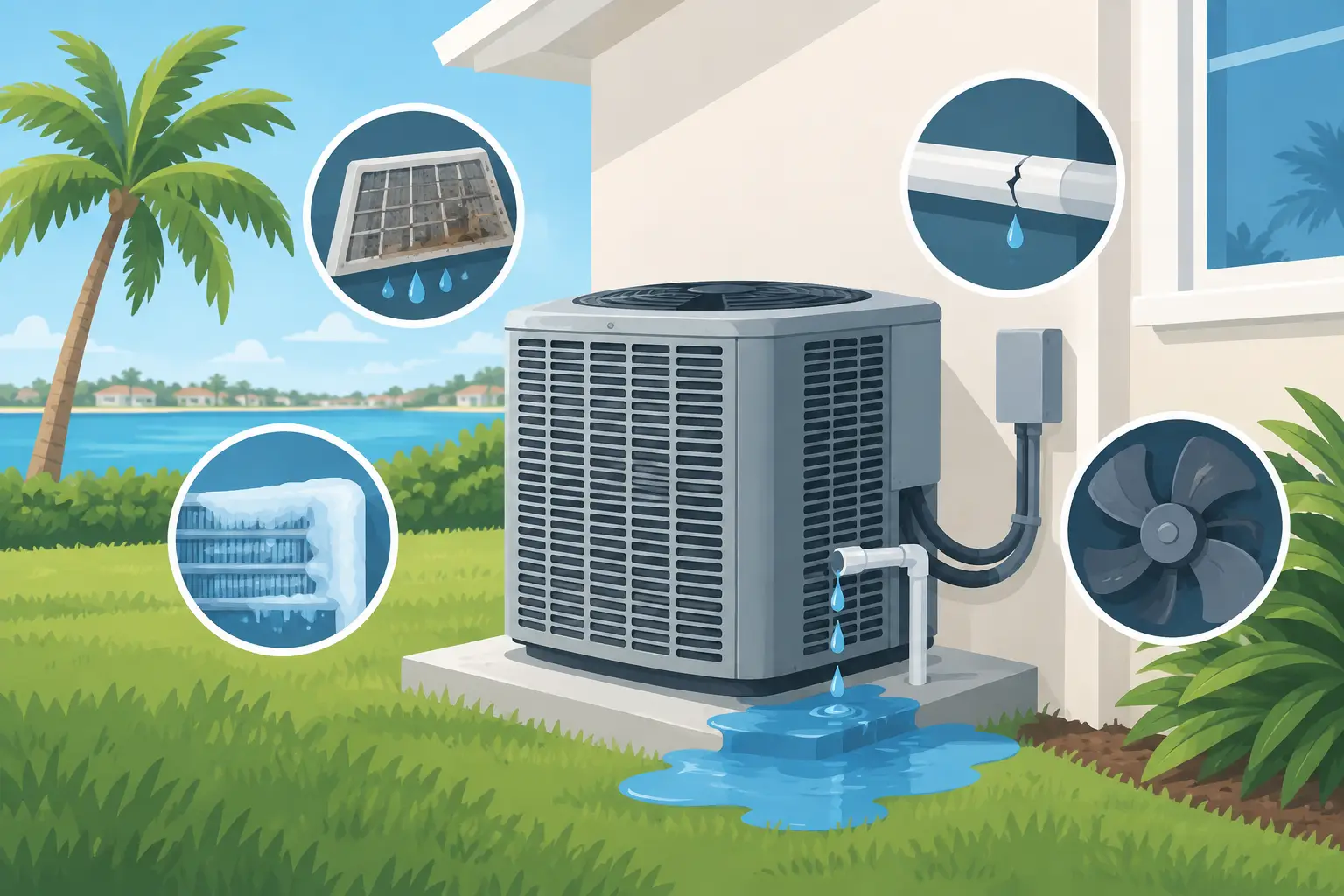
A clogged drain line is one of the most common reasons an AC starts leaking water indoors. Algae, mildew, dirt, and airborne debris can build up inside the line. Eventually, the blockage prevents condensate from draining, so it backs up into the pan and overflows.
You may notice water near the air handler, a musty odor, or an AC system that shuts off unexpectedly. Many newer systems have a float switch designed to turn the equipment off when water rises too high. That safety feature helps prevent major water damage, but it also means your home can quickly lose cooling.
Homeowners can check for obvious standing water and make sure the visible drain outlet outside is not buried under mulch or blocked by debris. Avoid forcing objects into the line or using harsh chemicals. A technician can clear the line correctly, flush it, and confirm the drain has the proper slope and connection.
A dirty air filter causing a frozen coil
A neglected air filter can create a problem that does not look related to water at first. When airflow is restricted, the evaporator coil can become too cold and freeze. Once the ice melts, the amount of water may overwhelm the drain pan and cause a leak.
Other causes of a frozen coil include closed supply vents, a blower issue, dirty ductwork, or low refrigerant. Because several conditions can produce the same symptom, simply changing the filter may not solve the entire problem.
If you see ice on refrigerant lines or the indoor coil cabinet, turn the system off at the thermostat and set the fan to ON if your system allows it. Do not chip at the ice or keep running the AC in cooling mode. Continued operation can damage equipment and may allow more water to spill into your home.
A cracked, rusted, or misaligned drain pan
The primary drain pan underneath the evaporator coil catches condensation before it enters the drain line. Over time, older metal pans can rust through, while plastic pans can crack. A pan can also shift out of position after equipment work or as components age.
When the pan is damaged, water may leak even if the drain line is clear. The source can be hard to spot because the pan is often inside the air handler cabinet. In attic installations, this type of leak deserves prompt attention since water can soak insulation and stain or weaken the ceiling below.
A secondary overflow pan may be installed beneath attic equipment, but it is a backup, not a long-term solution. Water in that pan is a signal to schedule service before it reaches the ceiling.
A disconnected or damaged condensate line
PVC condensate piping can crack, separate at a fitting, or become loose. This sometimes happens after accidental contact in a garage or utility area, but age, poor installation, and shifting equipment can also contribute.
A disconnected line often creates a steady leak when the AC is operating, even though the system may seem to cool normally. You might see water dripping from a pipe joint, running behind the air handler, or appearing in an unexpected area of the home.
This repair should be handled before running the system extensively. Water can travel along framing, walls, or flooring before becoming visible, which makes the final damage larger than the original puddle suggests.
A failed condensate pump
Not every AC system can use gravity to drain condensate. If the unit is located in a basement, interior closet, or other area without a convenient downward drain route, it may rely on a condensate pump. The pump collects water and pushes it through a discharge line.
When that pump loses power, becomes clogged, or fails mechanically, water can overflow from its reservoir. A humming sound without pumping, an unusually full pump tank, or water near the pump are common warning signs.
Because the pump is tied directly to moisture removal, this is not a repair to put off. A technician can test the pump, safety switch, tubing, and electrical connection to identify whether cleaning or replacement is the right fix.
Low refrigerant or another cooling-system problem
Low refrigerant does not directly create water, but it can cause the evaporator coil to freeze. As the frozen coil thaws, water may drip faster than the pan and drain system can handle. Low refrigerant often points to a leak in the sealed refrigerant circuit, so adding refrigerant without finding the source is only a temporary response.
You may also notice weak airflow, longer cooling cycles, warmer indoor temperatures, or ice on the refrigerant line. This requires a trained HVAC technician. Refrigerant work involves specialized equipment, accurate charging procedures, and leak testing.
What to Do When Your AC Is Leaking Water
First, protect the area around the leak. Move electronics, rugs, storage boxes, and furniture away from the water. If water is near electrical equipment or outlets, avoid touching it and turn off power to the affected area only if it is safe to do so.
Next, turn the thermostat from COOL to OFF if water is actively overflowing, if you see ice, or if the ceiling or wall is getting wet. Running the system may continue the leak. Take a photo of the affected area if possible, especially if the water source is intermittent.
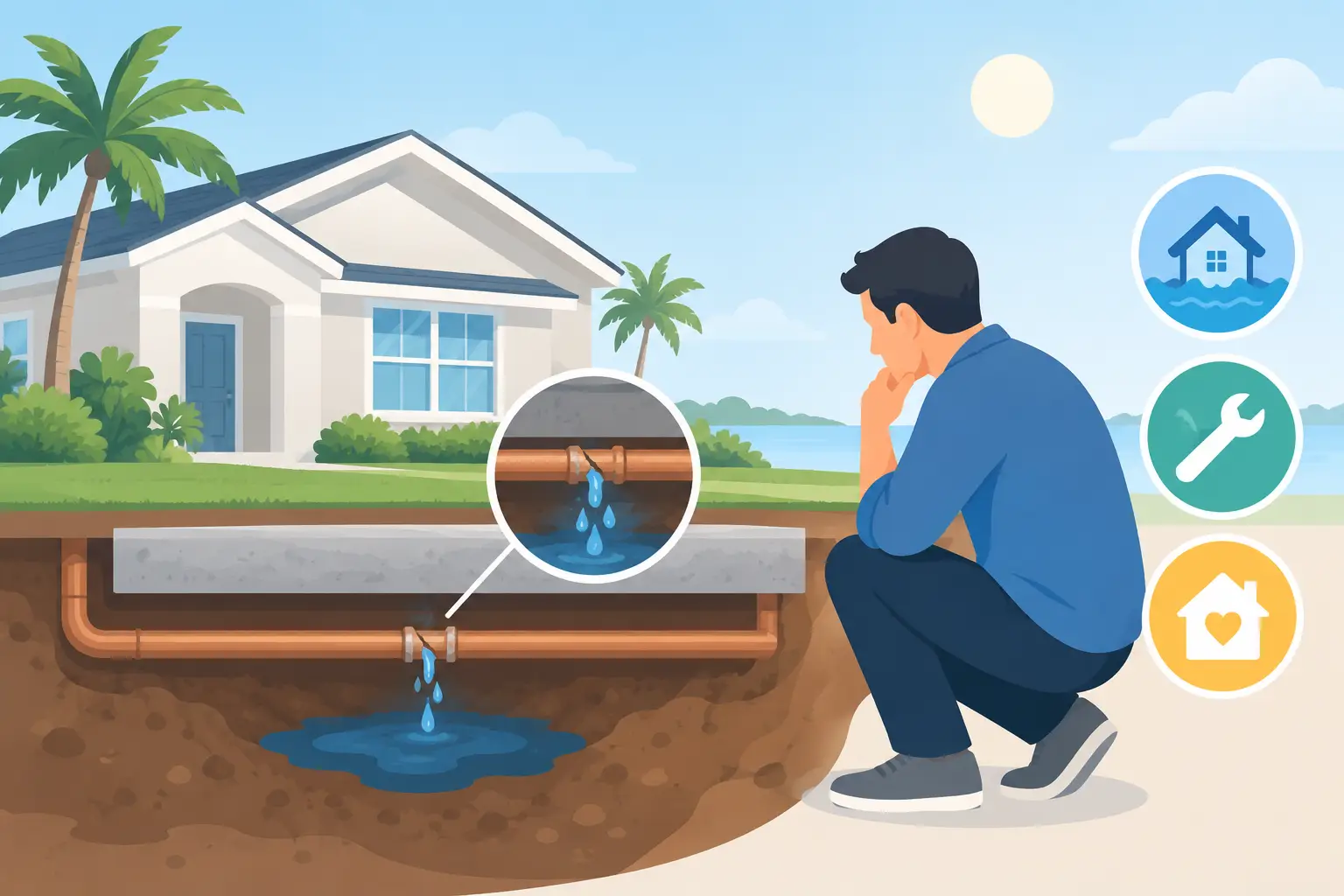
Do not assume the issue is limited to the AC simply because water is nearby. In some homes, a plumbing leak, roof leak, or water heater issue can appear in the same area as HVAC equipment. An experienced home services team can help determine the true source and prevent unnecessary repairs.
How to Reduce the Risk of Future Leaks
Regular maintenance is the best defense against condensate problems. During an AC tune-up, a technician can inspect the drain pan, clear the condensate line, test the float switch, check the pump where applicable, evaluate airflow, and look for early signs of coil freezing.
At home, replace filters on schedule based on the filter type, household activity, pets, and system recommendations. Keep supply vents open and unobstructed, and pay attention to changes such as musty odors, reduced airflow, frequent shutdowns, or stains near the air handler.
For Tampa-area homeowners, maintenance matters even more because AC systems work hard through long stretches of heat and humidity. A drain line that is only partially restricted can become fully clogged during the season when your system is running most often.
When to Call for AC Repair
Schedule professional service promptly if the leak returns after basic filter replacement, water is coming through a ceiling, the drain pan is overflowing, or you see ice on the system. You should also call if the AC has stopped cooling, a float switch keeps shutting it down, or there is any chance water has reached electrical components.
ACS Home Services can inspect the system, identify why water is escaping, and provide clear repair recommendations for your home. Same-day service can help limit disruption when an AC water leak threatens your comfort or property.
A dry, properly draining air conditioner is one less thing to worry about during a Florida heat wave. Address the first signs of water early, and you can often avoid the larger repair that follows.