

A tankless water heater can feel like one of the best upgrades in your home – until shower temperatures start fluctuating, hot water takes longer to arrive, or the unit displays an error code. In many Central Florida homes, mineral buildup is the culprit. Learning when to flush a tankless water heater helps protect its efficiency, extend its service life, and reduce the chance of an inconvenient hot-water interruption.
Unlike a traditional storage-tank water heater, a tankless model heats water as it moves through a compact heat exchanger. That design delivers dependable hot water on demand, but it also means minerals in the water collect inside narrow passages over time. Regular descaling removes that buildup before it affects performance.
Why Tankless Water Heaters Need Flushing
Every water supply contains some level of dissolved minerals, including calcium and magnesium. When water is heated, those minerals can separate and form scale on the heat exchanger. The issue is more likely in areas with hard water, but even homes with moderately hard water can develop buildup over time.
Scale acts as insulation. Your heater has to work harder and run longer to transfer heat to the water moving through it. That can increase energy use, reduce flow, and place added strain on internal components. If scale is left in place long enough, it may contribute to premature repairs or shorten the life of the equipment.
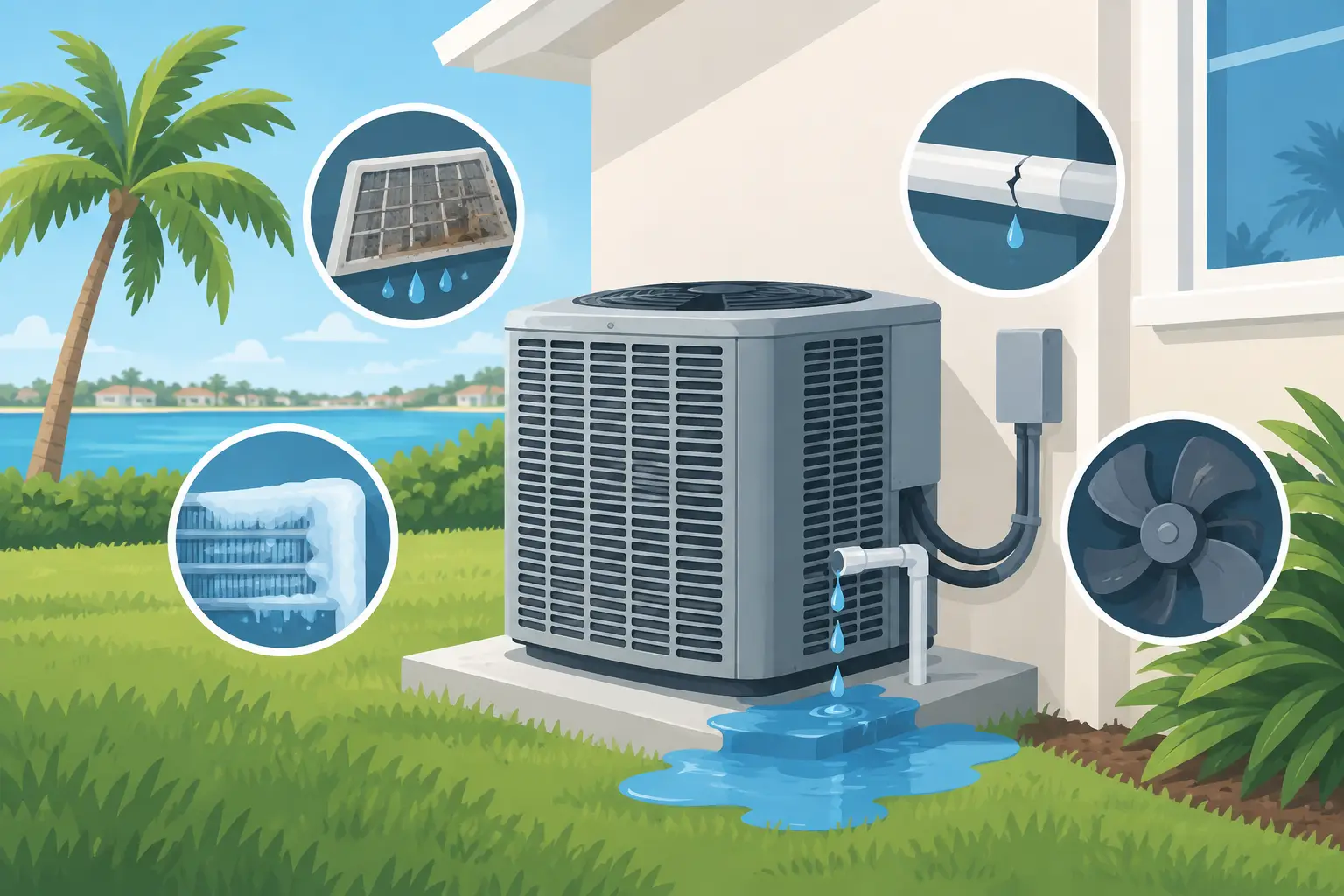
A tankless unit may need attention if you notice inconsistent water temperatures, lower hot-water flow, unusual noises during operation, or a maintenance reminder on the display. Those signs do not automatically mean the heater has failed. A professional flush and inspection may restore normal performance, depending on the condition of the system.
How Often Should You Flush a Tankless Water Heater?
For most homes, annual flushing is a sensible baseline. However, the right maintenance interval depends on the unit’s manufacturer requirements, household water conditions, and how heavily the system is used.
A home with a large family, frequent guests, or naturally hard water may benefit from service every six to nine months. A smaller household with a properly sized water treatment system may be able to follow a longer interval recommended by the manufacturer. The owner’s manual is the best source for model-specific requirements, especially if your equipment is under warranty.
Florida water conditions can vary from one community to another. If you are unsure how mineral-heavy your water is, a licensed plumbing professional can evaluate the system, discuss water treatment options, and recommend a maintenance schedule that makes sense for your home.
What You Need to Flush a Tankless Water Heater
Many tankless water heaters are built with isolation valves that make routine flushing more straightforward. Before starting, confirm that your specific model is designed for homeowner maintenance and review the manufacturer’s instructions. Some manufacturers require approved descaling products, while others allow white vinegar. Using the wrong solution or procedure can damage components or affect warranty coverage.
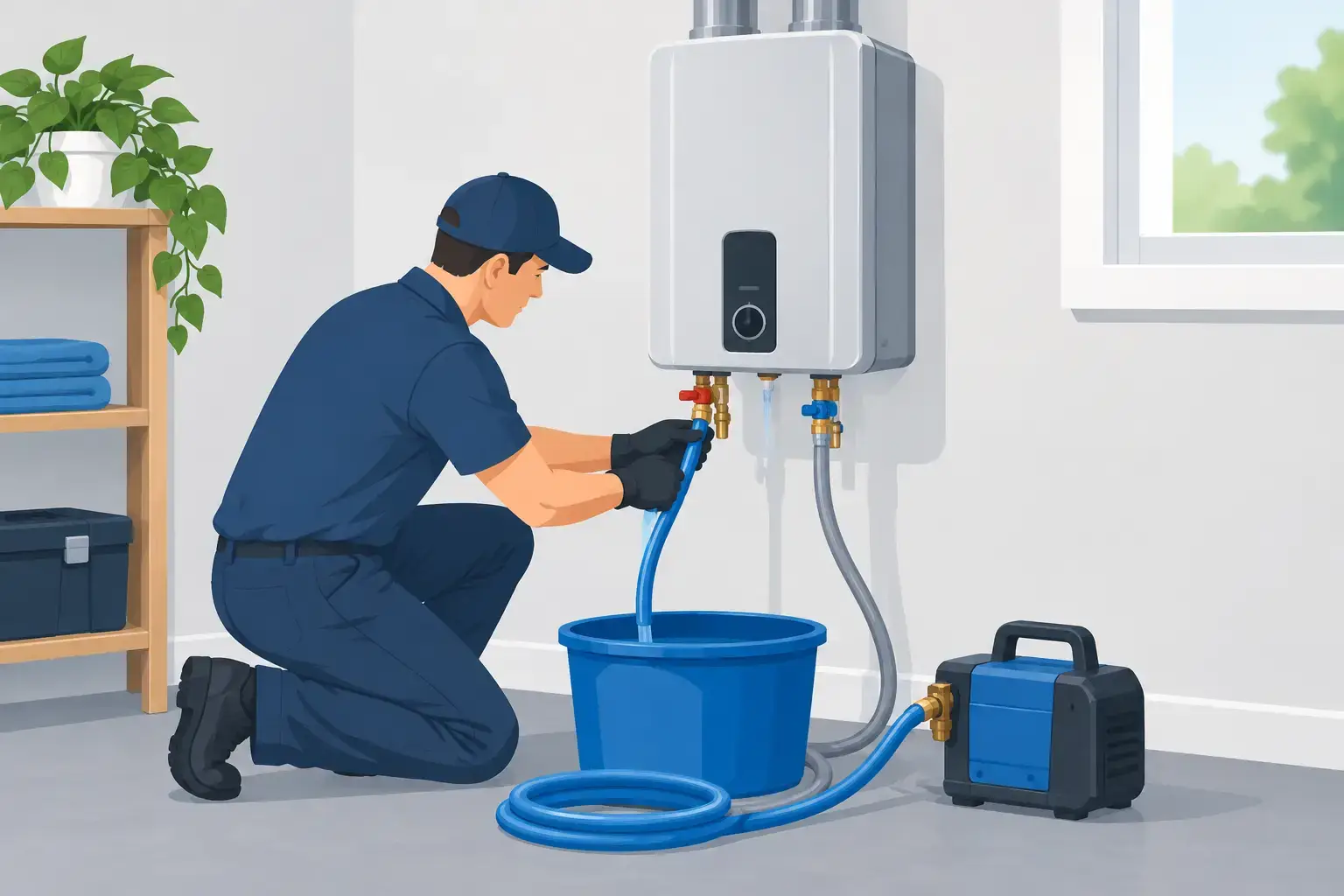
A typical flush requires a small submersible pump, two washing-machine-style hoses, a bucket, and an approved descaling solution. You will also need access to the hot- and cold-water service valves. If your installation does not have service valves, or if the unit is in a tight attic, garage, or utility area, professional service is generally the safer choice.
Never attempt maintenance if you smell gas, see water leaking from the unit, notice damaged wiring, or are not comfortable shutting down and restarting the equipment. Tankless water heaters involve water, gas or electricity, venting, and electronic controls. A quick service call is preferable to creating a larger repair.
How to Flush a Tankless Water Heater: Basic Steps
The exact sequence differs by brand and installation, so treat these as a general overview rather than a replacement for your manufacturer’s instructions.
First, turn off the unit’s power source. For an electric model, switch off the appropriate breaker. For a gas model, follow the manufacturer’s shutdown procedure and close the gas supply only if instructed. Allow the unit to cool before connecting hoses or opening service valves.
Next, close the hot- and cold-water isolation valves that connect the heater to your home’s plumbing. Connect one hose from the pump in the bucket to the cold-water service port. Connect the second hose from the hot-water service port back into the bucket. This creates a closed loop that lets the cleaning solution circulate through the heat exchanger.
Add the manufacturer-approved descaling solution to the bucket, then run the pump for the amount of time specified for your model. Many procedures call for a circulation period of roughly 45 minutes, but more is not always better. Follow the product and equipment instructions rather than guessing.
After circulating the solution, dispose of it according to the product label. Then flush the heater with clean water to remove residual descaler and loosened mineral deposits. Once the rinse is complete, close the service ports, disconnect the hoses, and slowly reopen the hot- and cold-water isolation valves.
Check carefully for leaks before restoring power or gas service. Run a hot-water fixture for several minutes to purge air from the lines and confirm normal operation. If the heater displays an error code, fails to ignite, or produces inconsistent water temperatures afterward, stop troubleshooting and schedule professional service.
Common Mistakes to Avoid
The biggest mistake is flushing a unit without reading the installation manual. Service valves, control settings, approved chemicals, and restart procedures vary among manufacturers. A process that works for one tankless water heater may not be appropriate for another.
Homeowners should also avoid using harsh acids, drain cleaners, or unapproved chemicals. These products can corrode sensitive metal components, damage seals, and create fumes that do not belong inside a home. White vinegar is commonly used in certain systems, but it should only be used when the manufacturer permits it.
Another common issue is skipping the inlet water filter. Many tankless models have a small filter that catches sediment before it enters the unit. During annual maintenance, this filter should be inspected and cleaned according to the manufacturer’s directions. A clean heat exchanger cannot perform at its best if the inlet filter is restricted.
Finally, do not assume every hot-water issue is scale. A tankless system may have a venting concern, ignition problem, undersized gas line, electrical issue, failing sensor, or crossover in the plumbing system. Proper diagnosis matters, particularly when the equipment is producing error codes or shutting down unexpectedly.
When Professional Tankless Water Heater Service Makes Sense
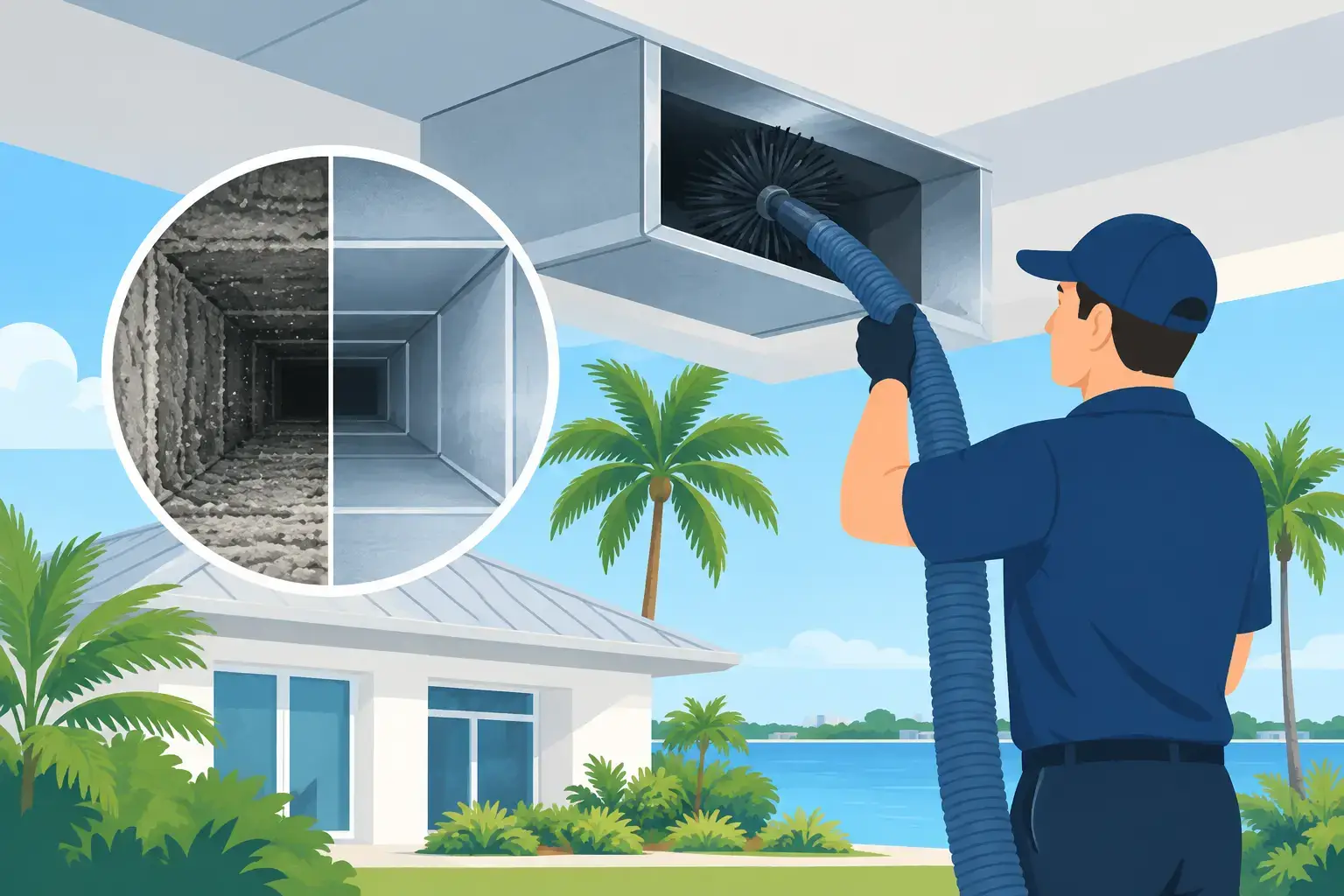
DIY maintenance can be reasonable for homeowners who have the right equipment, a manufacturer-supported procedure, and confidence working around plumbing connections. Professional service offers more than a basic flush, though. A trained technician can inspect the heat exchanger, clean the water filter, check error-code history, verify proper combustion or electrical operation, inspect venting, and identify leaks or worn parts before they become an emergency.
Professional maintenance is especially worthwhile if your system has never been flushed, is several years old, serves a larger household, or has started showing performance changes. It is also the right choice when access is difficult or the installation has no isolation valves. Adding service valves can make future maintenance faster and less disruptive.
For Tampa Bay and Central Florida homeowners, ACS Home Services can provide tankless water heater maintenance, repairs, and replacement guidance from trained plumbing professionals. Same-day availability can help when a lack of hot water is disrupting your household, while routine maintenance helps reduce the chance that it gets to that point.
Can a Water Softener Reduce Tankless Heater Scale?
A water softener can reduce calcium and magnesium levels that contribute to scale. For homes with consistently hard water, that may reduce how quickly deposits form inside the heater. It does not always eliminate the need for flushing, and it should not replace the maintenance interval required by the manufacturer.
Other water treatment options may address sediment, chlorine, taste, or other water-quality concerns, but they do different jobs. The right system depends on your water test results, plumbing setup, and household goals. A plumber can help separate useful upgrades from products that will not solve the problem you are experiencing.
A tankless water heater is built for years of reliable comfort, but it still needs routine care. Put flushing on your annual home-maintenance calendar, follow the guidance for your exact model, and call for help early if hot water starts behaving differently. That small step can protect a major home investment and keep busy mornings moving.