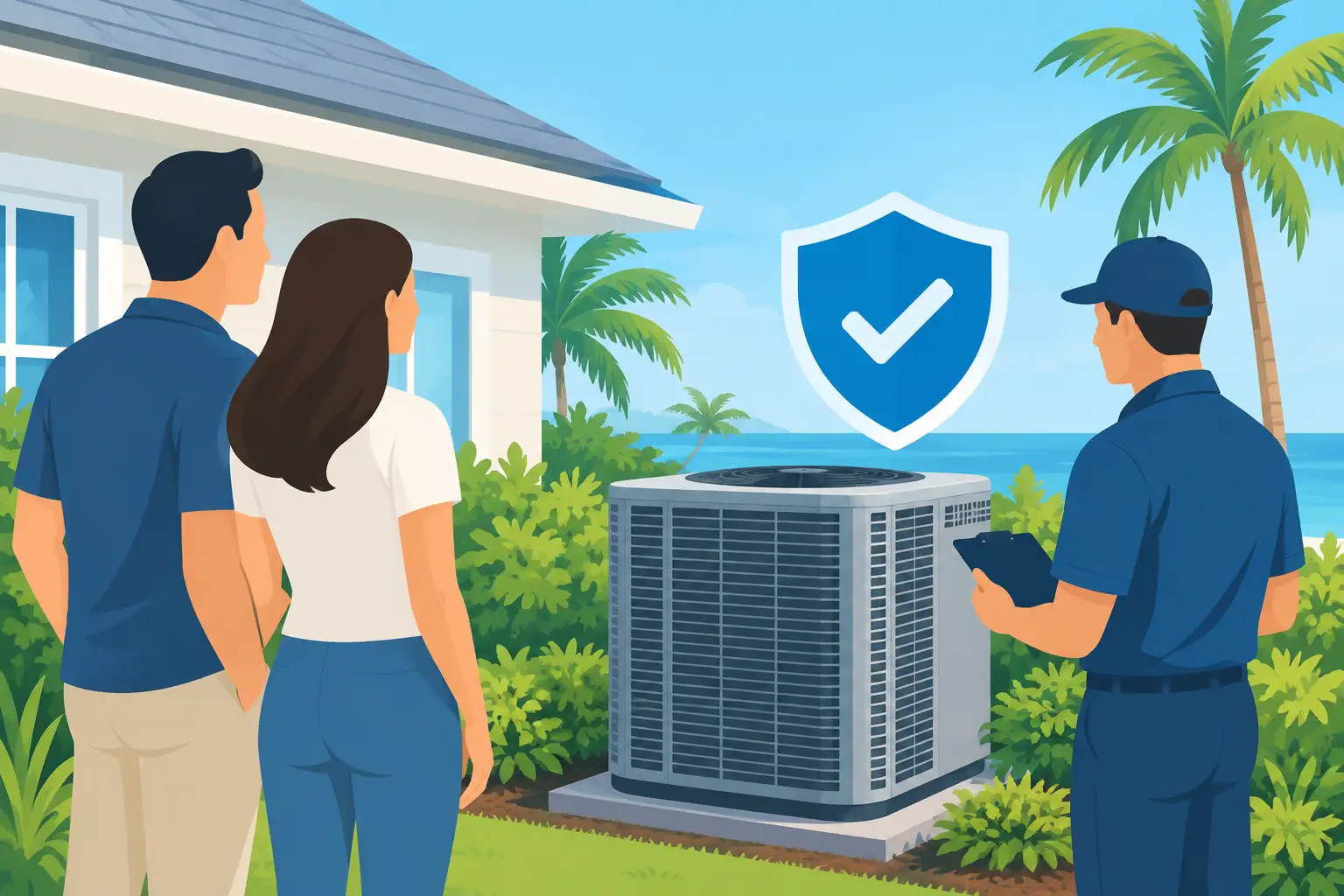


A new air conditioner is one of the largest comfort investments a Florida homeowner can make. AC warranties can provide valuable protection when a covered part fails, but they are not a promise that every future repair will be free. Knowing what your warranty covers before a problem occurs can help you avoid surprise costs when Central Florida heat is at its worst.
The details matter. Coverage can vary by manufacturer, equipment model, installation date, registration status, maintenance history, and the specific part that fails. A clear conversation before installation – and good records afterward – can make a major difference years down the road.
What AC Warranties Usually Cover
Most new central air systems come with a manufacturer limited parts warranty. This typically covers certain defective components, such as the compressor, condenser coil, evaporator coil, fan motor, or control board, for a stated period. The length of coverage varies widely by brand and model. Some systems may have a shorter base warranty and longer coverage after timely product registration.
The word “limited” is important. A manufacturer warranty generally applies to a defect in a covered part, not to every issue an AC system may develop. It also may not cover the labor required to diagnose the problem, remove the failed component, install a replacement, add refrigerant, or make related repairs. Those costs can be meaningful, particularly if a major component fails outside normal business hours.
A separate labor warranty may be provided by the installing contractor. This warranty covers workmanship for a specified period and is distinct from the manufacturer’s parts coverage. Ask for both warranties in writing so you know who to call and which costs may apply.
Parts, labor, and maintenance are different things
It is easy to hear that a system has a “10-year warranty” and assume it is fully protected for a decade. In many cases, that period refers only to eligible replacement parts. Service calls, labor, refrigerant, maintenance, electrical repairs, ductwork issues, drain line clogs, and damage caused by outside conditions may not be included.
Routine maintenance is also not warranty work. Changing filters, clearing a condensate drain, cleaning coils, checking electrical connections, and verifying refrigerant performance are preventive services that help keep the system operating as intended. In Florida’s long cooling season, these visits are a practical way to catch small issues before they become comfort emergencies.
What Can Affect Your AC Warranty Coverage
Every warranty has terms and exclusions. The best way to protect your coverage is to read the documentation for your specific system and keep it with your home records. If anything is unclear, ask your HVAC professional to explain it in plain language.
Registration is one of the most common requirements. Some manufacturers offer a longer limited parts warranty only when the equipment is registered within a set window after installation. Missing that deadline may reduce the available coverage. Do not assume registration happened automatically. Confirm it, save the confirmation, and keep the model and serial numbers accessible.
Proper installation also matters. A system must be correctly sized, charged, wired, drained, and matched with compatible indoor and outdoor equipment. An air conditioner that is too large, too small, or improperly installed may struggle with humidity control, efficiency, and reliability. Those issues can create repair needs that may not qualify as a manufacturing defect.
Neglect can create problems as well. A clogged filter can restrict airflow and place stress on equipment. A blocked drain line can lead to water damage and shutdowns. Dirty coils, damaged ductwork, electrical surges, storm damage, corrosion, pest activity, and unauthorized modifications may fall outside warranty protection. The exact terms depend on the manufacturer, but regular professional service gives you a documented maintenance history if questions arise later.
Why Maintenance Matters for Warranty Protection
Florida air conditioners work harder than systems in milder climates. High humidity, salt air in coastal communities, frequent afternoon storms, and months of near-daily cooling demand can all affect system performance. A warranty is useful when a covered manufacturing issue occurs, but maintenance is what helps reduce many preventable failures in the first place.
During a professional tune-up, a technician can inspect the electrical components, blower operation, refrigerant performance, condensate drainage, coil condition, thermostat operation, and overall safety of the system. The goal is not simply to check a box. It is to identify a failing capacitor, weak contactor, drainage concern, or airflow problem before it leaves your family without cooling.
Keep invoices and service records after each visit. They help you track the age and condition of your equipment, establish a repair history, and show that the system has received appropriate care. If you sell your home, these records may also be useful to prospective buyers. Some manufacturer warranties can transfer to a new owner, while others have transfer deadlines, fees, or restrictions. Check the documentation before relying on a warranty as a selling point.
Extended Warranties: Are They Worth It?
An extended warranty or service agreement may add labor coverage, longer parts protection, or other benefits beyond the manufacturer’s standard limited warranty. Whether it makes sense depends on the age and type of equipment, your budget, the terms offered, and how much certainty you want around future repair costs.
For some homeowners, added labor protection brings welcome predictability. For others, putting money toward routine maintenance and a future replacement fund is the better fit. The key is comparing the actual coverage, exclusions, deductible or service-call requirements, claim process, and duration – not just the headline number of years.
Before you purchase an extended plan, ask whether it covers labor for major repairs, refrigerant, diagnostic fees, after-hours service, and repeat visits for the same issue. Find out whether maintenance is required, whether the coverage remains in effect if you move, and whether there is a maximum payout. A plan that sounds comprehensive may still have important limitations.
Questions to Ask Before Your AC Installation
When replacing an air conditioner, a few direct questions can prevent confusion later. Ask which manufacturer warranty applies to the exact system being installed, how long parts are covered, and whether registration is required. Confirm the contractor’s labor warranty and get the terms in writing.
Also ask who will register the equipment, when you will receive model and serial numbers, and what maintenance schedule is recommended for your home. If your property has aging electrical equipment, duct leaks, indoor air quality concerns, or drainage issues, address those items before assuming a new AC system alone will solve every comfort problem.
A qualified HVAC team should be willing to explain your options without pressure. Higher-efficiency equipment, variable-speed systems, and upgraded filtration can offer meaningful comfort benefits, but the right choice depends on your home’s layout, insulation, ductwork, family needs, and budget. Financing may help make a replacement manageable, but warranty terms should remain clear regardless of how the project is paid for.
When a Warranty Repair Is Needed
If your system stops cooling, starts making unusual noises, leaks water, freezes up, or trips breakers, turn to a licensed HVAC professional rather than attempting a repair yourself. Continuing to run a struggling system can worsen damage. Avoid opening sealed refrigerant components or making electrical changes, since those repairs require specialized tools and training.
Have your system information and maintenance records ready when you call. The technician can diagnose the issue, determine whether a covered component may be involved, and explain the next steps. Warranty approval can depend on the manufacturer and the specific failure, so no reputable contractor should promise coverage before the problem has been evaluated.
When Florida heat puts your comfort at risk, ACS Home Services can help homeowners understand their repair options and restore reliable cooling. Keep your warranty paperwork, schedule routine maintenance, and call for service early when your AC shows signs of trouble – the best time to protect your system is before a small concern becomes a no-cooling emergency.