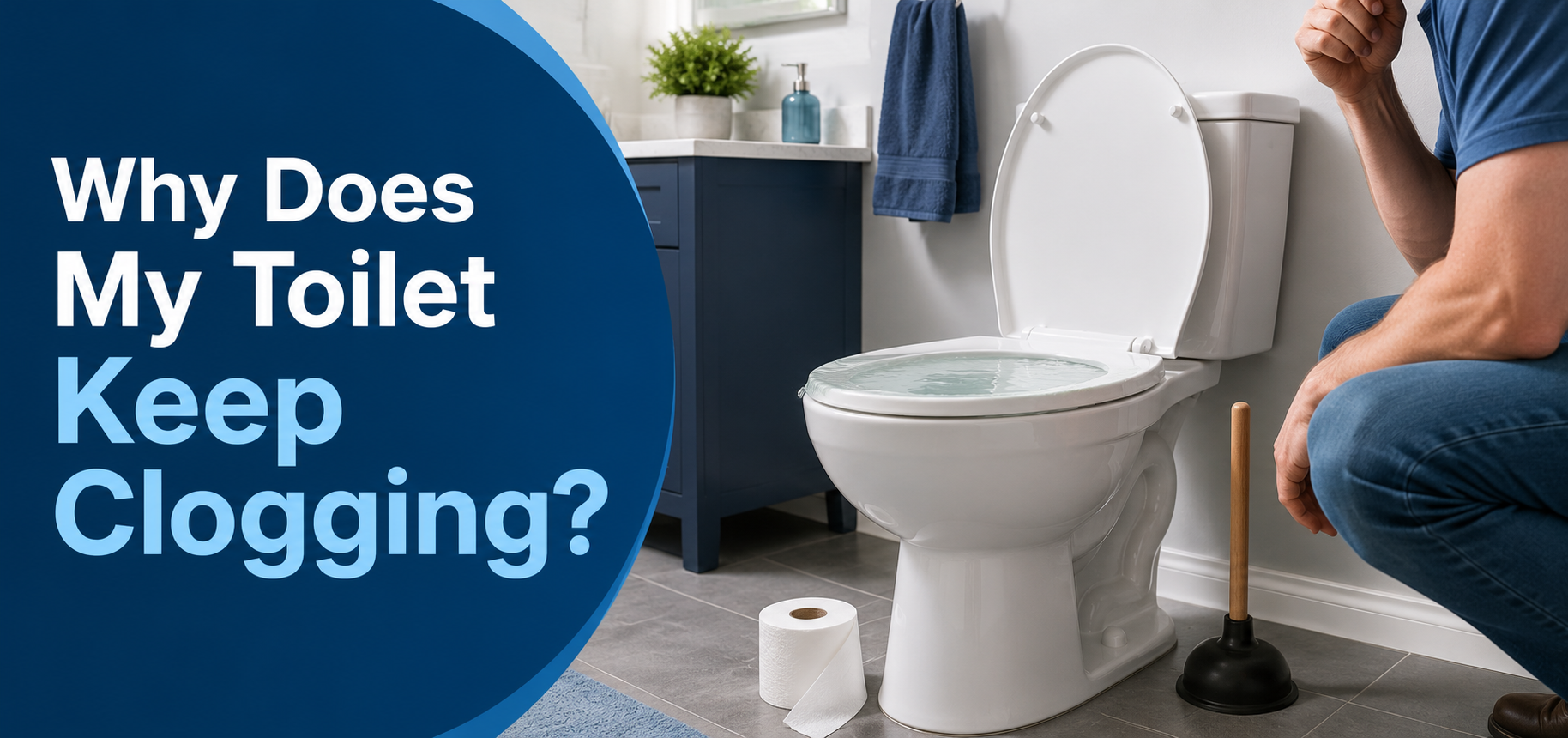

Why does my toilet keep clogging? A toilet that clogs repeatedly may have a partial blockage, weak flushing power, a problem deeper in the drain system, or an object caught inside the toilet trap. While an occasional clog is usually manageable, recurring clogs often indicate a plumbing issue that needs more than a plunger.
A clogged toilet is frustrating, but a toilet that keeps clogging can become a serious concern. You may clear the bowl one day only to find the same problem returning after a few flushes.
Understanding why this happens can help you prevent an overflow, avoid unnecessary damage, and determine when it is time to call a plumber.
Common Reasons a Toilet Keeps Clogging
A toilet can clog for several reasons. Some problems begin inside the toilet, while others develop farther down the drain line.
The most common causes include:
- Too much toilet paper: Large amounts of toilet paper may not dissolve quickly enough to pass through the toilet trap.
- Non-flushable materials: Wipes, paper towels, feminine hygiene products, cotton swabs, and similar items can become lodged in the drain.
- A partially blocked toilet trap: Material may remain inside the curved passage built into the toilet, restricting each new flush.
- Weak flushing power: A toilet that releases too little water may not move waste completely through the drain.
- A blocked plumbing vent: Poor airflow in the drainage system can interfere with proper flushing and drainage.
- A deeper drain or sewer blockage: Repeated clogs may originate in the branch drain or main sewer line rather than the toilet itself.
A clog that returns shortly after plunging is usually not fully cleared. The plunger may create a small opening through the blockage without removing the material that caused it.
You May Be Flushing the Wrong Materials
Toilets are designed to handle human waste and reasonable amounts of toilet paper. Many household products marketed as disposable do not break apart as easily as toilet paper.
Avoid flushing the following materials:
- Cleaning wipes and personal wipes
- Paper towels and facial tissues
- Cotton balls and cotton swabs
- Feminine hygiene products
- Dental floss and hair
- Food, grease, or cat litter
Even products labeled “flushable” can contribute to recurring toilet clogs. These materials may pass through the toilet but collect around buildup or rough sections inside the drain pipe.
The safest rule is simple: only flush waste and toilet paper. Everything else should go into a trash container.
Too Much Toilet Paper Can Create a Partial Blockage
Toilet paper is designed to dissolve in water, but it still needs time and enough water to break apart. Using a large amount during one flush can overwhelm the toilet trap.
This problem is more likely when the toilet already has weak flushing power. It can also happen when a partial blockage has reduced the available space inside the drain.
Try using smaller amounts of toilet paper and flushing more than once when necessary. If ordinary toilet paper use continues to cause clogs, the toilet or drain line should be inspected.
The Toilet May Have a Weak Flush
A toilet needs the right amount of water and enough force to move waste through the trap. If the tank does not fill correctly, material can remain behind and contribute to the next clog.
Common causes of a weak flush include:
- A low water level inside the tank
- An improperly adjusted fill valve
- A flapper that closes too quickly
- Mineral buildup in the rim jets
- A worn or damaged flushing mechanism
- An older toilet with limited flushing performance
Check the water level inside the tank. It should normally reach the manufacturer’s marked fill line.
If the tank fills properly but the flush remains weak, buildup may be limiting water flow through the bowl. A plumber can determine whether the toilet needs cleaning, repair, adjustment, or replacement.
An Object May Be Trapped Inside the Toilet
Small objects can fall into a toilet without being noticed. Children’s toys, air fresheners, caps, grooming products, and other items may become lodged in the built-in trap.
A plunger might move water around the object without removing it. This can make the toilet appear fixed temporarily, but the obstruction remains in place.
A toilet auger is often more effective than a plunger for objects caught inside the trap. However, an object that cannot be retrieved may require the toilet to be removed from the floor.
Avoid repeatedly forcing the object deeper into the plumbing. Doing so can turn a toilet repair into a more complicated drain line problem.
The Drain Line May Be Partially Blocked
If the toilet itself appears to be working correctly, the blockage may be inside the drain pipe. Waste, paper, mineral deposits, grease from connected drains, and foreign materials can gradually restrict the line.
A partial drain blockage often allows some water to pass. That is why the toilet may drain slowly rather than remaining completely stopped.
Watch for these signs:
- The bowl fills unusually high before draining
- The water level drops slowly after flushing
- The toilet gurgles after nearby fixtures are used
- The same toilet clogs several times in one week
Professional drain-cleaning equipment can reach farther than a household plunger or toilet auger. ACS Home Services offers comprehensive plumbing services to diagnose recurring clogs and other drainage problems.
A Blocked Plumbing Vent Can Affect Flushing
Your plumbing system uses vent pipes to balance air pressure inside the drains. Without proper airflow, wastewater may move slowly or create gurgling sounds.
Leaves, debris, nesting materials, or damage can obstruct a roof vent. A venting problem may affect more than one fixture and can be difficult to distinguish from a drain blockage without an inspection.
Do not climb onto the roof to investigate a plumbing vent unless you have the appropriate training and safety equipment. A professional can evaluate the vent system without putting you at risk.
The Main Sewer Line Could Be Clogged
A toilet that repeatedly clogs may be an early sign of a main sewer line problem. The main line carries wastewater from all the drains in your home, so a blockage can eventually affect multiple fixtures.
Possible causes include accumulated waste, damaged piping, shifting soil, tree root intrusion, or an object lodged inside the line.
Signs of a possible main sewer clog include:
- Multiple toilets or drains backing up
- Water appearing in a shower when the toilet flushes
- Gurgling sounds from several plumbing fixtures
- Sewage odors inside or around the home
- Wastewater coming through a floor drain
- Recurring clogs in the lowest toilet in the house
Stop using plumbing fixtures if wastewater begins backing up into the home. Continued water use can lead to additional contamination and property damage.
For an active backup, overflowing toilet, or suspected sewer obstruction, contact a professional offering Tampa emergency plumbing assistance.
What to Do When Your Toilet Clogs
Act quickly when the bowl begins filling higher than normal. Preventing an overflow should be your first priority.
- Stop flushing: Another flush may send water over the edge of the bowl.
- Close the toilet shutoff valve: Turn the valve behind the toilet clockwise to stop the water supply.
- Use a flange plunger: Create a firm seal over the drain opening and use controlled plunging motions.
- Try a toilet auger: Use an auger designed specifically for toilets if plunging does not clear the obstruction.
- Clean and disinfect the area: Wear gloves and sanitize any surface exposed to toilet water.
- Call a plumber when the clog returns: Repeated clogs suggest that the underlying problem remains.
Make sure the plunger has a fold-out flange that fits into the toilet drain. Flat cup plungers are better suited to sinks and may not create a strong seal in a toilet bowl.
Why Chemical Drain Cleaners Are Not the Best Solution
Chemical drain cleaners are generally not a good choice for toilet clogs. The product may remain trapped in the bowl or pipe when the toilet cannot drain.
This creates a risk of chemical splashes during plunging or augering. Some products can also damage plumbing components or create hazardous conditions for the plumber who later opens the drain.
Mechanical removal is usually safer for a clogged toilet. A flange plunger, toilet auger, or professional drain-cleaning method addresses the blockage without leaving harsh chemicals in the fixture.
When Should You Call a Plumber?
You do not necessarily need professional service for one minor clog. However, repeated problems should not be ignored.
Schedule a plumbing inspection when:
- The toilet clogs several times within a short period
- Plunging only provides temporary relief
- The toilet flushes slowly or has weak water movement
- You suspect a toy or solid object is trapped inside
- More than one fixture is draining slowly
- The toilet gurgles when another fixture is used
A plumber can determine whether the problem is inside the toilet, the nearby drain, the vent system, or the main sewer line. Identifying the correct location prevents repeated trial-and-error repairs.
How to Prevent Future Toilet Clogs
Good flushing habits can prevent many clogs. Toilet maintenance also helps identify small problems before they become backups.
- Flush only toilet paper and human waste
- Keep a lined trash container near the toilet
- Teach children what should never be flushed
- Use reasonable amounts of toilet paper
- Address weak flushing performance promptly
- Have recurring drainage problems professionally inspected
Consider closing the toilet lid when it is not in use, especially in homes with small children. This simple habit can prevent toys and household objects from falling into the bowl.
Frequent clogs are a symptom, not a normal feature of the toilet. Finding the cause is the best way to prevent an unexpected overflow or sewage backup.
Get Help With a Toilet That Keeps Clogging
A plunger can solve a basic clog, but it cannot repair a damaged toilet, remove every trapped object, or clear a deeper sewer obstruction. If the same toilet keeps clogging, let ACS Home Services locate and correct the underlying problem.
Call (833) 278-8886 to request plumbing service, or use the ACS Home Services contact page to schedule assistance. You can also view ACS Home Services on Google Maps.
Frequently Asked Questions
Why does my toilet clog even when I only flush toilet paper?
Your toilet may have a partial blockage, weak flushing power, a low tank water level, or mineral buildup that limits water flow. Ordinary toilet paper can repeatedly trigger clogs when the drain is already restricted.
Why does my toilet clog but other drains work normally?
The obstruction may be limited to the toilet trap or the branch drain serving that bathroom. A foreign object inside the toilet can also cause repeated clogs without immediately affecting sinks, showers, or other fixtures.
Can a toilet unclog itself?
Some clogs soften and move after sitting in water, especially when toilet paper is the only material involved. However, a toilet that seems to clear itself may still have a partial obstruction that causes another clog later.
Why does my toilet keep clogging after I plunge it?
Plunging may create a narrow opening through the blockage without removing it completely. Waste can pass temporarily, but new material quickly becomes caught in the same area.
Can a weak flush cause frequent toilet clogs?
Yes. A low tank water level, worn flapper, clogged rim jets, or poorly adjusted fill valve can reduce flushing force. Without enough water movement, waste may remain inside the trap or drain.
How do I know whether the main sewer line is clogged?
A main sewer clog often affects multiple fixtures. Warning signs include several slow drains, gurgling toilets, wastewater in a shower or floor drain, sewage odors, and backups in the lowest part of the home.
Should I replace a toilet that keeps clogging?
Replacement may be appropriate if the toilet is damaged, has consistently weak flushing performance, or requires frequent repairs. A plumber should first confirm that the clog is not being caused by the drain or sewer line.
Is a constantly clogging toilet a plumbing emergency?
It becomes an emergency when the toilet overflows, sewage backs up, multiple fixtures stop draining, or the home has no usable toilet. Stop using water and contact an emergency plumber when wastewater could damage the home or create an unsanitary condition.