

A GFCI outlet can prevent a dangerous shock in the places where Florida homes are most likely to have water nearby – bathrooms, kitchens, laundry rooms, garages, pool areas, and outdoor living spaces. Knowing how to test GFCI outlets takes less than a minute, but the result matters: you are confirming that a protective device can shut off power when it detects an electrical imbalance.
GFCI stands for ground-fault circuit interrupter. Unlike a standard outlet, a GFCI monitors the electricity moving through the circuit. If it detects current taking an unintended path, such as through water or a person, it is designed to trip quickly and cut power. It cannot prevent every electrical hazard, but it is a critical layer of protection in moisture-prone areas.
How to Test GFCI Outlets With the Built-In Buttons
Start by locating the outlet’s two small buttons, usually labeled TEST and RESET. The outlet may also have an indicator light. Before testing, plug a small lamp or phone charger into the outlet so you can clearly tell whether power is on and off. Avoid testing with a device that could be damaged by an unexpected power interruption, such as a computer or medical equipment.
With the lamp turned on, press the TEST button firmly. A properly working GFCI should make a noticeable click, and the lamp should turn off immediately. The RESET button may pop outward when the outlet trips.
Next, press the RESET button. You should hear another click, and the lamp should turn back on. This confirms that the outlet tripped and then restored power as intended.
That is the basic process, but do not assume a successful reset always means the entire circuit is protected. One GFCI device may protect several standard outlets farther down the line. That is common in bathrooms, garages, exterior receptacles, and older homes with electrical updates completed over time.
What the Test Results Mean
A test does not always produce a clean on-off-on result. The outcome tells you what to do next.
If the outlet trips when you press TEST and restores power when you press RESET, it is functioning normally at that moment. Continue testing the other GFCIs in your home individually, especially before heavy use of outdoor outlets, holiday lighting, pressure washers, or pool equipment.
If the TEST button will not trip the outlet but the outlet still has power, the GFCI may be defective, improperly wired, or not receiving the power configuration it needs to operate correctly. Do not rely on it for shock protection. Schedule an electrical inspection.
If the outlet trips but will not reset, first unplug everything connected to that outlet and to nearby outlets that may be on the same circuit. A plugged-in appliance, moisture intrusion, a damaged cord, or a wiring fault can keep a GFCI from resetting. If it still will not reset after everything is unplugged, leave it alone and call a qualified electrician.
If the outlet has no power and neither button changes anything, check your electrical panel for a tripped breaker. A breaker can trip for a different reason than a GFCI, so resetting it without investigating repeated trips is not a long-term fix. If the breaker immediately trips again, stop resetting it. Repeated tripping can point to a circuit overload, faulty appliance, damaged wiring, or moisture-related issue.
Test the Outlets Protected Downstream
A single GFCI can protect additional outlets that do not have TEST and RESET buttons of their own. This is why an outdoor outlet may suddenly stop working after a bathroom or garage GFCI trips.
After pressing TEST on a GFCI, check nearby standard outlets with your lamp or charger. In a kitchen, this may include outlets along the same countertop run. In a garage, it may include exterior receptacles. In some homes, a GFCI in one bathroom can protect outlets in another bathroom.
This step is especially useful if you have an outlet that seems dead with no obvious explanation. Rather than replacing the outlet or assuming the breaker has failed, check and reset all GFCI outlets throughout the home. Look in bathrooms, under kitchen sinks, garages, laundry areas, patios, near pool equipment, and on exterior walls.
How Often Should You Test GFCI Outlets?
Many manufacturers recommend monthly testing using the built-in TEST button. For most homeowners, a practical routine is to test GFCIs monthly or at least several times a year, then include them on your seasonal home-maintenance checklist.
In Central Florida, more frequent attention makes sense for outdoor outlets and areas exposed to humidity, rain, irrigation spray, pool activity, or condensation. A GFCI at a covered patio may still be affected by moisture, insects, sun exposure, and wear over time.
Test after a major storm if you notice a loss of power, before setting up outdoor entertainment equipment, and whenever you move into a new home. If your GFCIs are older, have discolored or cracked faces, feel warm, make buzzing sounds, or trip without a clear cause, have them evaluated rather than treating testing as a substitute for repair.
Use a GFCI Tester for an Extra Check
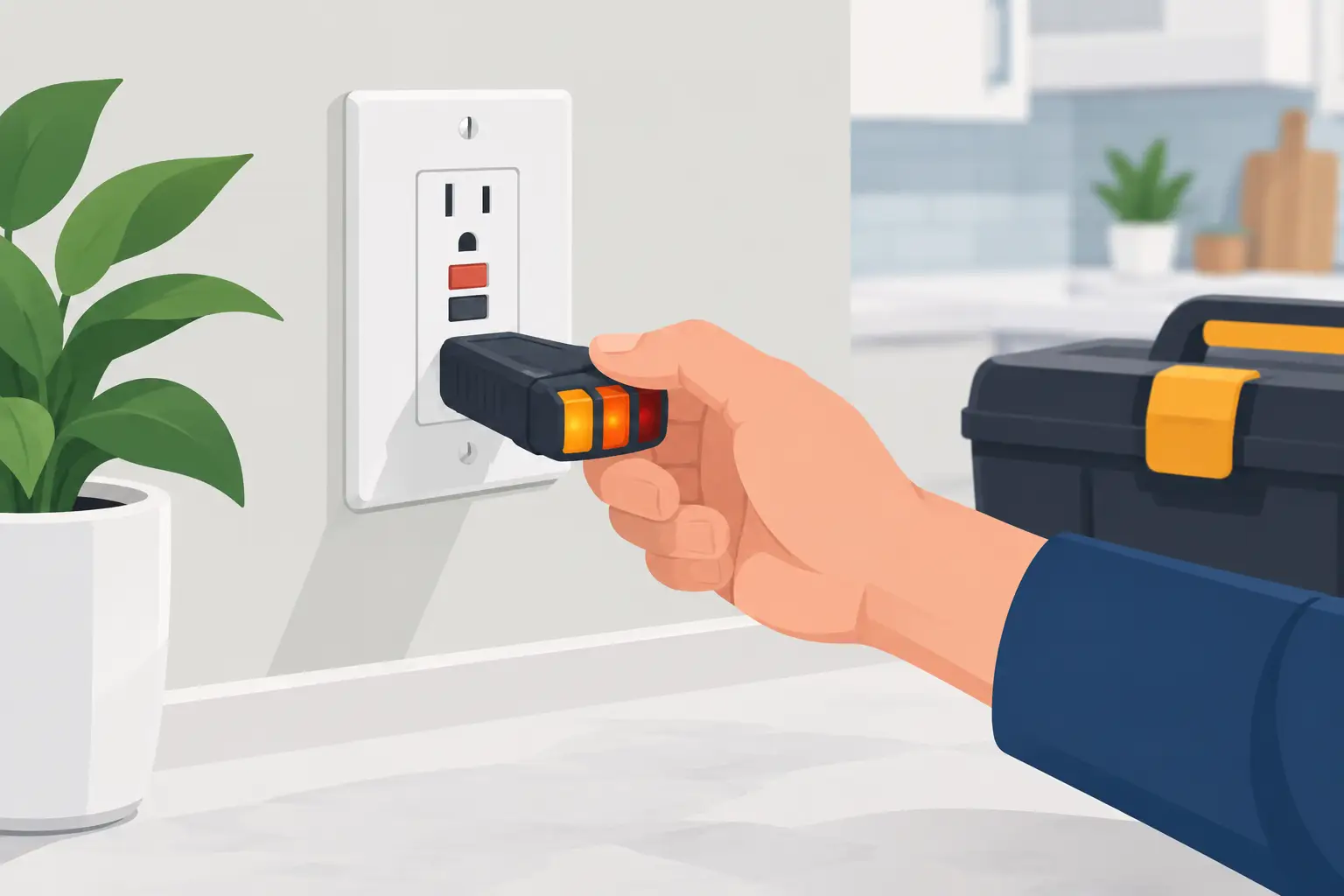
A plug-in GFCI outlet tester is a small device with indicator lights that can identify several common wiring problems. When plugged into an outlet, its light pattern may indicate correct wiring, an open ground, reversed polarity, or other issues. Most models also include a button that attempts to trip the GFCI.
These testers are helpful, but they have limits. They cannot diagnose every wiring condition, and a “correct” light pattern does not prove that the outlet and circuit are safe in every respect. They are best used as a screening tool alongside the outlet’s built-in TEST and RESET buttons.
If a plug-in tester does not trip a GFCI that should protect the outlet, do not start removing outlet covers or moving wires yourself. Electrical troubleshooting can become more complex when multiple outlets share a circuit, especially in homes with additions, remodeled kitchens, or outdoor circuits installed at different times.
Common GFCI Problems Homeowners Should Not Ignore
A GFCI that trips once while you are using a hair dryer or pressure washer may be responding to a real issue, or it may simply be reacting to a temporary appliance fault. Context matters. Unplug the appliance, reset the outlet, and see whether the problem returns.
A GFCI that trips repeatedly with nothing connected is more concerning. So is an outlet that resets but loses power again, one that feels hot, or one that shows corrosion around the cover. For outdoor outlets, a cracked weatherproof cover can allow water into the box and create a recurring problem.
Older homes may also have outlets that look like GFCIs but no longer provide dependable protection, or they may lack required protection in areas where modern electrical standards call for it. An electrician can determine whether replacement, rewiring, circuit correction, or an electrical panel upgrade is the appropriate solution. The right repair depends on the age of the home, the circuit layout, and what is causing the device to trip.
When to Call an Electrician
Testing is a homeowner-friendly safety task. Repairs are different. Call for professional electrical service if a GFCI will not reset, fails its test, trips repeatedly, shows signs of heat or damage, or if multiple outlets lose power without an obvious cause. You should also call if an outlet near water is not GFCI-protected and you are unsure whether another device protects it upstream.
For homeowners in Tampa and surrounding Central Florida communities, ACS Home Services can inspect GFCI outlets, identify the source of recurring trips, replace failed devices, and address related wiring or panel concerns. Same-day service can help when a dead outlet disrupts a kitchen, garage, bathroom, or outdoor space.
A working GFCI is easy to overlook because it sits quietly on the wall. Taking a minute to test it gives you a clearer picture of whether one of your home’s most important electrical safety devices is ready when you need it.