

A clear AC condensate drain is easy to overlook until water starts pooling near your indoor unit, a musty odor reaches the living room, or the air conditioner shuts down on a sweltering Florida afternoon. Your AC removes a surprising amount of humidity from indoor air, especially in Tampa and Central Florida. That moisture has to go somewhere, and the condensate drain line carries it safely outside.
When algae, slime, dirt, or debris clogs that line, the result can be a messy leak and a system that cannot keep your home comfortable. Some homeowners can handle basic drain-line maintenance safely. Others should call an HVAC professional before a small blockage becomes ceiling damage, mold growth, or an emergency repair.
What an AC Condensate Drain Does
As warm air moves across your air conditioner’s cold evaporator coil, water vapor in the air condenses into liquid. The water collects in a drain pan below the coil and flows through a PVC drain line to an exterior discharge point, a plumbing connection, or both.
In Florida, high humidity means your system may produce gallons of condensate each day. That constant moisture creates an ideal environment for biological growth inside the drain line. Over time, algae-like buildup can narrow or completely block the pipe.
Many newer systems also have a float switch or safety switch. When water backs up in the drain pan, the switch turns off the AC to prevent an overflow. It can feel alarming when the unit stops working, but the safety switch may be preventing much more expensive damage.
Signs You May Need to Clear an AC Condensate Drain
A drain clog is not always obvious from the thermostat. Watch for water around the indoor air handler, often located in a closet, garage, attic, or utility room. Stained drywall or a damp ceiling below an attic unit also deserves immediate attention.
Other warning signs include a musty smell when the system runs, visible water in the drain pan, or an AC that suddenly stops cooling even though the thermostat has power. Outside, check the drain-line outlet while the AC is running. If the system has been operating for a while in humid weather and no water is draining, there may be a blockage. However, low output can also occur during mild, dry weather, so that sign alone does not confirm a clog.
If you see water near electrical components, dripping from a ceiling, or a heavily rusted drain pan, skip the DIY approach. Turn the system off and arrange service promptly.
How to Clear an AC Condensate Drain at Home
For a minor clog, you can often clear the line through the PVC access pipe near the indoor unit. This pipe typically has a removable cap and may be shaped like a vertical T. Before beginning, turn off the AC at the thermostat and shut off power at the breaker or nearby disconnect if you can safely access it.
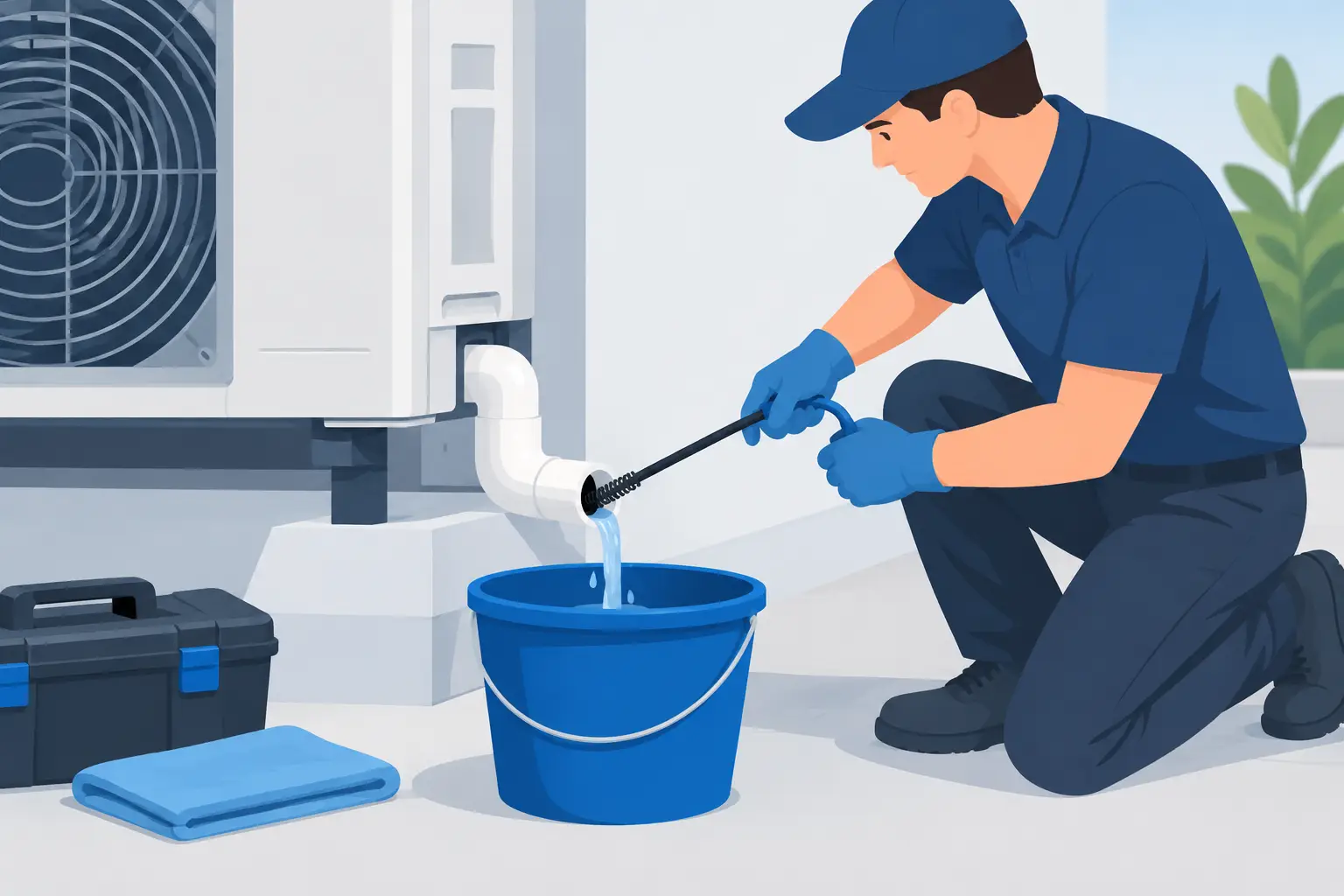
Start by locating the outdoor drain outlet. It is usually a small PVC pipe near the condenser, but some homes drain into a plumbing line instead. If your line exits outside, use a wet/dry vacuum on the outlet. Create as tight a seal as possible with your hand or a cloth, then run the vacuum for one to two minutes. This is often the safest and most effective method for removing slime and loose debris without forcing it deeper into the line.
Next, remove the cap from the indoor drain access point. Inspect for standing water or visible buildup. If the line appears to be flowing again, pour a small amount of distilled white vinegar into the access opening, following the equipment manufacturer’s guidance if available. Vinegar can help reduce organic buildup. Let it sit briefly, then flush the line with clean water.
Avoid using bleach, harsh drain cleaners, or compressed air. Bleach can damage some components and creates fumes. Chemical drain openers are not designed for HVAC condensate lines and can harm PVC, drain pans, and surrounding equipment. Compressed air may separate fittings or push a clog into a place that is harder to reach.
After cleaning, restore power and run the system. Check the outdoor outlet or drain connection for normal water flow. Also inspect the air handler over the next several hours for signs of renewed leaking.
Do not overlook the secondary drain pan
Attic-installed air handlers often sit inside a larger secondary drain pan. This pan is a backup, not the primary drainage path. If it contains water, the primary drain is likely clogged, and the secondary drain may also need attention.
A cracked, rusted, or overflowing secondary pan is not a cleaning project to put off. Water can travel through insulation and framing before it appears on the ceiling below. A trained technician can clear both drains, inspect the pan, test the float switch, and identify whether improper drain slope or a damaged line is contributing to the problem.
Why Condensate Drain Clogs Keep Coming Back
Clearing a clog restores drainage, but recurring backups point to an underlying condition. A drain line without proper slope can hold water and encourage buildup. A missing or poorly installed trap can interfere with drainage on certain systems. A dirty evaporator coil, neglected filter, or excess indoor humidity can also add to the issue.
The location of the indoor unit matters, too. Garage and attic systems can be more difficult to inspect regularly, which allows a slow problem to grow unnoticed. In older homes, the condensate line may tie into plumbing in a way that needs professional evaluation.
This is why routine HVAC maintenance is about more than keeping the air cold. During a professional tune-up, technicians can flush the drain line, inspect the drain pan, test safety switches, check refrigerant performance, and look for early signs of water damage. It is a practical way to prevent a shutdown during peak cooling season.
When to Call a Professional for a Clear AC Condensate Drain
Call for HVAC service if vacuuming and flushing do not restore drainage, if the line clogs repeatedly, or if the AC remains off after you address the drain. The float switch may need resetting, but it can also be signaling a continuing backup or an issue with the drain pan.
Professional service is also the right choice when the unit is in a difficult attic location, water has reached finished areas of the home, or you cannot confidently identify the correct drain line. A technician has the equipment to clear stubborn obstructions, verify the drain’s slope and trap configuration, and inspect the system without risking damage to your home or equipment.
For homeowners who prefer one trusted team for ongoing comfort and home-system care, ACS Home Services can provide prompt HVAC drain troubleshooting and maintenance. Same-day availability can be especially valuable when a drain backup has taken your AC offline in the Florida heat.
A little attention to your condensate drain can protect far more than your cooling system. If you notice the first sign of water where it does not belong, act early – it is usually the simplest time to keep a drain problem from becoming a home repair.