

A Tampa summer can turn a comfortable home into a sticky, expensive problem in a matter of hours. The best thermostat settings for summer are not just about picking one number and leaving it there. They need to balance your family’s comfort, Florida humidity, your daily schedule, and the condition of your air conditioning system.
For most Central Florida homes, 78 degrees is a practical starting point when people are home. But the right setting can shift a few degrees depending on your insulation, sun exposure, household preferences, and whether your AC is keeping humidity under control.
Best Thermostat Settings for Summer: Start at 78 Degrees
The U.S. Department of Energy commonly recommends 78 degrees while you are home in the summer. In Tampa, Clearwater, Sarasota, Lakeland, and surrounding communities, that setting is often a sensible balance between comfort and cooling costs.
At 78 degrees, your AC does not have to run as long as it would at 72 or 74. That matters during a Florida heat wave, when outdoor temperatures and humidity can keep the system working for much of the day. Raising the thermostat by even a few degrees can reduce your cooling demand, provided your home still feels comfortable.
That said, 78 is a starting point, not a rule that fits every household. A home with large west-facing windows, poor attic insulation, older ductwork, or rooms that receive heavy afternoon sun may feel warmer than the thermostat reading suggests. Families with infants, older adults, certain health conditions, or pets at home may also need a lower setting.
If 78 feels too warm, try 76 or 77 before making a major adjustment. The goal is steady, livable comfort without forcing your air conditioner to chase an unrealistic indoor temperature all day.
Adjust Settings Based on When You Are Home
Your thermostat schedule should reflect how your household actually uses the home. Keeping the temperature the same around the clock is simple, but it may mean paying to cool an empty house more than necessary.
When You Are Home
Set the thermostat around 76 to 78 degrees during the hours your family is home and active. If you are cooking, hosting guests, or spending time in a sunny room, a temporary one- or two-degree adjustment can be reasonable. Avoid turning the thermostat down dramatically because the house feels warm for a few minutes. Your AC cannot cool faster just because the setting is much lower. It will simply run longer.
When You Are Away
For a workday, setting the thermostat around 80 to 82 degrees can reduce unnecessary cooling. In Central Florida, it is usually better not to let the indoor temperature climb too high. A home that reaches 88 or 90 degrees can retain heat in the walls, furniture, and flooring, making it harder for the AC to restore comfort when you return.
If you have pets at home, choose a setting that protects their comfort and safety. Many pet owners keep the home closer to 78 to 80 degrees, depending on the animal, the home, and the available shade.
Overnight Settings
Many people sleep better in a cooler room. A nighttime setting between 74 and 77 degrees is common, especially when paired with ceiling fans. You may be able to raise the thermostat a degree or two if the fan creates a gentle breeze across the bed.
Do not assume that a colder bedroom requires freezing the entire house. Closing off unused rooms is not always the answer, either, particularly if it disrupts airflow or causes uneven pressure in the duct system. If one room is consistently uncomfortable, the issue may be airflow, insulation, ductwork, or thermostat placement rather than your preferred temperature.
Humidity Changes What Comfortable Feels Like
In Florida, humidity is a major part of the thermostat conversation. A house can be 76 degrees and still feel clammy if indoor humidity is too high. Most homes feel best when relative humidity stays roughly between 40% and 60%.
Your air conditioner removes moisture as it cools, but it must run long enough to do that job effectively. Constantly turning the system on and off, setting the thermostat too high, or using an oversized AC system can leave humidity behind. You may notice damp-feeling sheets, musty odors, condensation on vents, or rooms that feel warmer than the displayed temperature.
If your home feels humid even though the AC appears to be working, lowering the thermostat is not always the best fix. A clogged filter, dirty evaporator coil, drainage issue, refrigerant problem, duct leak, or failing component can affect cooling performance and moisture removal. A professional HVAC inspection can identify whether the issue is your settings or the equipment itself.
Use Your Thermostat and Ceiling Fans Together
Ceiling fans make people feel cooler by moving air across the skin. They do not lower the room’s actual temperature, so they should be turned off when no one is in the room.
During summer, ceiling fans should rotate counterclockwise to push air downward. This can allow you to raise the thermostat by one or two degrees while maintaining similar comfort. It is one of the simplest ways to reduce AC runtime without making your living space feel stale.
Set your HVAC fan to “Auto” in most situations. The “On” setting keeps the blower running continuously, which can circulate air more evenly but may also use more electricity and reintroduce moisture from the ducts after a cooling cycle ends. If you struggle with humidity, Auto is typically the better choice.
Avoid These Common Thermostat Mistakes
A thermostat works best when the rest of the home supports it. Small habits can make a noticeable difference during a long Florida summer.
First, avoid extreme temperature setbacks. Setting the home to 85 degrees while you are out and then dropping it to 72 when you get home can lead to long runtimes, uneven cooling, and a home that still feels humid. Moderate changes are usually more efficient and more comfortable.
Second, keep heat out before it enters the house. Close blinds or curtains on sun-facing windows during the afternoon, use weatherstripping around leaky doors, and make sure attic insulation is in good condition. Your thermostat cannot solve a heat-gain problem on its own.
Third, replace your air filter regularly. A clogged filter restricts airflow, can make rooms feel warmer, and puts extra strain on the system. Check it monthly during peak cooling season and replace it when it looks dirty or according to the filter manufacturer’s guidance.
Finally, do not ignore unusual AC behavior. Short cycling, warm air from the vents, weak airflow, water near the indoor unit, rising utility bills, or a system that never seems to satisfy the thermostat are signs that deserve attention. Waiting until the unit stops completely can turn a manageable repair into an urgent summer breakdown.
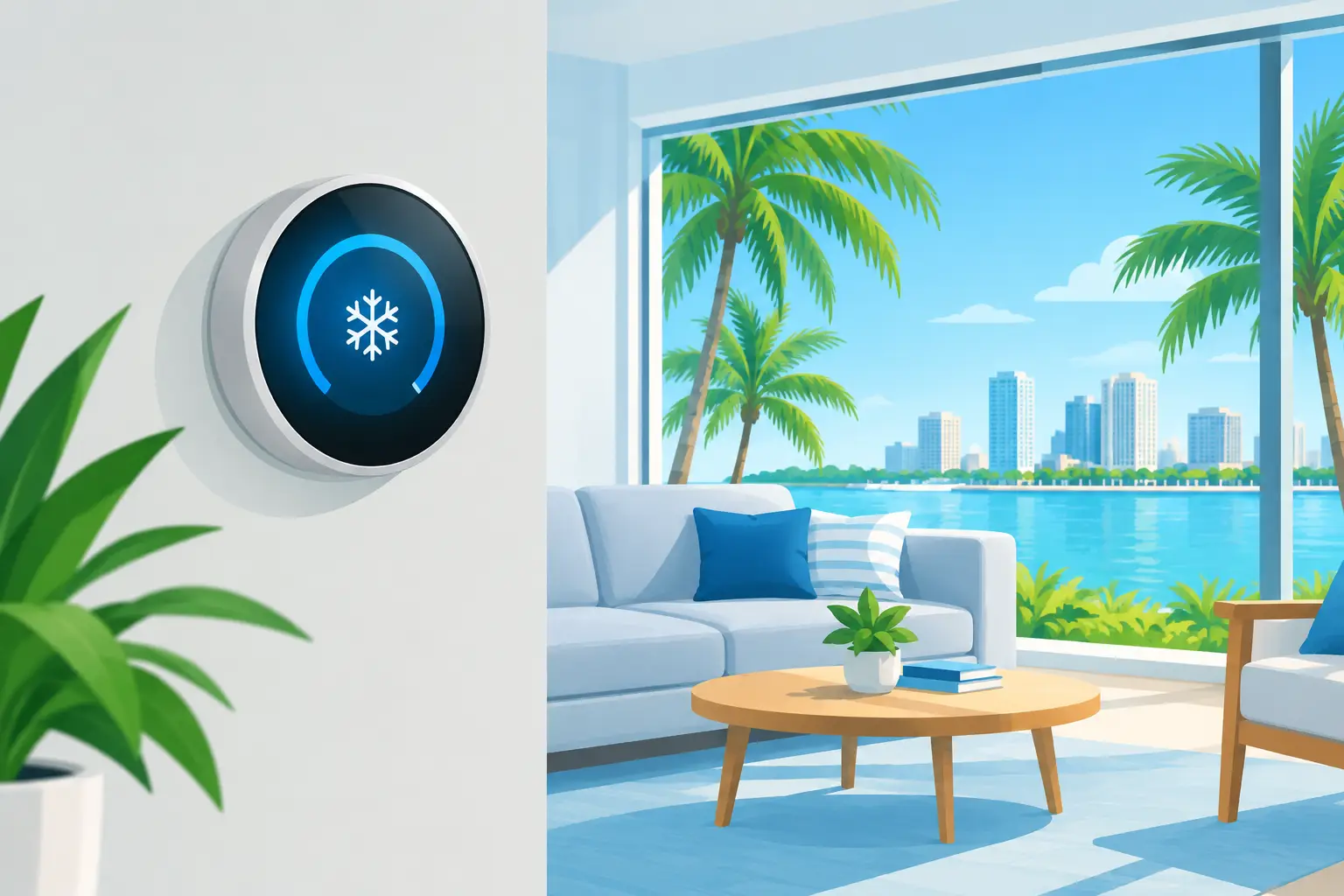
Smart Thermostats Can Make Summer Settings Easier
A programmable or smart thermostat can take much of the guesswork out of your schedule. You can set the temperature to rise after everyone leaves, begin cooling before you return, and maintain a more consistent overnight setting. Some models also show runtime patterns that help homeowners spot changes in system performance.
The technology is helpful, but installation and placement matter. A thermostat located near a kitchen, sunny window, exterior door, or supply vent may read the wrong temperature for the rest of the home. If your system seems to cool unevenly, a technician can assess whether the thermostat location, equipment size, ductwork, or zoning is contributing to the problem.
When the Right Setting Still Does Not Feel Right
If you have tried reasonable thermostat settings and your home remains hot, humid, or unevenly cooled, the problem may not be your thermostat at all. Older systems can lose efficiency, ducts can leak cooled air into the attic, and neglected maintenance can limit performance when you need it most.
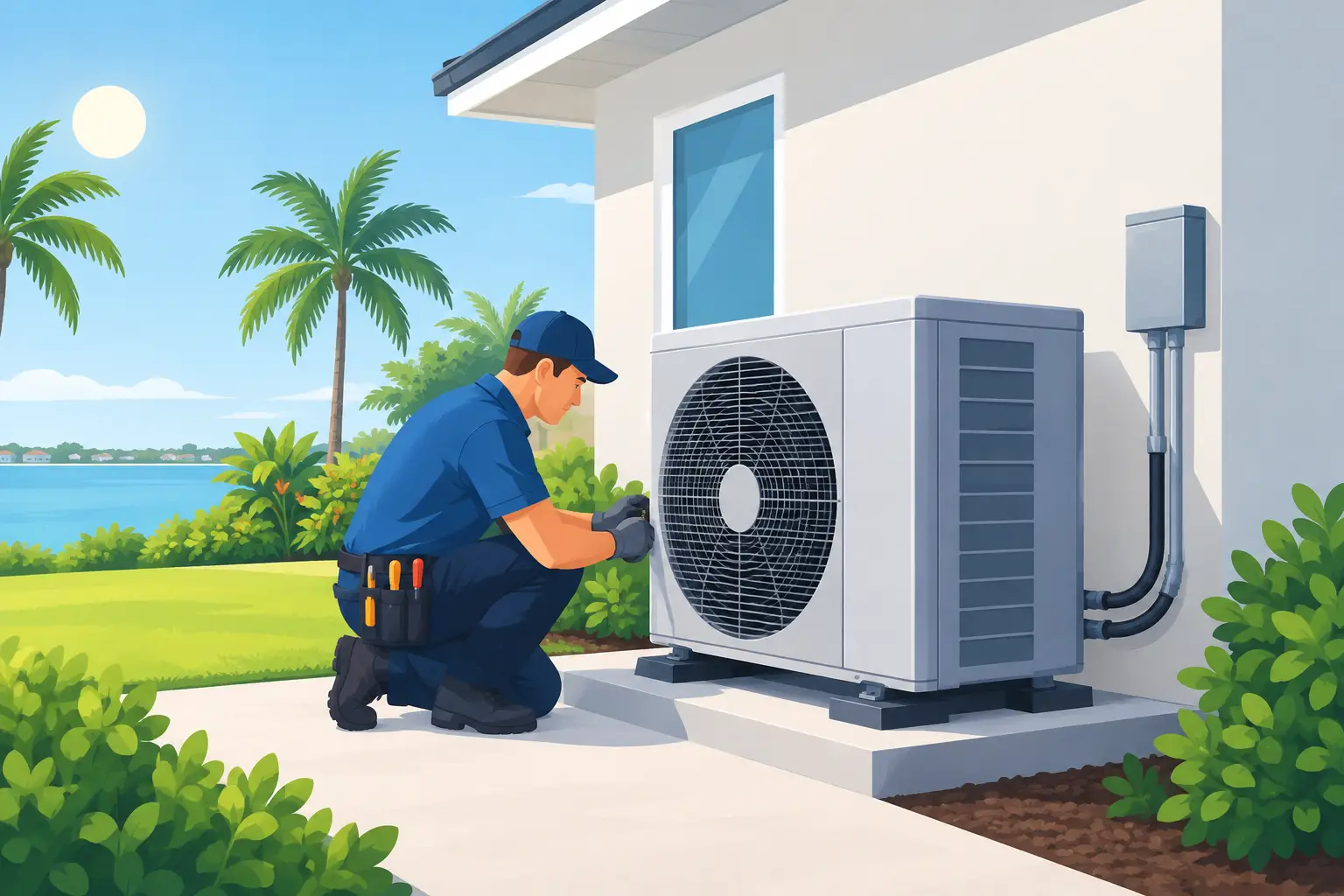
ACS Home Services can help homeowners identify the cause of persistent comfort issues, from AC repair and maintenance to ductwork and indoor air quality concerns. Same-day service can make a real difference when Florida heat is pushing your system past its limits.
A comfortable summer home should not require setting the thermostat lower and lower. Start with a steady temperature, manage humidity and sunlight, and pay attention when your AC begins telling you it needs help.