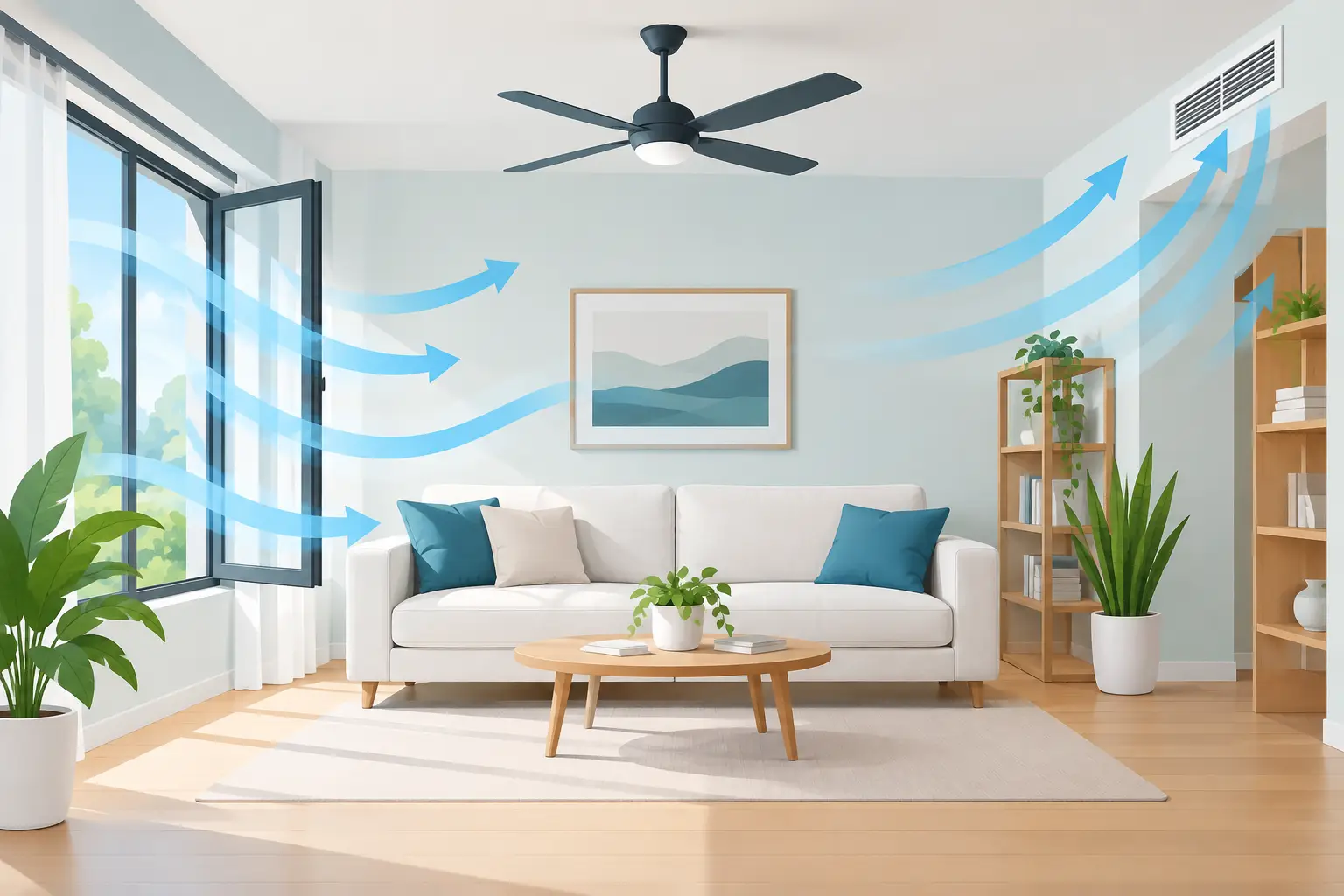


A Tampa home can have a working air conditioner and still feel hot, sticky, or uneven from room to room. The problem is often not the thermostat setting. It is the way conditioned air moves through the home. Knowing how to improve indoor airflow can make bedrooms more comfortable, reduce strain on your AC system, and help your home feel fresher during Florida’s long cooling season.
Airflow issues are not always obvious. You may notice a guest room that never cools down, a living room that feels stuffy in the afternoon, or vents that barely seem to blow. Sometimes the solution is as simple as changing a filter or adjusting a ceiling fan. Other times, restricted ductwork, an undersized return, or a failing HVAC component needs professional attention.
Start With the Air Filter and Vents
Your HVAC filter protects the equipment from dust and debris, but a dirty filter can also restrict the air your system needs to circulate. When airflow is limited, your AC may run longer, rooms can cool unevenly, and your system works harder than it should.
Check the filter every month, especially during periods of heavy AC use. Many Florida households need a replacement every one to three months, though the right schedule depends on the filter type, pets, household activity, allergies, and construction dust nearby. A higher-efficiency filter can capture more particles, but it may also create more resistance if it is not compatible with your system. When in doubt, ask an HVAC professional which filter rating is appropriate for your equipment.
Next, walk through the home and look at every supply vent and return grille. Supply vents deliver cooled or heated air into a room. Return grilles pull indoor air back to the HVAC system to be conditioned again. Both need clear space to do their job.
Do not block vents or returns with couches, beds, rugs, curtains, storage bins, or large furniture. Closing vents in unused rooms can seem like a smart way to direct air elsewhere, but it can increase pressure in the duct system and create comfort problems. Most central HVAC systems are designed to operate with vents open and airflow balanced across the home.
Use Ceiling Fans the Right Way
Ceiling fans do not lower the temperature of a room, but they can make people feel cooler by moving air across the skin. That means they are especially useful in occupied rooms where you want relief without immediately lowering the thermostat.
During Florida’s cooling season, set the fan to rotate counterclockwise when viewed from below. This creates a downward breeze. Keep the fan on only while the room is occupied, since a fan cools people, not the room itself.
A ceiling fan can support comfort, but it will not solve a weak vent, damaged duct, or AC system that cannot keep up. If one room needs a fan running at full speed all day just to feel tolerable, there may be a larger airflow issue worth investigating.
Keep Interior Doors From Restricting Air Movement
Many homes rely on a return grille located in a central hallway or living area. When bedroom doors are closed, air delivered to those rooms may have a harder time finding its way back to the return. That can lead to pressure differences, weak airflow, and rooms that feel warmer than the rest of the house.
Try leaving interior doors open when practical and see whether comfort improves. If closed doors are necessary for privacy or sleeping, an HVAC technician can evaluate whether the home has adequate return-air pathways. Solutions may include properly sized door undercuts, transfer grilles, jumper ducts, or additional return ducts. The right option depends on the layout of the home and should not compromise privacy, sound control, or fire safety.
Check the Areas Around Your Indoor and Outdoor Equipment
Your system needs room to move air on both sides of the cooling process. Inside, the air handler, furnace, or closet unit should be accessible and free of stored belongings. Boxes, holiday decorations, and household items can block access panels or restrict air around equipment.
Outside, keep leaves, grass clippings, mulch, and landscaping away from the condenser. The outdoor unit releases heat collected from inside your home. When its coil is dirty or airflow around it is limited, the entire system can lose efficiency and struggle to provide consistent cooling.
Avoid spraying the outdoor unit with a high-pressure washer or attempting to straighten delicate coil fins yourself. Basic cleanup around the unit is helpful, but coil cleaning and equipment inspection are best handled during professional maintenance.
Look for Ductwork Problems
Ducts carry conditioned air to each room, and they are a common source of airflow loss in Florida homes. Ducts running through a hot attic can develop leaks, loose connections, crushed sections, disconnected runs, or damaged insulation. Even a small gap can send cooled air into the attic instead of into your living space.
Warning signs of duct trouble include rooms with noticeably weaker airflow, dust collecting near vents, unusually high utility bills, whistling sounds, and hot or cold spots that persist after you change the filter. Duct issues may be hidden above ceilings or behind walls, so a visual check from inside the room may not reveal the real problem.
A professional duct evaluation can identify leakage, poor routing, undersized ducts, and balance issues. Sealing and repairing ducts can improve comfort, but replacement or redesign may be the better long-term choice if the existing duct system is severely deteriorated or does not match the capacity of the HVAC equipment.
Manage Humidity Along With Airflow
In Central Florida, comfort is not just about temperature. High humidity can make a properly cooled home feel clammy and stale. Your air conditioner removes moisture as it runs, but poor airflow, oversized equipment, incorrect settings, or drainage problems can interfere with that process.
Set your thermostat fan to “Auto” rather than “On” in most situations. With the fan set to “On,” it continues circulating air between cooling cycles and may blow moisture from the evaporator coil back into the home. “Auto” allows the fan to run when the system is actively cooling, which generally supports better humidity control.
If indoor humidity remains high, a whole-home dehumidifier or HVAC adjustment may help. Portable dehumidifiers can assist in a single problem area, but they require regular emptying or drainage and may not address humidity throughout the house. Persistent humidity should be evaluated because it can contribute to musty odors, condensation, and mold concerns.
Know When Airflow Needs Professional Service
Some airflow problems have a simple homeowner fix. Others point to a mechanical issue that should not be ignored. Schedule HVAC service if you notice any of these conditions:
- Air barely comes from several vents, even with a clean filter.
- One or more rooms stay much warmer than the thermostat setting.
- The AC runs constantly, freezes up, or shuts off before cooling the home.
- You hear banging, whistling, or rattling from ducts or equipment.
- Indoor humidity stays high or you smell persistent mustiness near vents.
A trained technician can inspect the blower motor, evaporator coil, refrigerant performance, thermostat operation, ductwork, returns, and overall system capacity. This matters because airflow and cooling performance are connected. Replacing a part without identifying the restriction can leave the original comfort problem unresolved.
Regular maintenance is also one of the most practical ways to prevent airflow trouble. During a tune-up, technicians can inspect filters, coils, drains, electrical components, blower performance, and other parts that affect reliable operation. For homeowners who want one trusted team for HVAC, plumbing, and electrical needs, ACS Home Services provides clear recommendations and same-day service availability when comfort cannot wait.
A home should not have rooms you avoid because they are too warm or too stuffy. Start with the basics, pay attention to patterns, and get help when the problem persists. Better airflow is not just about feeling cooler – it helps your HVAC system do the job you depend on every day.