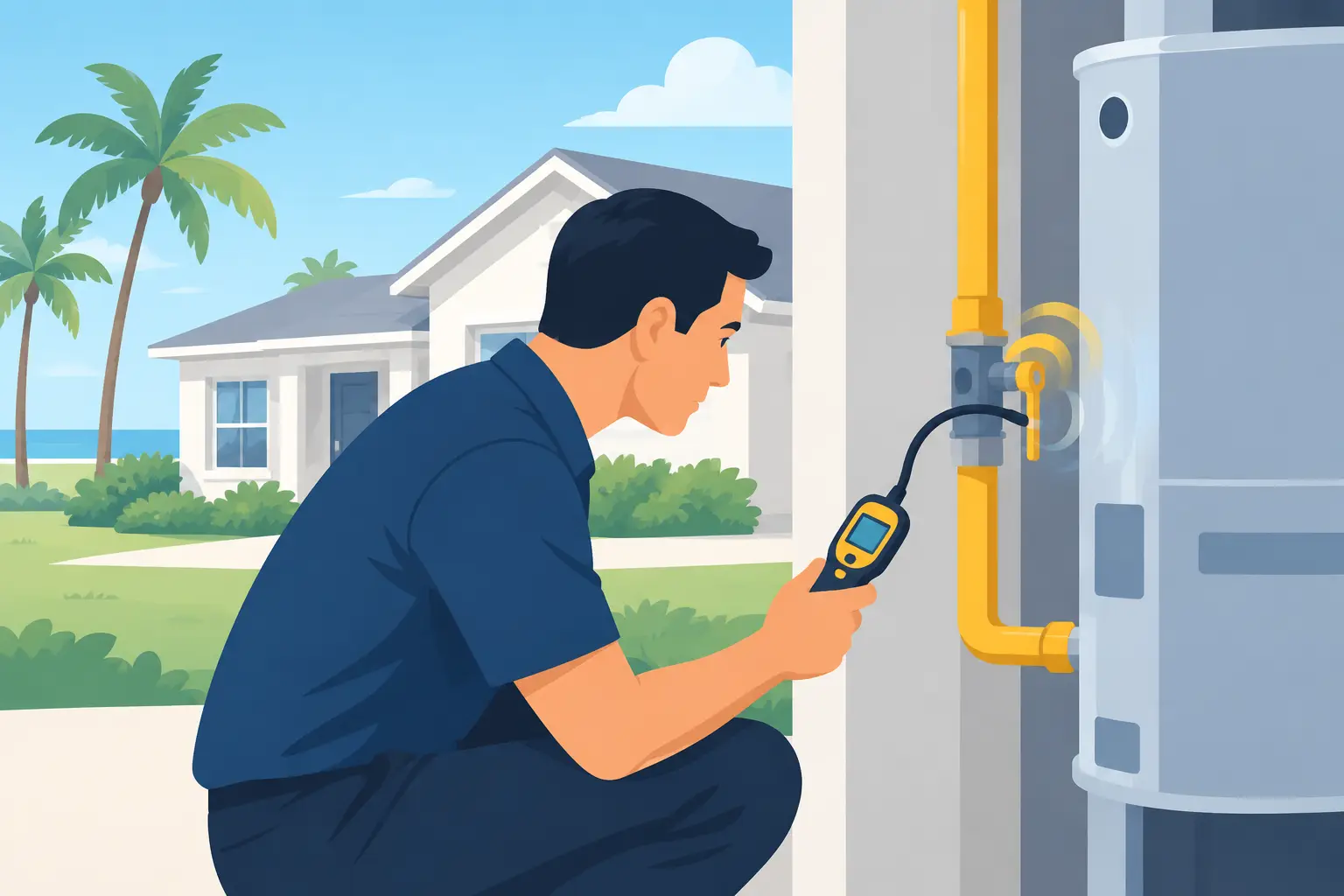


A gas leak is not the kind of home problem to troubleshoot after dinner or wait on until Monday. Natural gas and propane can create an immediate fire risk, while a significant leak can affect the air inside your home. Knowing how to detect gas leaks helps you respond quickly, protect your household, and bring in a qualified professional before a small concern becomes an emergency.
Many Florida homes use natural gas or propane for water heaters, ranges, dryers, fireplaces, pool heaters, and standby generators. The gas itself is odorless, so utility providers add a strong sulfur-like odorant to make leaks easier to identify. Your senses can provide an early warning, but they are only the first part of a safe response.
The Most Common Signs of a Gas Leak
The smell of rotten eggs or sulfur is the best-known warning sign, and it deserves immediate attention. That odor may be faint near a small leak or overwhelming near a larger one. If you notice it indoors, near a gas appliance, around your meter, or outside by a gas line, assume it could be a gas leak until a professional says otherwise.
A hissing or whistling noise near a gas line, appliance connection, meter, or propane tank is another serious indicator. Larger leaks can produce an audible sound as gas escapes under pressure. Do not lean in to locate the sound or touch the line to investigate.
There are other signs that can be easier to miss. A gas burner that suddenly burns with a lazy yellow or orange flame instead of a mostly blue flame may point to incomplete combustion or an appliance issue. It does not always mean there is a supply-line leak, but it does mean the appliance should be inspected. Soot around a gas appliance, repeated pilot light outages, or unusually high gas bills without a change in household usage can also warrant a service call.
Outside, look for dead or discolored vegetation in a concentrated area along the path of a buried gas line. You might also see dirt blowing or bubbling water where there should be neither. Florida’s heavy rain can create confusing yard conditions, so these signs are not proof on their own. Paired with a gas odor, however, they should be treated as urgent.
How to Detect Gas Leaks Without Creating More Risk
Your job is to recognize the warning signs and get to safety, not to confirm the leak with a hands-on test. If you smell gas, hear hissing, or suspect a major leak, leave the home immediately with everyone inside, including pets. Once you are a safe distance away, call 911, your gas utility’s emergency line, or a qualified emergency gas professional.
Avoid anything that could create a spark. Do not turn lights, fans, appliances, or thermostats on or off. Do not plug in or unplug devices, use a garage door opener, start a vehicle nearby, light a match, smoke, or use a phone while still inside or directly next to the suspected leak. Even a small electrical spark can ignite accumulated gas.
Do not try to shut off a gas valve if you have to pass through an area with a strong gas odor to reach it. Emergency responders and gas professionals can isolate the supply safely. You should only return to the home when the utility, fire department, or licensed technician confirms that it is safe.
What about the soap-and-water test?
A soap-and-water solution can reveal bubbles at an accessible appliance connection, and homeowners sometimes use it after installing an approved gas appliance connector. But it is not a complete gas leak detection method, and it is not appropriate when you already smell gas indoors or hear a leak. It cannot identify leaks inside walls, underground lines, appliance components, or fittings you cannot safely access.
For a suspected leak, especially one involving a gas water heater, range, dryer, generator, meter, or outdoor line, professional testing is the safer choice. A trained technician can assess the system, perform pressure testing when appropriate, locate the source, make code-compliant repairs, and verify safe operation afterward.
Gas Leak Symptoms and Carbon Monoxide Are Different Hazards
People often group gas leaks and carbon monoxide together, but they are not the same thing. Natural gas and propane leaks primarily create a fire and explosion hazard. Carbon monoxide is an odorless gas produced when fuel-burning equipment does not burn or vent properly. You cannot smell it, which is why working carbon monoxide alarms are essential in homes with gas appliances, fireplaces, or generators.
Headaches, dizziness, nausea, confusion, weakness, chest discomfort, and flu-like symptoms that improve when you leave the home can be possible carbon monoxide exposure signs. If multiple people in the home feel ill at once, get outside into fresh air and call 911. Do not assume the problem is a virus, bad indoor air, or a malfunctioning detector.
Carbon monoxide alarms do not detect natural gas leaks, and natural gas detectors do not replace carbon monoxide alarms. Depending on your home’s equipment and layout, both can add valuable protection. Follow the manufacturer’s placement and replacement instructions, and test alarms regularly.
Appliances and Areas Worth Watching
Gas problems often begin at connections, aging flexible lines, appliance shutoff valves, venting components, or equipment that has not been maintained. Pay attention after appliance installation, remodeling work, storm damage, or a generator hookup. A line may also be disturbed by landscaping, digging, fence installation, or other work near buried utility routes.
In Central Florida, outdoor gas equipment deserves special attention. Pool heaters, patio appliances, generators, and propane systems are exposed to heat, humidity, rain, and corrosion. These conditions can affect fittings and components over time. After a hurricane or major storm, have damaged or shifted gas equipment checked before using it again.
Never use a gas oven or range to heat your home, even briefly. It can create a carbon monoxide hazard and puts extra strain on equipment not designed for space heating. Keep flammable materials away from gas appliances, and make sure vents and combustion-air openings are not blocked by storage, debris, or renovations.
When to Call for Professional Gas Leak Detection
Call for immediate emergency help when you smell gas, hear hissing, see signs of a significant outdoor leak, or experience symptoms that may be related to carbon monoxide. In those situations, evacuation comes first.
For less obvious concerns, schedule professional service promptly if you have a recurring gas odor, soot around an appliance, yellow burner flames, unexplained increases in gas use, a pilot light that will not stay lit, or a gas appliance that is performing differently than usual. It depends on the symptom, but waiting for it to become unmistakable is not a good safety strategy.
A licensed gas professional can distinguish between a gas supply leak, a combustion issue, a venting problem, and a failing appliance component. That distinction matters. Replacing a detector or tightening a visible fitting may not address the actual source, and an improper repair can make the situation more dangerous.
ACS Home Services provides professional gas line and home comfort services for homeowners who need clear answers and responsive help. When safety is on the line, you deserve a technician who can explain what was found, outline the repair options, and help restore confidence in the systems your home depends on.
A Simple Prevention Plan for Your Home
You cannot prevent every equipment failure, but regular attention reduces the chance that a problem goes unnoticed. Have fuel-burning appliances maintained according to their manufacturer guidance, keep carbon monoxide alarms operational, and arrange an inspection when you add or replace gas equipment. Before digging outdoors, follow local utility-location requirements rather than guessing where a gas line runs.
If something smells wrong, sounds unusual, or changes the way a gas appliance operates, trust that instinct. Stepping outside and asking for qualified help is a small interruption compared with the peace of mind of knowing your home is safe.