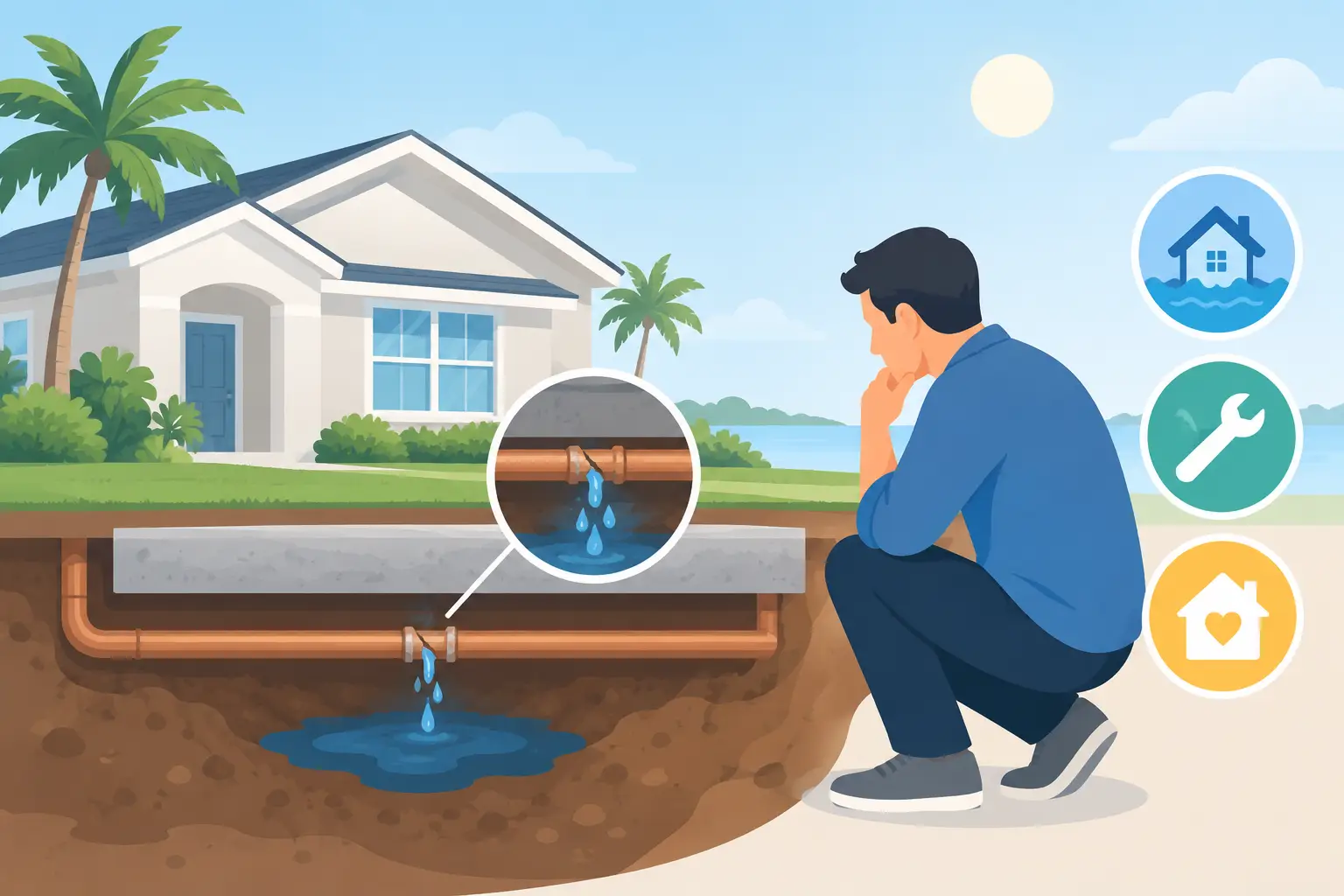


A warm spot under a tile floor, the sound of water when every fixture is off, or a water bill that suddenly climbs can point to a leak below your home’s concrete slab. Slab leak outcomes can range from a contained plumbing repair to flooring damage, mold concerns, and foundation movement if water is allowed to run unchecked. For Tampa Bay and Central Florida homeowners, prompt leak detection gives you the best chance of keeping the repair smaller and protecting the home around it.
Slab Leak Outcomes Depend on Timing and Repair
A slab leak is a leak in a water or drain line located beneath or within a concrete foundation. Because the pipe is hidden, the first visible problem may not appear where the leak actually is. Water can travel beneath the slab, seep into flooring materials, or show up along an exterior wall before anyone realizes there is an issue.
The most favorable outcome is early detection followed by a targeted repair. A qualified plumber locates the source, confirms the condition of the line, and recommends the least disruptive solution that will hold up over time. In some cases, that means repairing one accessible section of pipe. In others, especially with aging or repeatedly failing lines, rerouting or replacing a section can make more sense than opening the slab for another spot repair later.
The longer a leak continues, the more variables enter the picture. Water can saturate carpet, underlayment, baseboards, and cabinetry. It can create conditions that support mold growth, raise utility costs, and weaken or wash away soil below portions of the slab. Not every slab leak leads to foundation damage, but the risk increases when a pressurized water line leaks continuously or when warning signs are ignored.
Signs That Can Change the Outcome
A hidden leak does not always create a dramatic flood. Small leaks often start with changes that are easy to dismiss, especially in a busy household. Paying attention to those changes can prevent a repair from becoming a larger restoration project.
Watch for an unexplained increase in your water bill, low water pressure, damp or unusually warm areas of flooring, or the sound of water moving when no appliance or fixture is operating. A water meter that continues to run after you shut off all water use is another reason to schedule professional testing. Mildew odors, cracked tile, loose flooring, and damp spots near walls may also indicate that moisture has migrated beyond the original leak location.
In Florida, high humidity can make indoor moisture issues harder to read. Condensation from HVAC equipment, a roof leak, or a plumbing leak can all create similar symptoms. That is why diagnosis matters. Cutting into flooring before the source is confirmed can add unnecessary disruption and expense.
Water Damage and Indoor Air Concerns
One possible slab leak outcome is damage to finished spaces rather than the slab itself. Water moving upward can affect wood flooring, laminate, carpet, cabinets, drywall, and furniture. The amount of damage depends on the volume of the leak, how long it has been active, and the materials in the affected area.
Moist materials should be dried quickly and evaluated carefully. A plumbing repair stops the source, but it does not automatically restore flooring or address moisture that has already reached wall cavities and other materials. If the leak has affected a large area, homeowners may need water mitigation and restoration support after the plumbing work is complete.
Soil Movement and Foundation Concerns
Foundation problems are the outcome homeowners worry about most, but they are not guaranteed. Whether a slab leak affects the foundation depends on factors such as leak size, soil conditions, water direction, the age of the home, and the length of time the leak has continued.
A steady leak can change the moisture level in the soil below a slab. In some situations, this may contribute to shifting, settling, or cracks. However, a crack in concrete or tile does not prove that a slab leak caused it. Professional leak detection and, when appropriate, a foundation evaluation help separate confirmed plumbing damage from unrelated settling or structural concerns.
Why Accurate Leak Detection Matters
The goal is not simply to find moisture. It is to identify the leaking line, verify its location, and understand the condition of the surrounding plumbing system. Experienced technicians may use pressure testing, acoustic listening equipment, thermal imaging, or other noninvasive diagnostic methods before recommending a repair.
Accurate testing can reduce unnecessary demolition and help homeowners make a clearer repair decision. It also matters when a home has more than one symptom. A high water bill and a wet floor may stem from the same leak, but they can also come from separate issues. A complete evaluation prevents assumptions from driving the repair plan.
At ACS Home Services, homeowners can get professional plumbing help from a team equipped to identify urgent leak concerns and explain the available next steps in plain language. Same-day service availability can be especially valuable when water is actively affecting the home.
Choosing the Right Repair Path
There is no single best slab leak repair for every Central Florida home. The right option depends on the pipe material, the leak location, access, prior repairs, the age of the plumbing, and your plans for the property.
A direct spot repair may be appropriate when the leak is isolated and the line is otherwise in good condition. This approach can require accessing the pipe through the slab or, in select situations, from another location. It can be cost-effective, but it may not be the best long-term answer if the same older piping has developed multiple leaks.
Rerouting involves bypassing the damaged section by installing a new line through walls, ceilings, or attic space. It may avoid breaking through the slab, though it can require drywall access and patching. Repiping becomes worth discussing when widespread corrosion, recurring pinhole leaks, or aging materials suggest that future failures are likely.
The trade-off is straightforward: the lowest immediate repair cost is not always the lowest cost over the next several years. A trusted plumbing professional should explain both the immediate fix and the reason a larger repair may or may not be justified. Homeowners deserve a recommendation based on the condition of their system, not a one-size-fits-all answer.
What to Do When You Suspect a Slab Leak
Start by limiting water damage. If water is actively surfacing indoors or a pipe has caused a sudden pressure loss, turn off the home’s main water supply if it is safe to do so. Move rugs, furniture, and valuables away from affected areas, but avoid tearing out flooring or opening walls before a professional evaluation.
Next, schedule leak detection as soon as possible. Take photos of visible moisture, note changes in water bills, and write down when you first noticed the symptoms. Those details can help establish how the problem developed and may be useful if you need to speak with your insurance carrier.
Insurance coverage varies by policy and by the type of damage involved. Some policies may address sudden and accidental water damage but exclude the cost of repairing worn plumbing or ongoing seepage. Review your policy, document the issue, and ask your insurer what information it needs. Your plumbing contractor can provide repair details, but insurance coverage decisions belong to the carrier.
A Faster Response Protects More Than Plumbing
The best slab leak outcome is not just a repaired pipe. It is a home with its water supply restored, moisture controlled, and repair decisions made before the problem spreads into surrounding finishes or creates larger concerns below the slab.
If you notice unexplained water use, damp flooring, warm spots, or the sound of running water with fixtures off, treat it as a reason to act rather than wait. A timely professional evaluation can bring clarity quickly and help protect the comfort, value, and day-to-day function of your Florida home.