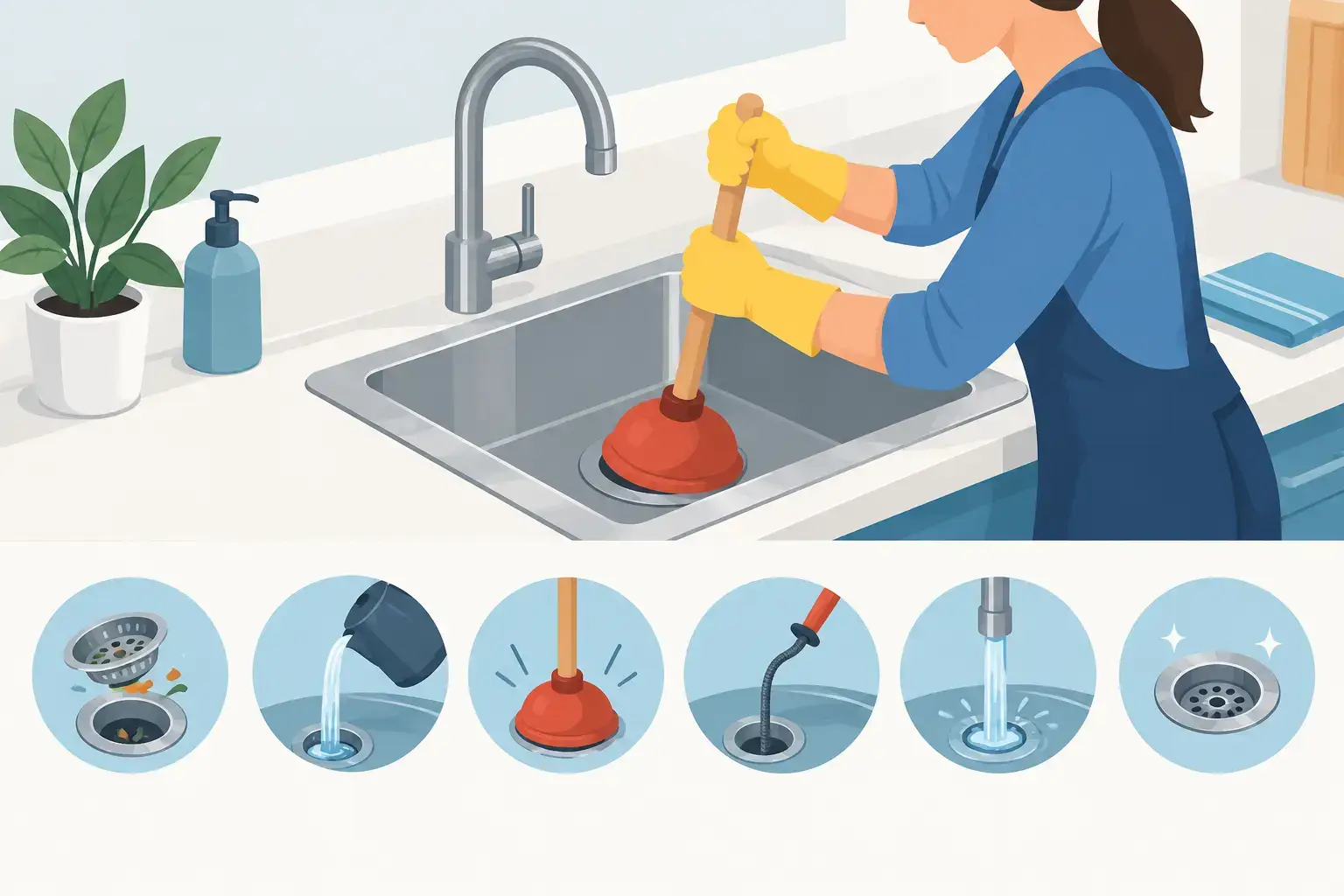


A kitchen sink that suddenly fills with murky water can bring dinner cleanup, dishwashing, and the whole household routine to a stop. Knowing how to unclog kitchen sink drains safely can often get water moving again without damaging your plumbing – but the right method depends on where the blockage is and whether you have a garbage disposal.
Most kitchen sink clogs build gradually. Cooking grease cools inside the drain, food particles settle in the trap, and soap residue helps everything stick together. In Central Florida homes, mineral buildup can also narrow pipes over time. The goal is to clear the obstruction without forcing it farther down the line or creating a bigger repair.
How to Unclog a Kitchen Sink Safely
Before you start, remove dishes from the sink and clear out as much standing water as possible with a cup or small container. Put on gloves, especially if you plan to clean the drain trap. Avoid mixing products or pouring several chemical drain cleaners into the sink. Those products can create dangerous fumes, damage certain pipes, and make hands-on repairs hazardous for anyone working on the drain later.
1. Check the garbage disposal
If one side of a double kitchen sink is clogged and the other side drains slowly, the garbage disposal may be involved. Turn the disposal switch off before inspecting it. Never put your hand into the disposal chamber.
Use a flashlight to look for visible utensils, bottle caps, fibrous food scraps, or other objects near the opening. If you can see an item, remove it with tongs. Then press the disposal’s reset button, typically located underneath the unit, and use the manufacturer-provided wrench or a compatible Allen wrench in the bottom socket to manually rotate the motor if it is jammed.
Once the disposal spins freely, run cold water and turn it on for a few seconds. Cold water helps carry small particles through the drain and keeps grease from softening into a coating inside the pipe. If the disposal hums but will not turn, repeatedly trips its reset button, or leaks underneath the sink, stop there and schedule professional service.
2. Use hot water and dish soap for grease buildup
For a slow drain with no standing water, dish soap and hot water can help loosen fresh grease residue. Add a generous squeeze of grease-cutting dish soap to the drain, then follow it with very hot tap water. If your home has PVC drain lines, use hot tap water rather than boiling water. Extreme heat can stress older plastic fittings and seals.
Let the water run for a minute or two. This method is most useful for a minor grease film, not a solid food blockage or a drain that is completely backed up. If water rises instead of draining, turn it off and move to the next step.
3. Plunge the sink correctly
A sink plunger is often the most effective first tool for a simple kitchen clog. Use a clean cup-style plunger, not one that has been used for a toilet. Add enough water to cover the rubber cup, which helps create a seal.
For a double-bowl sink, seal the second drain opening with a wet rag or sink stopper. If your sink has a dishwasher connection, keep the dishwasher door closed during plunging. Place the plunger over the clogged drain and make 10 to 15 firm, controlled strokes. Lift the plunger and see whether the water begins to drain.
You may need to repeat this process a few times. Do not plunge if you have recently used a chemical drain cleaner. Splashing caustic chemicals onto your skin, cabinets, or eyes is a serious risk.
4. Clean the P-trap under the sink
If plunging does not work, the clog may be sitting in the P-trap, the curved section of pipe beneath the sink. Place a bucket and several towels under the trap before loosening anything. The trap holds water by design, and it may release dirty water and debris when removed.
Most modern traps have slip nuts that can be loosened by hand. Carefully remove the curved section and empty its contents into the bucket. Food scraps, grease clumps, coffee grounds, and small objects often collect here. Clean the trap, inspect the washers for wear, then reinstall it snugly without overtightening.
Run water slowly and check every connection for leaks. If the trap is clean but the sink still will not drain, the blockage is likely farther into the branch drain line. That is when a drain auger or professional drain cleaning becomes the smarter next step.
5. Use a small drain auger with care
A hand-crank drain auger, sometimes called a drain snake, can reach deeper clogs that are beyond the trap. Remove the P-trap first when possible and feed the cable into the pipe leading into the wall. Turn the handle gradually instead of forcing it. Pushing too hard can damage a pipe, catch the cable in a fitting, or compact the blockage.
Pull the cable back slowly, clean it as you go, and reassemble the drain. Then test the sink with a steady flow of water. A small auger can be helpful for a localized clog, but it is not always the best solution for heavy grease buildup or a recurring blockage. Those conditions may require professional equipment that cleans the pipe walls rather than simply punching a narrow hole through the debris.
6. Test the drain and watch for warning signs
After clearing a clog, fill the sink partway with water and release it. The sink should drain quickly without gurgling, water backing up into the other bowl, or water appearing in the dishwasher. Check under the cabinet for moisture around the trap and supply lines.
If water backs up again within days or weeks, the original clog may not be fully cleared. Repeated slow drains can point to accumulated grease, an issue farther down the kitchen line, or, in some homes, a larger sewer drain problem.
What Not to Put Down a Kitchen Sink
Kitchen drains are built for water and small amounts of rinsed residue, not for processing every food scrap from meal prep. Even with a garbage disposal, avoid sending grease, oils, fats, coffee grounds, eggshells, rice, pasta, flour, stringy vegetables, and large amounts of potato peelings into the drain.
Grease is especially troublesome in Florida’s warm climate because it may seem liquid when poured out, then cool and cling to pipe walls farther down the line. Let grease cool in a container and throw it away instead. Use a sink strainer to catch food debris before it enters the drain.
When a Kitchen Sink Clog Needs a Plumber
A basic clog is usually a homeowner-friendly job. But a few symptoms call for prompt professional help: water backing up into multiple fixtures, sewage odors, frequent repeat clogs, leaks under the sink, a disposal that will not reset, or drainage problems after you have cleaned the P-trap.
Property managers and homeowners should also pay attention when a kitchen sink backs up while the washing machine runs or when toilets and showers begin draining slowly at the same time. That can indicate a blockage in a larger drain line rather than the kitchen sink itself.
ACS Home Services provides professional drain cleaning for homeowners across Tampa and surrounding Central Florida communities. A trained plumber can identify whether the issue is in the trap, branch line, garbage disposal connection, or main sewer line, then recommend the appropriate repair without guesswork.
A clear kitchen sink should not be something you have to think about. If safe DIY steps do not restore normal drainage, addressing the problem early can help protect your cabinets, flooring, and schedule from a much messier backup.