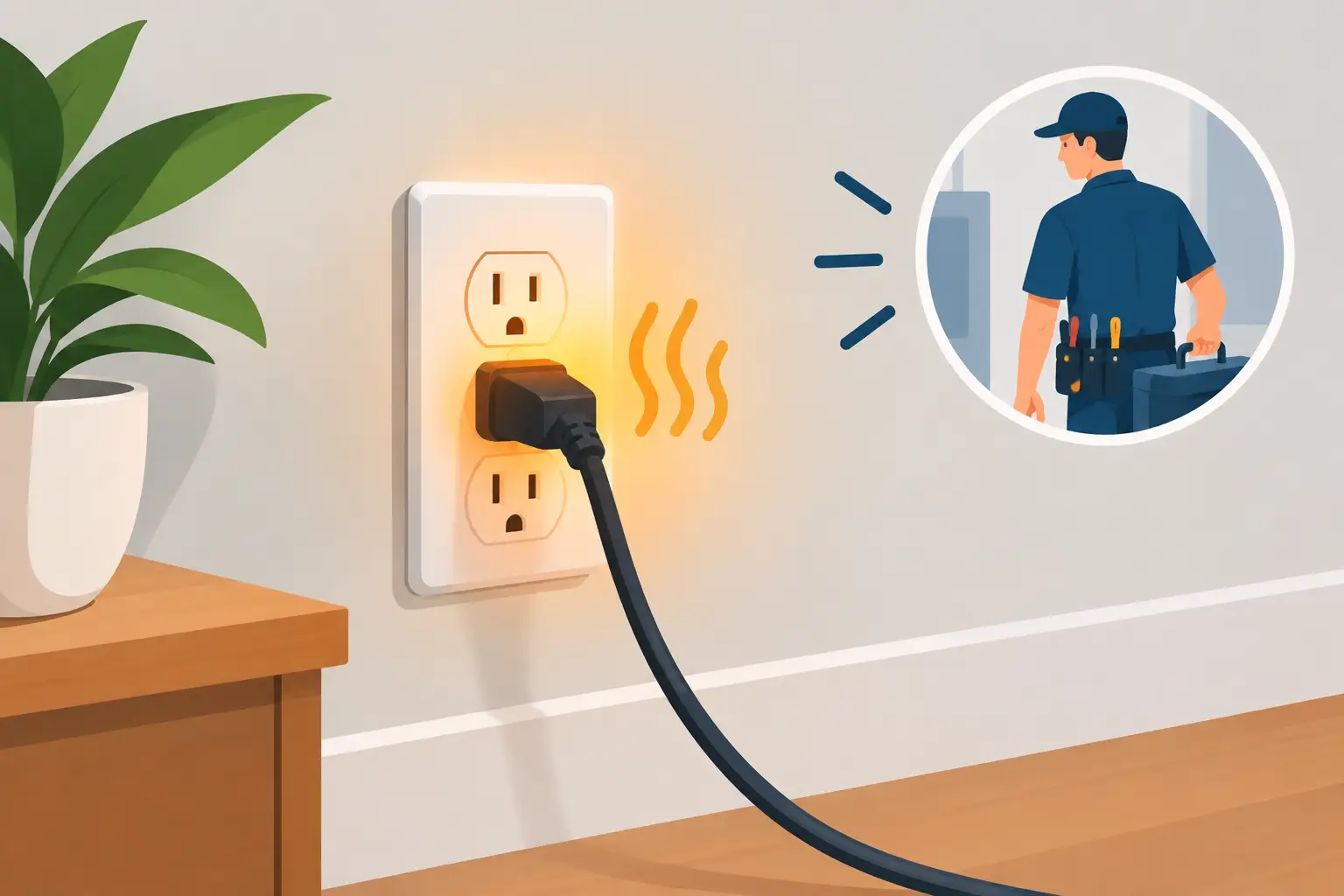


A phone charger has been plugged in all afternoon, and now the outlet plate feels warm when you walk by. When outlets feel warm, it is easy to wonder whether you are noticing a normal effect of electricity or an early warning of a serious electrical problem. The answer depends on how warm the outlet is, what is connected to it, and whether other warning signs are present.
A wall outlet should generally feel close to room temperature. A slight amount of warmth can occur when an outlet is supplying power to a device for an extended period. But an outlet that feels noticeably hot, is uncomfortable to touch, smells burnt, or shows discoloration needs prompt attention from a qualified electrician.
Are Warm Outlets Normal?
Electricity creates some heat as it moves through wires and connections. That is especially true when a high-demand appliance runs for a long time. Space heaters, window AC units, hair dryers, countertop appliances, gaming systems, and power tools can all place a significant load on an outlet.
Even so, the outlet cover and plug should not become hot. A mildly warm plug after charging a large battery or running an appliance may not mean an emergency, but it should not be ignored if the warmth is recurring or increasing. Heat often means that electrical resistance is building somewhere it should not, including inside the outlet box where you cannot see it.
Florida homes face an added challenge. Air conditioning, pool equipment, garage refrigerators, and storm-season power needs can put steady demand on a home’s electrical system. In older homes, aging wiring or outlets may not be equipped to handle the way families use power today.
Why Do Outlets Feel Warm?
A loose connection is creating resistance
Loose wiring is one of the most common reasons an outlet gets warm. Electricity moves less efficiently through a loose terminal, damaged wire, or worn internal contact. That resistance produces heat. Left uncorrected, the connection can continue to deteriorate, damage the receptacle, and potentially create an arcing or fire hazard.
This issue can develop over time as plugs are inserted and removed, especially at outlets used every day. It can also occur after poor-quality repairs or when wires were not properly secured during installation.
The outlet is overloaded
An outlet may overheat when it is asked to power more than it was designed to handle. Plugging several devices into a power strip does not increase the amount of power the circuit can safely provide. It only gives more devices access to the same circuit.
A portable heater, microwave, air fryer, vacuum, or other high-wattage appliance can overload an outlet or circuit when used alongside other equipment. Extension cords and multi-outlet adapters can make the problem harder to spot. If an outlet warms up only when a particular appliance is used, stop using that setup until an electrician can evaluate it.
The receptacle is worn or damaged
A plug should fit snugly in the outlet. If plugs sag, slide out easily, or require you to position them just right to work, the outlet may be worn. Loose internal contacts can create a poor connection between the plug and receptacle, which creates heat at the point of contact.
Look for cracked cover plates, chipped plastic, discoloration, melted areas, or dark marks around the slots. These are not cosmetic concerns. They can indicate overheating or arcing inside the outlet.
The circuit or wiring is outdated
Older homes may have wiring, outlets, or electrical panels that were adequate decades ago but are now supporting much larger electrical loads. Modern households use more electronics, chargers, kitchen appliances, smart devices, and climate-control equipment than previous generations.
A single warm outlet does not automatically mean your entire electrical system needs replacement. However, recurring hot outlets, frequent breaker trips, flickering lights, or multiple outlets that do not work properly can point to a broader circuit or panel issue. An electrical inspection can determine whether a targeted repair, new dedicated circuit, outlet upgrade, or panel work makes the most sense.
Moisture or corrosion is affecting the connection
Outdoor outlets, garage outlets, bathrooms, laundry areas, and pool-adjacent spaces are more vulnerable to moisture exposure. In Central Florida’s humidity, corroded components and compromised covers can affect how safely an outlet operates.
Any outlet exposed to water should have appropriate protection and a weather-resistant cover where required. If an outlet feels warm after rain, has visible corrosion, or is near a leak, turn off power to that circuit if you can do so safely and schedule professional service.
Warning Signs That Need Fast Electrical Service
Heat alone deserves attention, but certain symptoms raise the urgency. Stop using the outlet and arrange an electrical evaluation as soon as possible if you notice:
- A burning, fishy, or melted-plastic odor
- Sparks, crackling, buzzing, or popping sounds
- Brown, black, or yellow discoloration on the outlet or cover plate
- A hot plug, melted cord, or outlet that is painful to touch
- Breakers that trip repeatedly or lights that flicker when equipment turns on
- Smoke, visible arcing, or a loss of power at the outlet
If you see smoke, flames, or active sparking, move people away from the area, call 911, and do not touch the outlet or attempt a repair. Do not use water on an electrical fire. Once the immediate danger is addressed, have the affected circuit inspected before it is used again.
What to Do When an Outlet Feels Warm
First, unplug the device if the plug and surrounding area can be touched safely. If the plug is hot, you smell burning, or the outlet is visibly damaged, do not pull at it or continue handling it. Turn off the appropriate breaker only if you can identify it safely and without approaching a hazardous outlet.
Do not cover the outlet, tape over it, or assume a new faceplate will solve the problem. A warm outlet is usually caused by a condition behind the cover, not by the cover itself. Avoid using extension cords to work around the outlet until the underlying issue has been checked.
It can help to note what was plugged in, how long it had been operating, and whether the breaker tripped. That information gives the technician a clearer starting point. An electrician can test the outlet, inspect the wiring connections, evaluate circuit load, and identify whether the appliance itself may be contributing to the problem.
Can You Replace a Warm Outlet Yourself?
Replacing an outlet may appear straightforward, but a warm receptacle should not be treated as a routine cosmetic swap. The heat could be caused by a loose wire, a damaged conductor, an overloaded circuit, or an issue farther upstream. Installing a new outlet without finding the cause may leave the same hazard in place.
Electrical work also requires proper power shutoff, correct wire connections, grounding, and device selection. For example, kitchens, bathrooms, garages, laundry areas, outdoors, and pool-related spaces may require GFCI protection. A licensed electrician can make sure the repair addresses both the immediate concern and current safety requirements.
When a Panel or Circuit Upgrade May Be the Better Fix
Sometimes the outlet is only the first symptom. If your home relies heavily on power strips, has too few outlets, frequently trips breakers, or struggles when major appliances run at the same time, adding a dedicated circuit may be safer than repeatedly replacing outlets.
Electrical panel upgrades can also be worth considering when a panel is outdated, undersized, damaged, or unable to support new equipment such as an EV charger, pool heater, larger HVAC system, or standby generator. The right solution depends on the age of the home, the condition of the wiring, and the actual load on each circuit. A professional assessment prevents both unnecessary upgrades and temporary fixes that do not last.
ACS Home Services provides electrical diagnostics and repairs for homeowners who want clear answers, careful workmanship, and a straightforward recommendation. Same-day service may be available when an electrical concern cannot wait.
A warm outlet is not something to monitor for weeks while hoping it cools down. Stop using the affected outlet, pay attention to any warning signs, and schedule an electrical inspection before a small connection problem has the chance to become a larger safety issue.