
A toilet can go from normal to overflowing in the few seconds it takes to reach for the flush handle again. Knowing how to prevent toilet overflow protects your floors, walls, and peace of mind, especially when a bathroom is being used by a busy family or guests. The best approach combines a quick emergency response with simple habits that keep clogs and mechanical failures from becoming a messy surprise.
Prevent Toilet Overflow With a Fast Response
When the water level rises after a flush, do not flush a second time. A second flush is one of the fastest ways to send dirty water over the bowl and onto the floor. Instead, remove the tank lid and press the rubber flapper closed over the opening at the bottom of the tank. This stops more water from entering the bowl.
Next, turn the shutoff valve clockwise. It is usually located on the wall or floor behind the toilet, where the supply line connects. This valve shuts off the fresh water feeding the tank. Every household should know where it is and make sure it turns freely. A valve that has not been used in years can seize up when you need it most.
If the bowl is close to overflowing, keep towels handy to contain any water that reaches the floor. Avoid standing in wastewater, and keep children and pets away from the area. Once the water has stopped rising, you can assess whether the problem is a simple clog or a drain issue that needs professional attention.
Know the Difference Between a Clog and a Tank Problem
Not every overflow begins with a blockage. If the bowl rises only after flushing and then drains slowly, a clog in the toilet trap or drain line is the likely cause. If water continues running into the bowl even without flushing, the issue may be inside the tank. A worn flapper, incorrectly adjusted float, or failing fill valve can allow water to keep flowing.
A toilet that repeatedly runs after flushing should be repaired before it contributes to an overflow. Tank parts are relatively small, but they control a large amount of water. If the float is set too high, for example, the tank can overfill and send water down the overflow tube continuously. That may not spill onto the bathroom floor immediately, but it wastes water and signals that the toilet needs attention.
What Should Never Go Down the Toilet
Your toilet is designed for human waste and toilet paper. It is not a general-purpose disposal drain, even when an item is labeled flushable. Many products do not break apart quickly enough to travel through the plumbing system, particularly in older homes or homes with septic systems.
Keep these common clog-causers out of the bowl:
- Flushable wipes, baby wipes, cleaning wipes, and paper towels
- Feminine hygiene products, cotton swabs, and dental floss
- Facial tissues, dryer sheets, and disposable cleaning pads
- Grease, food scraps, cat litter, and medications
Wipes are a frequent source of stubborn toilet and sewer line clogs. They may pass through the toilet on the first flush, but they can collect in bends, joints, or existing buildup farther down the line. The same is true of excess toilet paper. Use a reasonable amount per flush, and flush between large amounts when necessary.
For households with young children, consider using a toilet lid lock or a childproof bathroom latch. Small toys, toothbrushes, and personal care items can become lodged in the toilet trap. A plunger may not remove these objects, and pushing harder can send the obstruction deeper into the drain.
Use the Right Tool for a Minor Clog
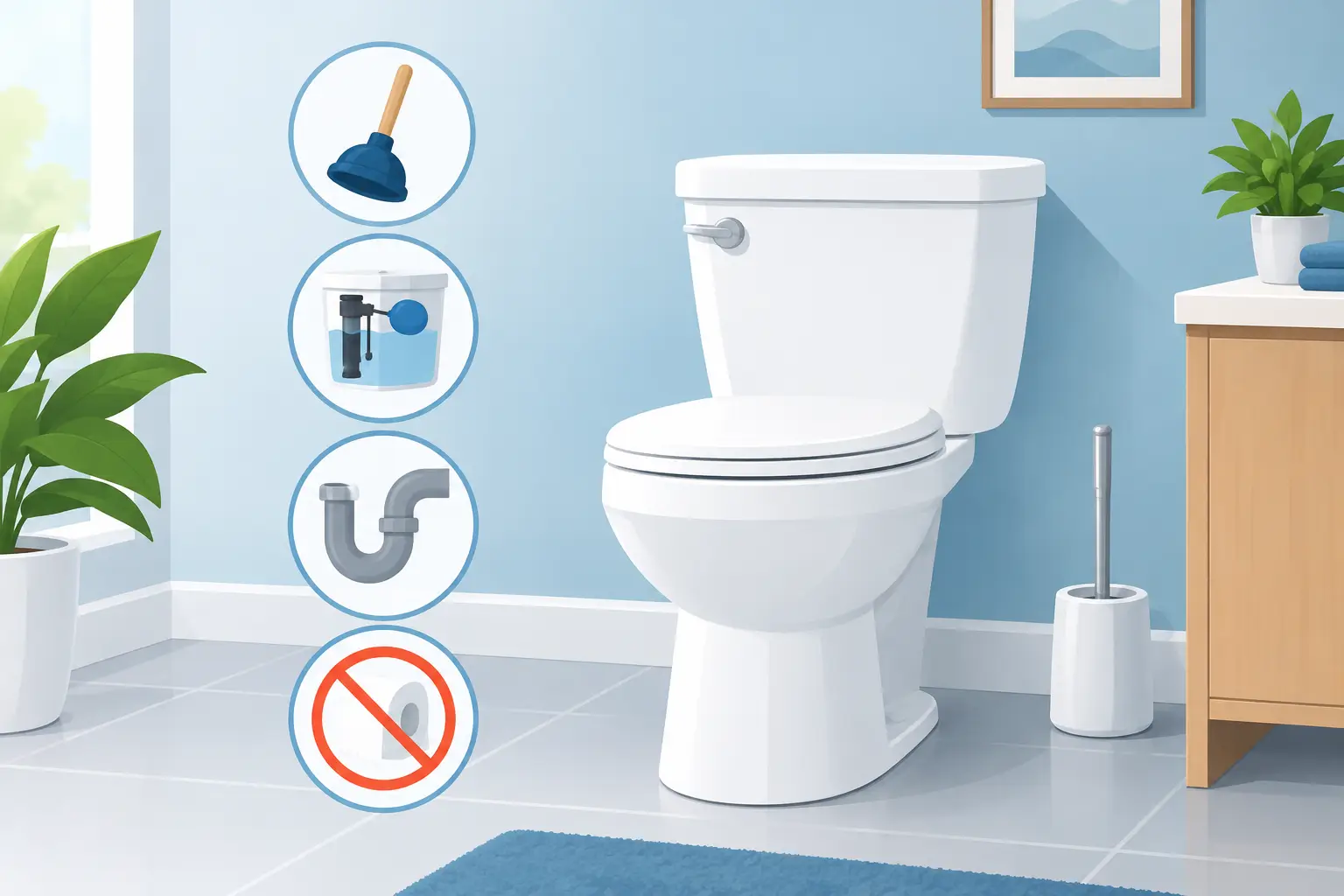
A toilet plunger is worth keeping in every bathroom, but it needs the right shape. Choose a flange plunger, which has a rubber sleeve that folds out from the cup to create a seal in the toilet bowl. A flat-bottom sink plunger does not seal as effectively and often turns a manageable problem into a frustrating one.
Before plunging, make sure the bowl is not near the rim. If needed, shut off the water supply and wait a few minutes for the level to drop. Position the plunger over the drain opening, create a tight seal, and use controlled, steady pushes and pulls. Several firm strokes are usually more effective than frantic plunging.
Skip chemical drain cleaners. Harsh chemicals can damage some plumbing components, create fumes, and remain in the bowl if the clog does not clear. They also make a later repair more hazardous for anyone working on the drain. If a plunger does not restore a normal flush, a toilet auger is the safer next step for a blockage close to the fixture. If you are not comfortable using one, call a plumber rather than forcing the clog farther into the line.
Watch for Early Warning Signs
Toilet overflows rarely feel predictable, but many plumbing systems give warning signs before a full backup occurs. Slow flushing, frequent plunging, gurgling sounds, and changing water levels all deserve attention. A toilet should flush with a consistent, quick pull of water and then refill normally.
Pay attention to what happens elsewhere in the house. If flushing one toilet causes water to rise in a shower, tub, or another toilet, the issue may be beyond that bathroom fixture. Multiple slow drains, sewage odors, or backups in the lowest drain in the home can point to a clog in the main sewer line. This is not a DIY situation, particularly if wastewater is coming back into the home.
Homes in Central Florida may also experience drain problems from aging piping, root intrusion, shifting soil, or heavy household use. A single occasional clog can happen in any home. A repeated clog in the same toilet means there is likely an underlying issue, such as a partial blockage, poor drainage, a damaged pipe, or a toilet that is not flushing with enough force.
Be Careful With “Temporary” Workarounds
Jiggling a handle, holding it down during every flush, or flushing twice to make the bowl clear may seem harmless. In reality, these workarounds can hide an issue until the toilet fails at the worst possible time. A weak flush can indicate mineral buildup under the rim, a malfunctioning tank component, or a restriction in the drain.
It also depends on the age and design of the toilet. Some older fixtures use more water but still perform poorly because of worn internal parts or buildup. Newer high-efficiency toilets can save water, but they need to be installed correctly and matched to the household’s needs. Replacing a toilet may make sense when repairs are frequent, the fixture is cracked, or flushing performance has been consistently poor.
Maintain the Toilet and the Drain System
A few routine checks can help prevent toilet overflow before it becomes an emergency. Test the shutoff valve once or twice a year by gently turning it off and back on. Inspect the supply line for corrosion, bulging, or dripping. Look inside the tank for a deteriorated flapper, a loose chain, or water that rises above the overflow tube.
Clean rim jets as part of regular bathroom maintenance. These small openings under the bowl rim direct water during a flush. Mineral deposits can reduce their flow over time, which weakens the flush and makes clogs more likely. If your home has hard water, this task can matter more than many homeowners realize.
Professional drain cleaning is also a practical preventive step when a home has recurring clogs or a history of sewer backups. It is not necessary to clean every drain line on a set schedule for every household. However, homes with mature trees, older pipes, large families, or repeated slow drains benefit from an inspection and clear recommendation based on what is actually happening in the plumbing system.
When to Call for Plumbing Help
Call a professional plumber when plunging does not clear the toilet, the toilet keeps clogging, wastewater backs up into another fixture, or you see water around the base of the toilet. A leak at the base can be caused by a failed wax ring, loose mounting hardware, or a cracked fixture. Continued use can damage flooring and subflooring, even if the leak seems small.
If a toilet overflows with contaminated water, disinfect the affected surfaces after the water source has been stopped. Porous materials such as carpeting, drywall, and untreated wood may need more than surface cleaning. Fast action limits damage, odor, and the risk of mold growth.
ACS Home Services provides professional plumbing support for homeowners who need help with recurring toilet clogs, drain backups, sewer concerns, and urgent plumbing issues. Same-day service and 24/7 emergency support can make a major difference when water is already on the floor.
A toilet should be one of the most dependable fixtures in your home. Keep the shutoff valve accessible, treat warning signs seriously, and address repeat clogs early. That small amount of attention can spare your household a much bigger cleanup later.