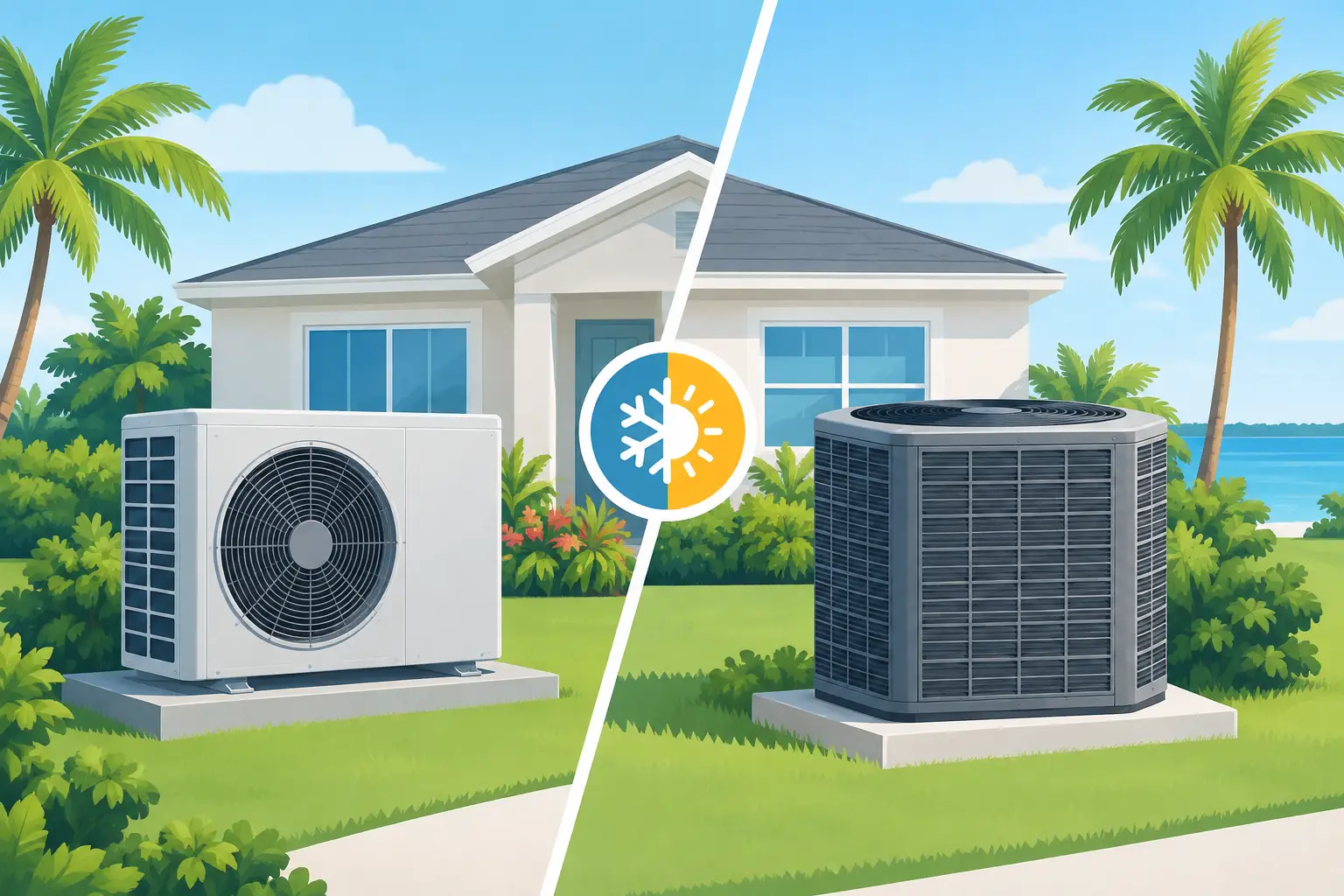


A broken AC in a Tampa summer is not the time to sort through equipment terminology. Homeowners often ask about heat pump versus central air when replacing an aging system, but the answer is not always as simple as choosing one box over another. Both can keep your home cool, both use outdoor and indoor equipment, and both depend on proper sizing and installation. The key difference is what they can do once Florida gets a rare cold snap.
Heat Pump Versus Central Air: The Core Difference
A central air conditioner moves heat out of your home to provide cooling. When heating is needed, it typically relies on a separate heating source, such as electric heat strips, a furnace, or another system.
A heat pump also moves heat out of the house in cooling mode. But it can reverse that process in winter, pulling available heat from outdoor air and transferring it indoors. It is one system that provides both cooling and heating.
That distinction matters in Central Florida, where cooling is the priority for much of the year and winter temperatures are usually mild. A heat pump can often handle day-to-day heating efficiently without the need for fuel-burning equipment. Central air can still be an excellent choice, especially when paired with an existing compatible heating setup or when replacement cost and equipment configuration point in that direction.
One point that causes confusion: people sometimes use “central air” to mean any ducted cooling system. A heat pump can be part of a central HVAC system, too. The real comparison is usually a cooling-only central AC system with separate heat versus a heat pump system that heats and cools.
How They Perform During a Florida Summer
For cooling performance, a properly selected central AC and a properly selected heat pump can feel very similar inside your home. Both should lower indoor temperature, remove humidity, and distribute conditioned air through the ductwork when the system is designed and installed correctly.
The equipment label alone does not guarantee comfort. An oversized system can cool too quickly and shut off before removing enough moisture, leaving the house cool but clammy. An undersized system may run for long periods and struggle to maintain temperature during the hottest afternoons. Leaky ducts, poor attic insulation, dirty coils, and airflow restrictions can also make a new system underperform.
For Tampa-area homeowners, humidity control deserves as much attention as the thermostat setting. Ask your HVAC professional to evaluate the whole system, including duct condition, return-air capacity, drainage, and indoor air quality needs. That is where a replacement can make a noticeable difference in how the home feels, not just how cold it gets.
Efficiency Ratings Matter, but So Does Installation
Higher-efficiency equipment generally uses less electricity to deliver the same level of comfort. Heat pumps and central AC systems are available in a range of efficiency levels, so neither category automatically wins on operating cost.
A high-efficiency central AC may cost less to run than an entry-level heat pump. Conversely, a high-efficiency heat pump can provide strong cooling savings and efficient heating. The best comparison is between specific system options, their estimated energy use, your home’s size and layout, and the condition of the existing ductwork.
Heating Comfort and Cold-Weather Trade-Offs
A heat pump is usually a natural fit for Florida because it provides efficient heating during the mild weather homeowners see most often. Rather than generating heat the way electric resistance strips do, it transfers heat. That can reduce heating energy use during typical winter conditions.
When temperatures drop significantly, a heat pump’s efficiency declines. Many systems use auxiliary electric heat strips to help maintain indoor comfort during colder periods. Those strips can use more electricity, particularly if they run for extended periods. This is less of a concern in Tampa, Clearwater, Sarasota, and Lakeland than it would be in a northern climate, but it is still worth discussing before installation.
Central air paired with a gas furnace provides a different heating experience. Furnaces can deliver warmer air from supply vents during cold weather, and some homeowners prefer that feel. However, gas availability, fuel costs, venting requirements, maintenance needs, and the limited duration of Florida’s heating season all affect whether that arrangement makes financial sense.
If your current home has central AC and electric heat, replacing it with a heat pump may be especially practical. The indoor air handler, electrical capacity, ducts, and outdoor unit all need to be evaluated as a complete system rather than assumed to be interchangeable.
Upfront Cost, Repairs, and Long-Term Value
A heat pump may have a higher initial equipment cost than a comparable cooling-only AC unit because it includes the components needed to operate in both heating and cooling modes. The difference varies by brand, efficiency level, system size, and installation requirements.
That higher upfront cost can be offset over time by lower heating costs, particularly if you currently rely on electric resistance heat. But savings are never one-size-fits-all. If your existing central AC is paired with a newer, dependable furnace, replacing only the air conditioner may be the more sensible short-term investment. If both heating and cooling components are aging, a matched heat pump system may offer better value and simpler long-term maintenance.
Repairs also depend on the system’s age, maintenance history, and the specific failure. Heat pumps have a reversing valve and operate year-round, so they have additional components and more seasonal operating hours than a cooling-only AC condenser. On the other hand, a central AC system with a separate furnace has two pieces of major equipment to maintain.
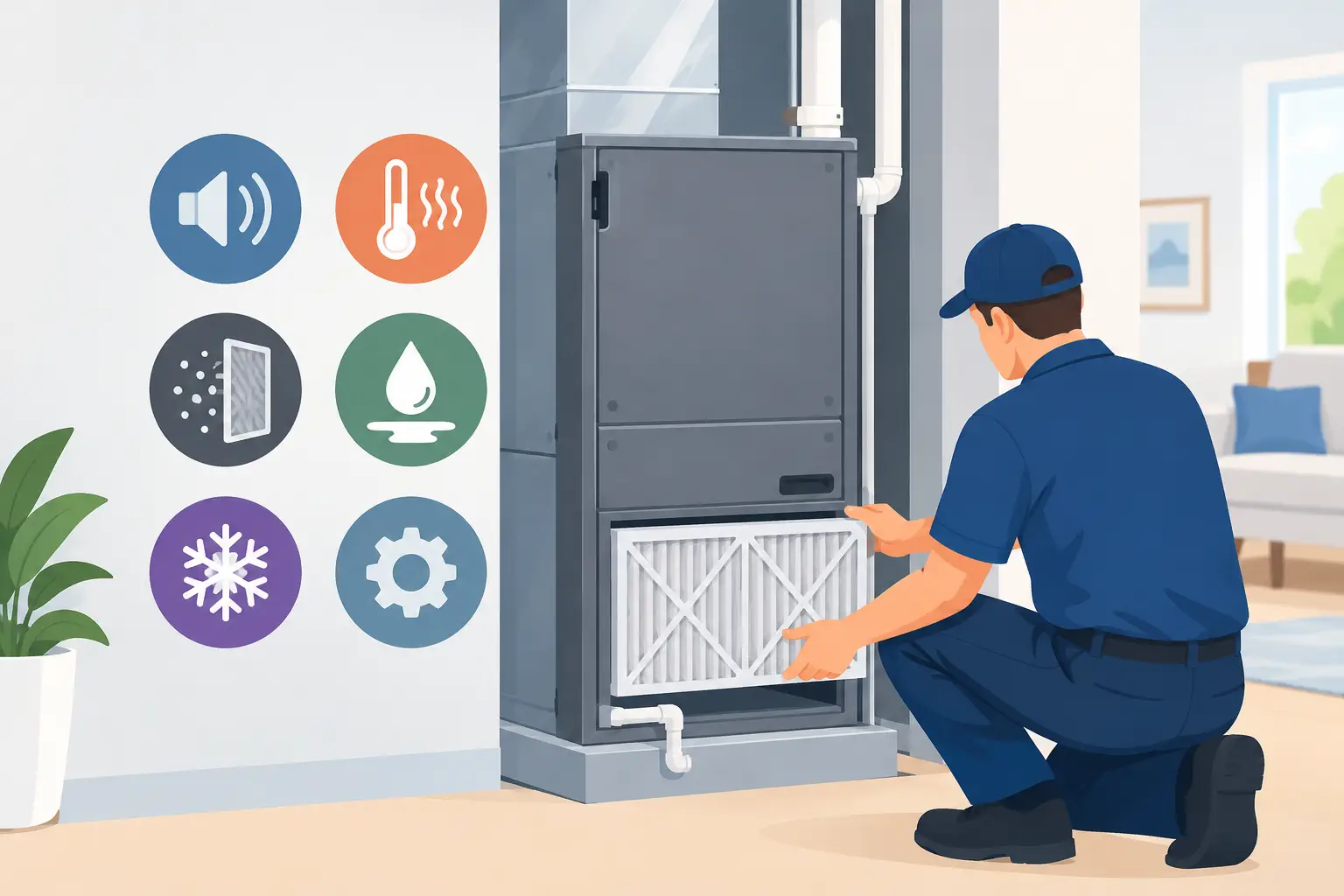
Regular maintenance is the practical way to protect either choice. Cleaning coils, checking refrigerant performance, clearing condensate drains, inspecting electrical connections, replacing filters, and confirming safe airflow can help prevent surprise breakdowns when the heat is at its worst.
Which System Is Right for Your Home?
The better choice depends on your existing setup and what you want from the replacement. A heat pump is often worth serious consideration when you want one electric system for cooling and heating, use electric heat now, or need to replace an older air handler and outdoor unit together. Its efficient mild-weather heating aligns well with Central Florida’s climate.
A central AC replacement can make sense when a compatible furnace is in good condition, you want to manage the initial project cost, or your home’s heating arrangement is already meeting your needs. It can also be the right path when equipment compatibility or local utility considerations favor a cooling-only system.
Before choosing, have a trained technician perform a load calculation instead of selecting equipment based only on the old unit’s size. The evaluation should account for square footage, windows, insulation, occupancy, ductwork, sun exposure, and comfort concerns in specific rooms. A system that is correctly sized and installed is more likely to control humidity, operate efficiently, and last as expected.
Get a Recommendation Built Around Your Home
A replacement decision should not be driven by a quick online comparison or the lowest quote alone. The right HVAC recommendation considers your current equipment, electrical service, duct condition, budget, comfort goals, and the way Florida weather affects your home.
ACS Home Services can help homeowners compare options clearly, explain the trade-offs without pressure, and install a system designed for reliable year-round comfort. If your AC is struggling, making unusual noises, leaking, or failing to keep up with the heat, scheduling an evaluation now can give you more choices before a small problem becomes an urgent replacement.