

A repipe is not a cosmetic home project. The material behind your walls will affect water pressure, repair options, future remodeling, and the cost of a plumbing emergency for years to come. When homeowners compare PEX versus copper plumbing, the right answer depends on the home’s age, water conditions, budget, and how much of the piping system needs attention.
For many Central Florida homes, PEX has become the practical choice for whole-home repipes and new water lines. Copper still has a strong track record and can be an excellent material in the right application. A qualified plumber should look beyond the material itself and evaluate what is happening inside your specific plumbing system before recommending either option.
PEX Versus Copper Plumbing at a Glance
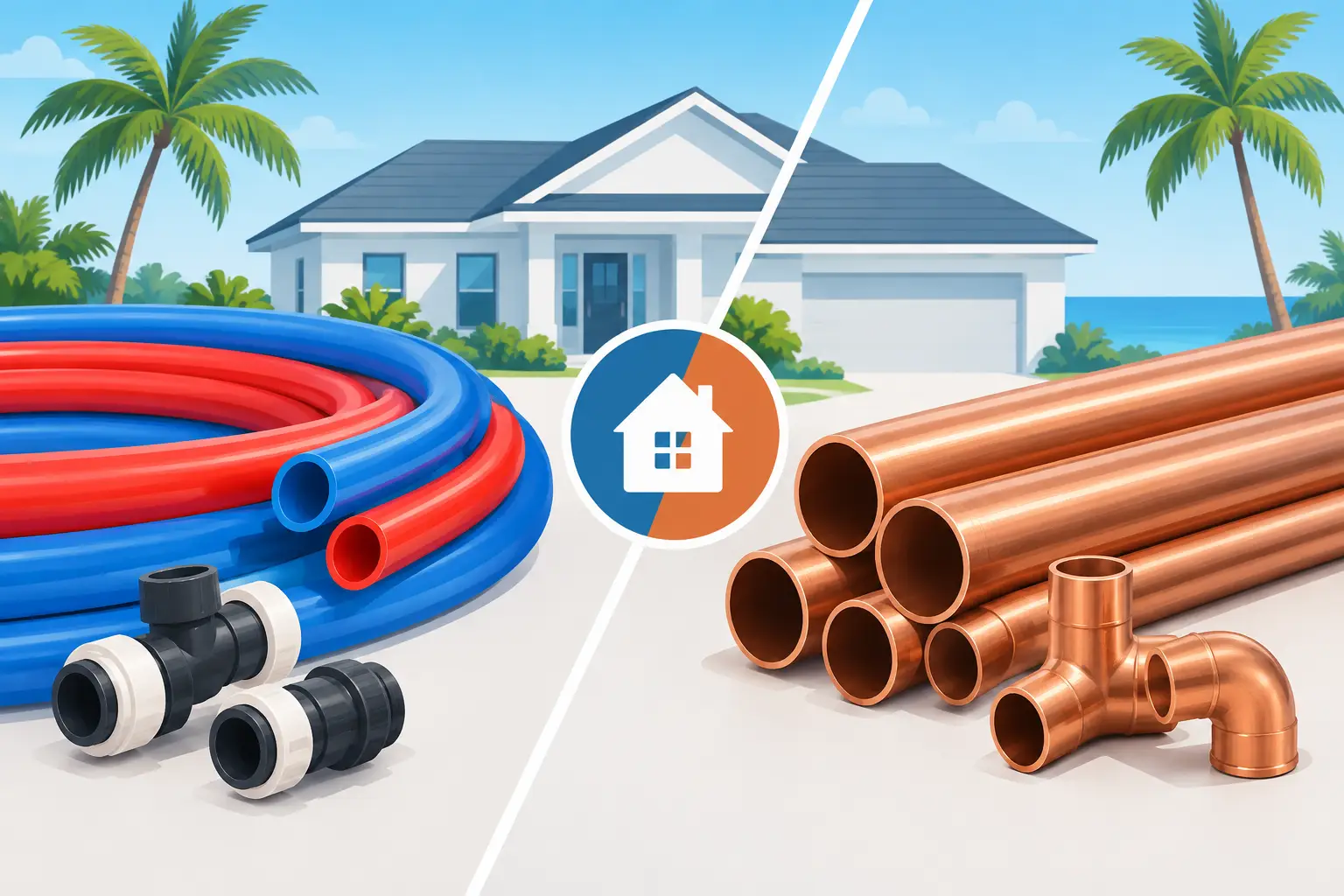
PEX is a flexible plastic tubing used for hot and cold water supply lines. Because it bends around many corners, it often requires fewer fittings than rigid pipe. Installers can route it through walls, attics, and crawl spaces with less cutting and less disruption to finished areas.
Copper is a rigid metal pipe that has been used in residential plumbing for generations. It is familiar to homeowners, long-lasting under favorable conditions, and resistant to sunlight when used outdoors. Copper connections are soldered, pressed, or otherwise joined with fittings, so installation generally involves more labor and more connection points than a PEX system.
Neither material is automatically best for every house. A small, accessible repair is different from replacing aging supply lines throughout a two-story home. The quality of installation also matters as much as the pipe choice. A poorly installed system can create trouble regardless of whether it is PEX or copper.
Why Many Florida Homeowners Choose PEX
The biggest advantage of PEX is flexibility. A plumber can often make long, continuous runs with fewer elbows and joints, which can reduce installation time and potential leak points. That flexibility is particularly valuable in repipes, where accessing old pipe behind drywall or through slab-adjacent areas can otherwise become invasive.
PEX is also generally less expensive to install than copper. The material costs less, and the quicker installation can reduce labor charges. For homeowners managing a major plumbing investment, that difference may leave more room in the budget for related work, such as replacing shutoff valves, upgrading an aging water heater, or repairing wall access after the project.
Because PEX does not corrode the way metal can, it avoids pinhole leaks caused by copper corrosion. This is worth discussing when a home has experienced repeated small leaks, discolored water, or water chemistry concerns. PEX also handles normal expansion and contraction well, which can help reduce noise from pipes as hot water moves through the system.
There are limits to consider. PEX should not be exposed to direct sunlight for extended periods, so it is not the right material for unprotected outdoor runs. It must also be kept away from high-heat sources and installed according to local code and manufacturer requirements. The fittings and connection method matter, too. A professional should use a compatible system and properly support the tubing rather than treating flexible pipe as a shortcut.
Where Copper Still Makes Sense
Copper remains a proven choice for homeowners who prefer a traditional metal piping system. It performs well in many homes, tolerates high temperatures, and is suitable for certain exposed or outdoor locations where UV exposure would rule out PEX. It is also noncombustible, a characteristic some homeowners value in specific applications.
Copper can be a smart fit when only a short section of existing copper pipe needs replacement and the surrounding system is still in good condition. Matching the existing material may simplify a targeted repair. In visible mechanical areas, some homeowners also prefer copper’s clean, familiar appearance.
The trade-off is cost. Copper prices can fluctuate, and installation is more labor-intensive because the pipe must be measured, cut, fitted, and joined precisely. Rigid piping may require more wall or ceiling access during a repipe. Copper is also not immune to failure. Water that is too acidic, highly chlorinated, or otherwise aggressive can contribute to corrosion over time. Fast-moving water, poor grounding practices, and installation issues can also shorten its service life.
Cost Is More Than the Price of Pipe
It is easy to compare material prices and assume the cheaper pipe creates the cheaper project. That is only part of the equation. A repipe estimate should account for the number of fixtures, the home’s layout, accessibility, pipe routing, required permits, wall repairs, and whether the job includes new supply valves or a water heater connection.
PEX commonly delivers a lower total project cost because it requires less labor and can be routed with fewer fittings. In a home with difficult access, that labor advantage can be substantial. Copper may cost more upfront but may be appropriate when a specific location calls for it or when it integrates best with an otherwise healthy copper system.
Homeowners should also ask what the estimate includes. A clear proposal explains which pipe will be installed, how lines will be routed, what fixtures or valves are included, how permits are handled, and how access openings will be addressed. The lowest quote is not always the best value if it leaves out essential work or relies on unclear allowances.
Water Quality and Existing Pipe Problems Matter
Before choosing a material, consider why the plumbing work is needed. If a home has a single leak caused by accidental damage, a focused repair may be all that is necessary. If leaks have occurred in multiple areas, water pressure has declined, or the home has older galvanized or deteriorating supply piping, a larger replacement may be more cost-effective than repeated spot repairs.
Water quality can influence the recommendation. Copper corrosion can be affected by pH, mineral content, disinfectants, and other factors in the water supply. A plumber may recommend evaluating the condition of removed pipe, reviewing the history of leaks, or testing water when repeated corrosion is suspected. Simply replacing pipe without addressing a contributing issue can lead to frustration later.
For homes with a water softener, filtration system, or planned water treatment upgrade, make sure the plumbing plan accounts for it. The location of treatment equipment, bypass lines, shutoff valves, and pressure regulation should work together with the new piping system.
Installation Quality Protects Your Investment
A new plumbing system should improve reliability, not just replace old pipe. Proper sizing helps deliver water to showers, appliances, and fixtures without unnecessary pressure loss. Secure supports prevent movement and noise. Accessible shutoff valves make future maintenance easier, and careful connections reduce the chance of leaks hidden behind walls.
Professional installation also means respecting the details that homeowners may not see. That includes code-compliant penetrations, protection where pipe passes through framing, correct spacing from heat sources, pressure testing before walls are closed, and coordination with other home systems. If electrical work, drywall repair, or water heater replacement is part of the project, using one established home services provider can make scheduling and accountability much simpler.
A reputable plumber should explain the recommendation in plain language. Ask whether the problem is isolated or systemic, why a particular material fits the application, what warranty coverage applies, and what disruption to expect. You deserve clear answers before approving work that affects every sink, shower, and appliance in the house.
Choosing the Right Pipe for Your Home
PEX is often the strongest value for a full repipe in a Florida home because it is flexible, corrosion-resistant, and typically faster to install. Copper remains a dependable option for targeted repairs, exposed applications, and homes where existing conditions support its use. The best material is the one that solves the actual problem, complies with local requirements, and is installed with care.
If you are dealing with recurring leaks, low water pressure, or aging supply lines, do not wait for the next hidden leak to become a major restoration project. ACS Home Services can inspect your plumbing, explain your options clearly, and help you choose a path that protects your home, budget, and daily comfort.