

A heat pump replacement is not a project to rush because the old system quit on a 95-degree afternoon. In Central Florida, your equipment works through long cooling seasons, high humidity, heavy rain, and occasional chilly nights. This Florida heat pump installation guide explains what homeowners should consider before installation day, from choosing the right equipment to preparing for permits, electrical needs, and reliable long-term operation.
Why Heat Pumps Make Sense in Florida
A heat pump moves heat rather than generating it through combustion. In cooling mode, it pulls heat and humidity from inside the home and sends them outdoors. When temperatures drop, the process reverses to provide heat. That makes a heat pump a practical all-in-one comfort system for Tampa, Clearwater, Sarasota, Lakeland, and nearby communities where true winter weather is limited.
For many Florida households, the biggest benefit is efficient cooling with dependable heating available when a cold front arrives. Modern variable-speed systems can also improve humidity control and maintain more even temperatures than older single-stage equipment. The right result, however, depends on proper sizing, duct performance, installation quality, and how the home is used.
A higher-efficiency model can reduce operating costs, but it is not automatically the best choice for every household. The right system balances upfront investment, comfort expectations, home layout, insulation levels, and expected length of ownership. A qualified HVAC professional should explain those trade-offs clearly before asking you to choose equipment.
Start With a Home Evaluation, Not a Box Size
It is tempting to replace a three-ton heat pump with another three-ton model. That can work in some homes, but tonnage alone does not tell the full story. A home may have new windows, added insulation, a remodeled room, changed occupancy, or ductwork problems that affect its cooling load.
A professional evaluation should consider square footage, ceiling height, window orientation, insulation, air leakage, local climate, duct condition, and the number of people regularly in the home. This process helps determine how much heating and cooling capacity the house actually needs.
Oversizing is a common comfort problem in Florida. A system that is too large may cool the home quickly but shut off before it removes enough moisture. The result can be rooms that feel cool yet clammy, along with more frequent starts and stops. An undersized system may run constantly during peak heat and struggle to reach the thermostat setting. Proper load calculations help avoid both outcomes.
Consider Humidity Along With Temperature
Florida comfort is not just about the number on the thermostat. Indoor humidity affects how cool the air feels, whether rooms develop musty odors, and how hard your system must work. Variable-speed or two-stage heat pumps may run longer at lower output, which can support more consistent moisture removal.
That upgrade may be especially worthwhile in homes with uneven temperatures, high indoor humidity, or family members who are sensitive to damp indoor air. In other homes, a well-installed single-stage system may be the more sensible budget-conscious choice. The key is matching the equipment to the home rather than buying based on a broad promise of savings.
Choose Equipment That Fits Florida Conditions
When comparing heat pumps, efficiency ratings matter, but they should be part of a larger conversation. Higher ratings generally indicate lower energy use under standardized testing conditions. Actual savings will vary based on thermostat settings, insulation, duct leakage, maintenance, utility rates, and how often the system runs.
Ask your installer to discuss the indoor air handler, outdoor unit, thermostat, and available warranty coverage as one system. Mixing components that are not designed to work together can reduce efficiency or create performance issues. A properly matched system supports the rated capacity and comfort features you are paying for.
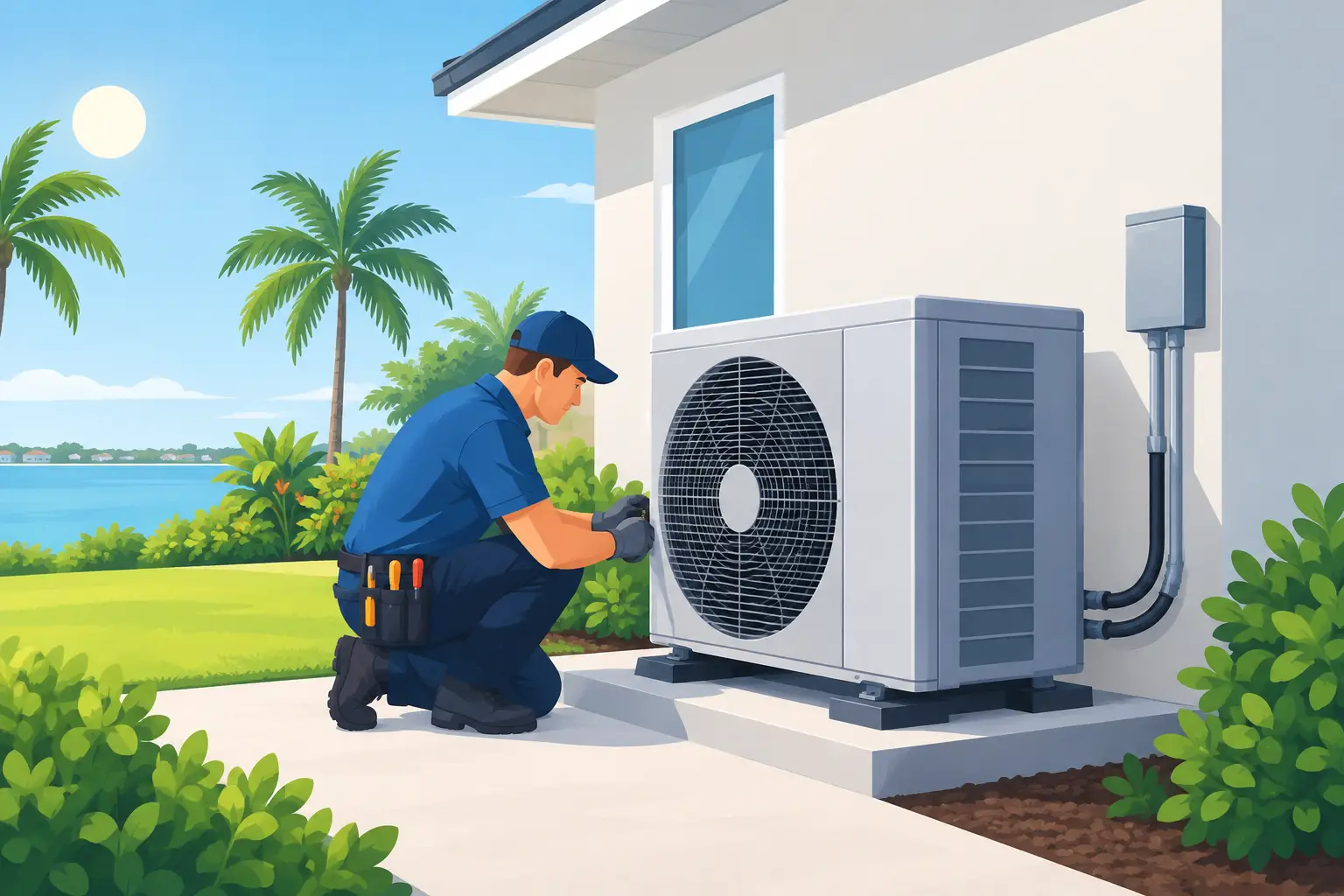
Also consider where the outdoor unit will sit. It needs adequate airflow and a stable pad, while remaining accessible for service. In coastal or high-moisture environments, material durability and regular maintenance deserve extra attention. The unit should not be crowded by landscaping, enclosed tightly, or positioned where roof runoff repeatedly floods the area.
Electrical Capacity Can Affect the Project
A new heat pump may require electrical updates, particularly when replacing older equipment or adding accessories. The disconnect, breaker, wiring, and electrical panel capacity must be evaluated for safe operation. This is where a company with HVAC and electrical expertise can simplify the process instead of leaving you to coordinate separate contractors.
Do not treat electrical work as an afterthought. Incorrect wiring or an overloaded circuit can create safety risks, nuisance breaker trips, or damage to new equipment. A thorough installation plan identifies electrical requirements before installation day whenever possible.
What to Expect During Heat Pump Installation
A professional installation typically begins with confirming the selected equipment, reviewing access points, and protecting work areas. The old system is disconnected and removed, then the new outdoor unit and indoor air handler are positioned and secured. Technicians connect refrigerant lines, condensate drainage, electrical components, duct transitions, and controls.
The refrigerant line set and condensate drain deserve careful attention. Florida humidity means your system will produce substantial condensation during cooling season. A drain that is poorly sloped, improperly trapped, or clogged can lead to water damage, system shutdowns, and avoidable service calls. The drain should be tested before the job is complete.
After installation, the system should be started, tested, and adjusted. Technicians should verify airflow, refrigerant operation, temperature performance, drainage, safety controls, and thermostat function. You should also receive a walkthrough of basic operation, filter access, recommended maintenance, and what to do if you notice a problem.
Permits and Inspections Protect the Investment
Heat pump replacement projects often require permits and inspections, depending on the municipality and scope of work. Permit requirements can vary across Central Florida, particularly if the job includes electrical modifications, duct changes, or structural work.
A reputable contractor handles the permitting process and follows applicable local requirements. This protects homeowners by creating a documented record of the work and helping ensure the installation meets current standards. It can also prevent complications when selling the home or filing an insurance claim after a major loss.
Be cautious of any contractor who suggests skipping permits simply to move faster or lower the price. A lower initial quote can become expensive if unpermitted work must be corrected later.
Prepare Your Home for Installation Day
Most homeowners can make installation day easier by clearing a path to the indoor unit, outdoor equipment location, electrical panel, and attic access if needed. Move valuables and fragile items away from the work area, and keep pets secured in a comfortable room.
Plan for temporary interruptions to cooling and power while equipment is being replaced and tested. If someone in the home has a medical need affected by heat, make that known when scheduling. A professional team can help set expectations and schedule the work as efficiently as possible.
Before technicians leave, ask practical questions. Find out where the filter goes, how often to change it, which thermostat settings are recommended, and who to call if the system displays an alert. You should understand the warranty terms and keep copies of installation documentation in a safe place.
Protect Comfort After the New System Is Installed
Installation is the beginning of your heat pump’s service life, not the end of the decision. Regular maintenance helps preserve efficiency, catch drainage or electrical issues early, and keep the system prepared for Florida’s demanding cooling season. At home, changing filters on schedule and keeping the outdoor unit clear of leaves and debris can make a meaningful difference.
Professional maintenance should include inspection of electrical connections, refrigerant performance, condensate drainage, airflow, coils, and safety controls. If your home has hot or cold rooms, rising humidity, unusual sounds, or higher utility bills after installation, schedule service early rather than waiting for a complete breakdown.
A new heat pump should bring relief, not uncertainty. When the system is correctly sized, carefully installed, and supported by ongoing service, your home is better prepared for the heat, humidity, and surprise cold snaps that come with life in Central Florida. ACS Home Services can help homeowners plan the work clearly, with experienced HVAC and electrical support available when the project calls for it.