

A lightning storm rolls through Central Florida, the lights blink once, and everything appears normal. Then your refrigerator stops cooling the next morning, or your AC will not start when the afternoon heat arrives. Can power surges damage appliances? Yes. A single surge can damage sensitive electronics immediately, while smaller, repeated surges can gradually shorten the life of appliances and home systems.
The frustrating part is that damage is not always obvious. An appliance may keep running after a surge, but its control board, compressor components, or internal wiring may have been weakened. Knowing what causes surges and where protection belongs can help Tampa-area homeowners avoid a costly, inconvenient breakdown.
Can Power Surges Damage Appliances? Yes, in More Than One Way
A power surge is a brief increase in voltage above the level your home’s electrical system is designed to handle. Your home normally receives about 120 volts for standard outlets. During a surge, that amount can jump sharply for a fraction of a second. That is enough time to harm delicate electronic components.
The most dramatic cause is lightning. Florida’s frequent thunderstorms put homes at greater risk, especially when a strike affects nearby utility equipment or power lines. But lightning is not the only concern. Utility switching, downed lines, power restoration after an outage, and electrical problems within the home can all create voltage spikes.
Some surges originate inside the house. Large equipment such as an air conditioner, heat pump, refrigerator, pool pump, or well pump can create smaller voltage fluctuations as motors cycle on and off. These events may not cause an immediate failure, but they can wear down circuit boards over time.
Modern appliances are particularly vulnerable because many rely on electronic controls. A refrigerator is no longer just a compressor and a thermostat. It may have a digital display, sensors, a control board, and a connected water dispenser. The same is true for smart thermostats, washers, dryers, dishwashers, ranges, televisions, computers, and HVAC equipment.
Which Appliances Are Most at Risk?
Any plugged-in device can be affected, but appliances with circuit boards, variable-speed motors, or sophisticated controls deserve special attention. Your air conditioning system is a major concern in Florida. A surge can damage the outdoor unit’s capacitor, contactor, wiring, or control board. In some cases, the system may fail to turn on. In others, it may run poorly, trip a breaker, or lose cooling capacity.
Refrigerators and freezers are another priority because a failure can lead to spoiled food as well as repair costs. If a refrigerator begins clicking repeatedly, runs constantly, displays error codes, or no longer holds a consistent temperature after an outage, schedule service rather than assuming it will correct itself.
Other common victims include microwaves, ovens with electronic controls, garage door openers, washing machines, dryers, entertainment systems, networking equipment, and chargers. A plug-in surge protector can help with many smaller electronics, but it is not a complete defense for the systems hardwired into your home.
Signs a Surge May Have Caused Damage
Sometimes the clue is clear: a device will not power on after a storm or outage. Often, though, surge damage looks like an unrelated appliance problem. Watch for flickering displays, a burning or metallic odor, buzzing sounds, repeated breaker trips, random resets, or equipment that turns on but does not operate normally.
With HVAC equipment, warning signs can include no cooling, weak airflow, a thermostat that goes blank, a condenser that hums but will not start, or a breaker that trips when the system calls for cooling. Do not keep resetting a tripped breaker to force equipment to run. That can create a shock or fire risk and may cause additional damage.
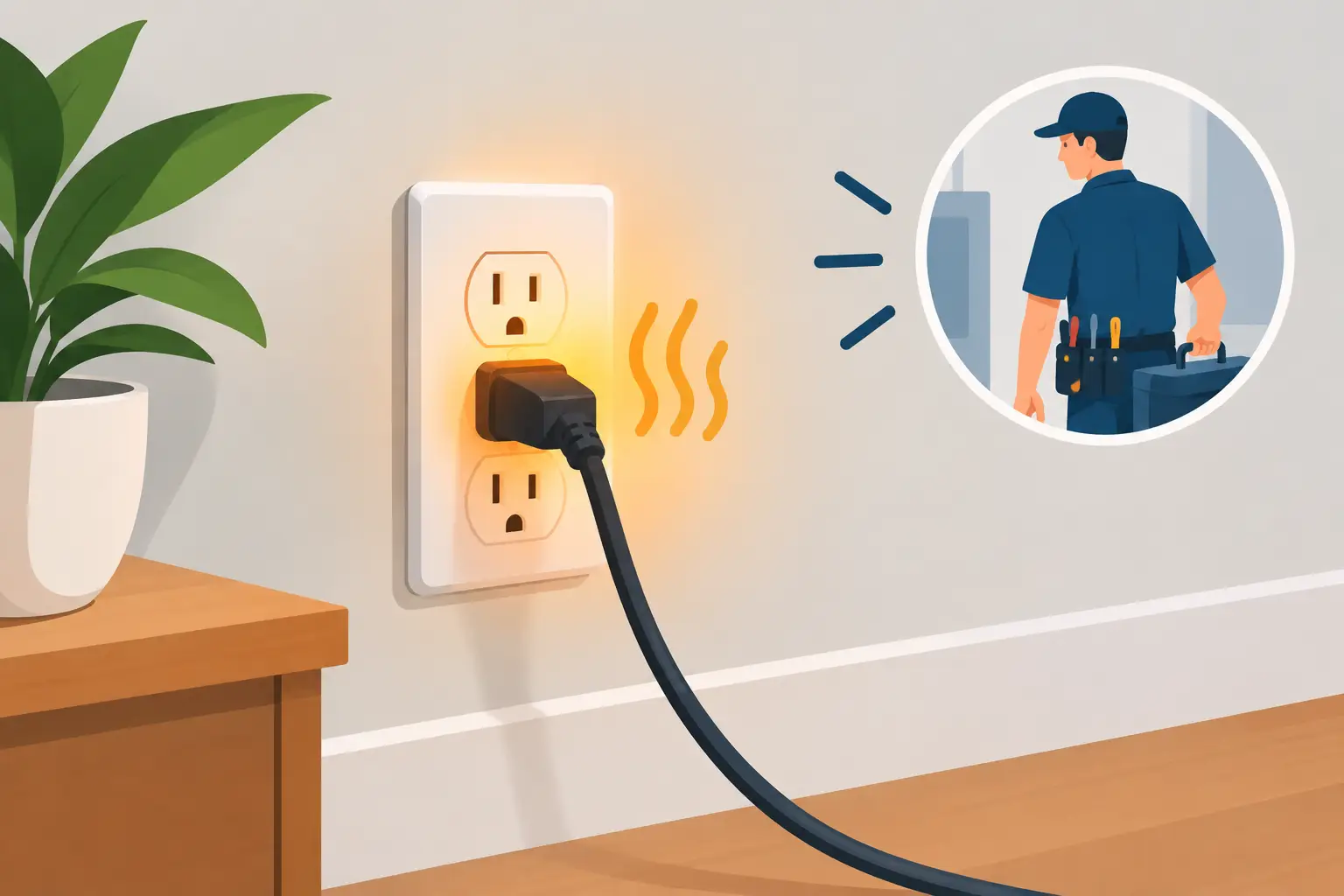
A surge can also damage the electrical panel, outlets, and wiring connections. If several devices failed at the same time, lights are behaving unpredictably, or you see discoloration around an outlet or panel, turn off power to the affected area if it is safe to do so and arrange for a qualified electrician to inspect the system.
Why Power Strips Are Not Enough
Many homeowners use the terms power strip and surge protector interchangeably, but they are not always the same thing. A basic power strip simply adds outlets. It may not provide meaningful surge protection at all.
A quality point-of-use surge protector is useful for televisions, computers, gaming systems, and other plug-in electronics. However, it cannot protect every circuit in the home, and its protective components wear out over time. If its indicator light shows that protection is no longer active, replace it.
Whole-home surge protection works at the electrical panel to help reduce incoming voltage spikes before they travel through your home’s wiring. It is designed to complement, not replace, plug-in protection. Using both layers gives sensitive electronics better coverage, while whole-home protection also helps safeguard hardwired equipment such as an AC system, dishwasher, range, garage door opener, and water heater controls.
There is a trade-off to understand: no surge protective device can promise that equipment will survive every direct or extreme lightning event. Protection reduces risk and can absorb or redirect many damaging spikes, but proper installation, grounding, and electrical system condition matter just as much.
Protect Your Home Before the Next Florida Storm
The best approach starts with an electrical evaluation. An electrician can check whether your panel has space for a whole-home surge protector, confirm that your grounding and bonding are in good condition, and identify aging components that could affect safety or reliability. Homes with older panels, recurring breaker trips, recent additions, or major new appliances may benefit from a panel upgrade or targeted electrical improvements.
There are also practical steps homeowners can take during severe weather. Unplugging nonessential electronics before a storm is one option if there is time and it can be done safely. Do not handle cords, outlets, or electrical equipment during an active lightning event. After an outage, wait a few minutes before restarting major equipment so the power supply has time to stabilize.
For sensitive items, use listed surge protectors that are appropriately rated for the equipment being connected. Replace damaged cords and loose outlets promptly. If your home has a generator, make sure it is professionally installed with the correct transfer equipment. Improper generator connections can create dangerous backfeeding and damage electrical systems.
What to Do After an Outage or Suspected Surge
Start with safety. If you smell burning, see smoke, hear crackling, or find a hot outlet or panel, move away from the area and call for emergency electrical help. Do not touch damaged wiring or attempt a repair yourself.
If there are no immediate hazards, check the electrical panel for tripped breakers. Reset a breaker once only after unplugging or turning off the equipment on that circuit. If it trips again, leave it off. A repeated trip is a warning that needs professional attention.
For appliances that have stopped working, avoid replacing parts based on guesswork. Surge damage can affect multiple components, and the visible symptom may not reveal the full issue. An experienced technician can test the appliance or HVAC system and determine whether the problem is a failed component, a wiring issue, or an electrical supply concern.
When to Call for Professional Help
Call an electrician after a major storm if multiple appliances malfunction, breakers trip repeatedly, outlets appear scorched, or your lights flicker throughout the home. Call for HVAC service if your system will not cool, makes unusual sounds, or trips its breaker after a power event. Fast attention can prevent a smaller electrical issue from becoming a larger repair or a complete system failure.
For homeowners across Tampa and Central Florida, ACS Home Services can help evaluate surge concerns, inspect electrical panels and wiring, and address AC equipment affected by an outage or voltage event. Same-day availability can make a real difference when your home’s comfort or electrical safety is on the line.
A storm may be unavoidable, but an unprotected home does not have to be. Taking action before the next outage gives your appliances, your HVAC system, and your household a better chance of staying safe and dependable when the weather turns.