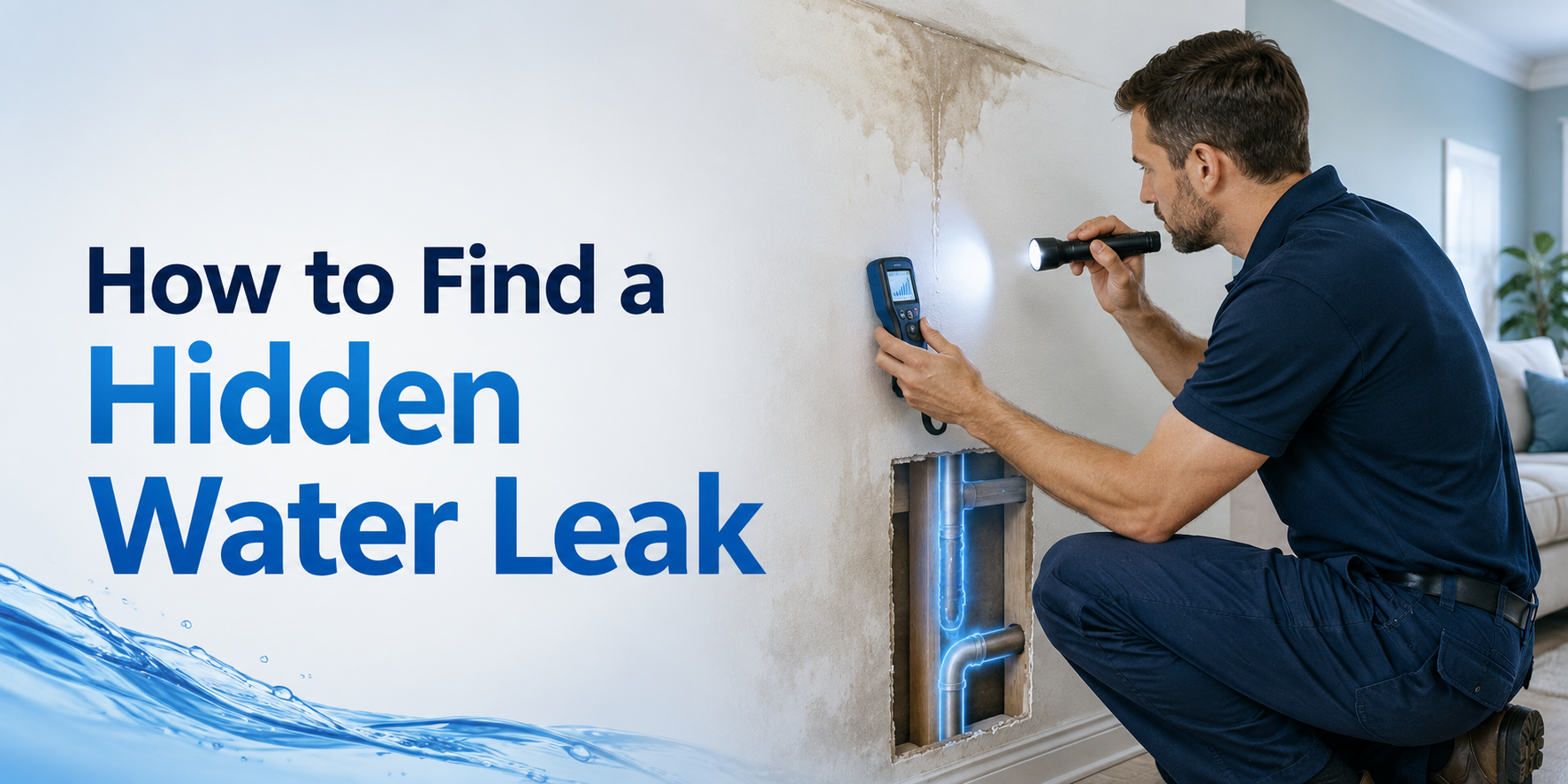

How to find a hidden water leak starts with noticing small changes in your home, checking your water meter, and investigating unusual moisture, sounds, odors, or increases in water use. Finding the source early can help prevent structural damage, mold growth, wasted water, and a much more expensive plumbing repair.
A hidden water leak does not always leave an obvious puddle. Water can escape behind drywall, beneath flooring, under a concrete slab, inside a cabinet, or within an underground supply line without being immediately visible.
An unexplained water bill increase is often the first warning that something is wrong. Other clues may appear gradually, so knowing what to look for can help you catch a plumbing problem before it spreads.
Common Signs of a Hidden Water Leak
Some hidden leaks release water slowly enough that homeowners do not notice them right away. Others may cause visible damage within hours. Pay attention to changes in your home, especially when they cannot be connected to normal water use.
Common signs of a hidden water leak include:
- An unexpected increase in your monthly water bill
- The sound of running or dripping water when fixtures are off
- Stains, bubbling paint, or soft spots on walls and ceilings
- Warped flooring, loose tiles, or damp carpet
- Musty odors that remain after cleaning and ventilation
- Low water pressure affecting multiple fixtures
You may also notice a warm section of flooring if a hot-water pipe is leaking beneath the surface. Outdoor leaks can create unusually green patches of grass, muddy areas, standing water, or soil erosion near the foundation.
Do not assume a small stain means a small leak. Water often travels along framing, pipes, or electrical lines before becoming visible, so the actual source may be several feet away.
Check Your Water Bill for Unusual Changes
Compare your current water bill with bills from the same season last year. Household water use can change because of guests, irrigation, laundry, or warmer weather, but a steady increase without a clear explanation deserves attention.
Review the bill for:
- A sudden increase from one billing cycle to the next
- Several months of gradually rising water consumption
- Water use recorded while the property was unoccupied
- Higher usage despite no change in household habits
A leaking toilet, underground pipe, water heater connection, or irrigation line can waste a surprising amount of water. Even when the leak is not visible, your meter continues recording the flow.
If your bill has increased and you cannot identify the reason, a professional evaluation through comprehensive plumbing services can help determine whether the problem is inside the home, beneath the property, or connected to an exterior line.
Use Your Water Meter to Test for a Leak
Your water meter can help confirm whether water is moving through the plumbing system when nothing should be using it. This test may not reveal the exact location, but it can tell you whether further investigation is needed.
How to Perform a Water Meter Test
- Turn off faucets, showers, washing machines, dishwashers, irrigation systems, and other water-using equipment.
- Make sure no toilets are refilling and no one uses water during the test.
- Locate your water meter and record the displayed reading.
- Wait approximately 30 minutes, then check the meter again.
If the reading changes, water is likely moving somewhere in the system. Some meters also have a small leak indicator that spins or moves when even a small amount of water is flowing.
Do not close the home’s main water shutoff before performing this test. The meter must remain connected to the plumbing system so it can detect unintended water use.
Inspect Walls, Ceilings, Floors, and Cabinets
Hidden plumbing lines often run through areas that are difficult to see. A careful visual and physical inspection can reveal moisture before the damage becomes severe.
Look closely around bathrooms, kitchens, laundry rooms, water heaters, and rooms located beneath upstairs plumbing fixtures. Use a flashlight to examine the backs of cabinets and the spaces around supply valves.
Watch for:
- Yellow, brown, or copper-colored stains
- Peeling paint, loose wallpaper, or swollen baseboards
- Drywall that feels soft, cool, or damp
- Flooring that buckles, separates, or feels spongy
- Darkened cabinet surfaces beneath sinks
- Rust, corrosion, or mineral buildup on pipe connections
Do not press aggressively into damaged drywall or flooring. Water can weaken building materials, and a small opening may release trapped water or cause a larger section to collapse.
Listen for Water When the House Is Quiet
Turn off televisions, fans, appliances, and other sources of noise. Stand near bathrooms, kitchens, utility rooms, and walls that contain plumbing lines.
A hidden leak may produce:
- A steady dripping sound inside a wall
- A faint hissing noise near a pipe connection
- The sound of water running beneath a floor
- Intermittent toilet refilling without being flushed
Sounds can travel through framing and pipes, so the loudest location is not always the source. Still, identifying the general area can help a plumber narrow the search and avoid unnecessary openings in walls or flooring.
Running water sounds combined with meter movement should be treated as a strong warning. If water is spreading quickly or approaching electrical components, shut off the main water supply and request help through ACS Home Services’ Tampa emergency plumbing service.
Test Toilets for Silent Leaks
Toilets are a common source of water loss because a worn flapper or faulty fill valve can allow water to move from the tank into the bowl without making much noise. The problem may continue around the clock.
How to Perform a Toilet Dye Test
- Remove the toilet tank lid and make sure the tank has finished filling.
- Add several drops of food coloring to the tank water.
- Wait about 20 minutes without flushing the toilet.
- Check the bowl for colored water.
If color appears in the bowl, water is leaking past the tank components. This leak is not hidden behind a wall, but it can explain an unexplained rise in water use.
Also check around the toilet base. Moisture, staining, movement, or a soft floor may indicate a leaking seal, damaged flange, condensation problem, or supply-line leak.
Look for Leaks Around Appliances and Plumbing Equipment
Appliance connections can leak slowly behind equipment where water remains unnoticed. Inspect areas around refrigerators, dishwashers, washing machines, water heaters, filtration systems, and ice makers.
Check for:
- Moisture beneath or behind the appliance
- Cracked, swollen, or brittle supply hoses
- Corrosion around valves and threaded fittings
- Water marks on nearby walls or cabinets
- Loose connections that drip during operation
- Puddles that return after being dried
Slide appliances only when it is safe to do so. Large appliances can damage flooring, strain hoses, or tip when moved incorrectly.
A water heater may also leak from its tank, drain valve, temperature and pressure relief valve, or nearby pipe connection. Water near a water heater should be investigated promptly, especially if the tank shows rust or corrosion.
Check for Slab and Underground Water Leaks
A leak beneath a concrete slab or within an underground supply line can be difficult to locate without specialized equipment. Water may move through soil or building materials before producing visible signs.
Possible signs of a slab or underground leak include:
- Warm or damp sections of flooring
- Cracks that appear or widen unexpectedly
- Water sounds coming from beneath the floor
- Unexplained meter movement with indoor fixtures off
- Wet soil near the foundation during dry weather
- A noticeable drop in water pressure throughout the home
Professional plumbers may use acoustic equipment, moisture meters, pressure testing, or thermal imaging to narrow down the source. These methods can reduce unnecessary cutting and help determine the most appropriate repair.
A suspected slab leak is not a good location for exploratory DIY demolition. Breaking flooring or concrete without confirming the pipe location can cause additional damage and increase repair costs.
What to Do After Finding a Hidden Leak
Once you discover evidence of a leak, protect the surrounding area and limit additional water damage. The correct response depends on how quickly the water is escaping and where it is located.
Take these steps:
- Shut off the affected fixture or appliance when possible
- Close the main water valve if water is spreading rapidly
- Move furniture, rugs, electronics, and valuables away from moisture
- Use towels or containers to control minor dripping
- Photograph visible damage for your records
- Arrange a professional plumbing inspection
Avoid using electrical devices near standing water. If water has reached outlets, wiring, fixtures, or an electrical panel, stay clear of the area and seek qualified assistance.
Drying the visible surface is helpful, but it does not resolve moisture trapped behind walls or beneath floors. Damp building materials may need additional attention after the plumbing repair is complete.
When to Call a Professional Plumber
Some simple leaks can be traced to a loose connection or worn toilet component. Others require professional testing because the pipe is hidden inside a wall, beneath a slab, or underground.
Contact a plumber when:
- Your water meter moves while every fixture is off
- You cannot identify the source of visible water damage
- Water pressure drops throughout the house
- A ceiling, wall, cabinet, or floor feels soft
- You suspect a slab or underground line leak
- Water is spreading faster than you can contain it
Early leak detection usually gives you more repair options. Waiting can allow moisture to damage drywall, flooring, cabinetry, insulation, framing, and personal belongings.
Schedule Hidden Water Leak Service in Tampa
Do not let a hidden water leak continue damaging your home or increasing your water bill. ACS Home Services can inspect your plumbing system, identify the likely source, and explain the available repair options.
Call 833-278-8886 to request plumbing service, or contact ACS Home Services online to schedule an appointment.
You can also view ACS Home Services on Google Maps for location and business information.
Frequently Asked Questions About Hidden Water Leaks
How can I tell if I have a hidden water leak?
Common warning signs include an unexplained water bill increase, meter movement when fixtures are off, damp odors, water stains, warped flooring, soft drywall, low pressure, or running water sounds. One sign alone may have another explanation, but several signs together strongly suggest a leak.
Can a hidden water leak increase my water bill?
Yes. Even a slow leak can waste water continuously throughout the day and night. Comparing recent bills and testing your water meter can help determine whether unexplained water use is occurring.
How do I use my water meter to check for a leak?
Turn off every fixture and water-using appliance, record the meter reading, and wait about 30 minutes without using water. If the reading changes or the leak indicator moves, water is likely flowing somewhere in the plumbing system.
Where are hidden water leaks commonly found?
They are often found behind bathroom or kitchen walls, beneath sinks, around appliance connections, under flooring, near water heaters, below concrete slabs, and in underground supply lines. Toilets can also leak silently inside the tank.
What does a hidden leak inside a wall sound like?
You may hear dripping, hissing, trickling, or steady running water. Because sound travels through framing and pipes, the leak may not be located directly behind the area where it sounds loudest.
Can a plumber find a leak without opening the wall?
In many cases, a plumber can narrow down the location using moisture meters, acoustic detection, pressure testing, or thermal imaging. A small opening may still be necessary to confirm and repair the damaged pipe.
Should I shut off my water if I suspect a hidden leak?
Shut off the main water supply when water is spreading quickly, causing active damage, or approaching electrical components. For a slow suspected leak, you may leave the water on long enough to complete a meter test, provided the situation is safe.
Is a hidden water leak considered a plumbing emergency?
It can be. A leak requires emergency attention when water is spreading rapidly, damaging ceilings or floors, affecting electrical equipment, or making it unsafe to remain in the area. Slow leaks should also be scheduled promptly because damage can worsen over time.
Not around here? Well, then check out the leak detection and repair at Squeaks Plumbing, Heating & Air!