
A Florida power outage can turn serious quickly. Without air conditioning, refrigeration, lighting, or a way to charge phones, a storm-related outage can disrupt your household far beyond a minor inconvenience. Learning how to prepare a home for generator installation before hurricane season gives you time to make safe decisions instead of rushing when a storm is already approaching.
A generator is not simply a piece of equipment placed outside the house. A dependable backup-power setup involves your electrical panel, the circuits you choose to protect, a safe outdoor location, fuel planning, local permits, and professional installation. The right plan depends on your home, your priorities, and whether you need essential power or near-whole-home coverage.
Start With the Kind of Backup Power You Need
The first question is not which generator brand to buy. It is what you expect the generator to do during an outage.
A portable generator can supply selected appliances through properly installed generator connections. It generally costs less upfront, but it requires hands-on setup, refueling, and safe storage. It can be a reasonable choice for short outages when your priority is keeping a refrigerator, a few lights, internet equipment, and portable fans running.
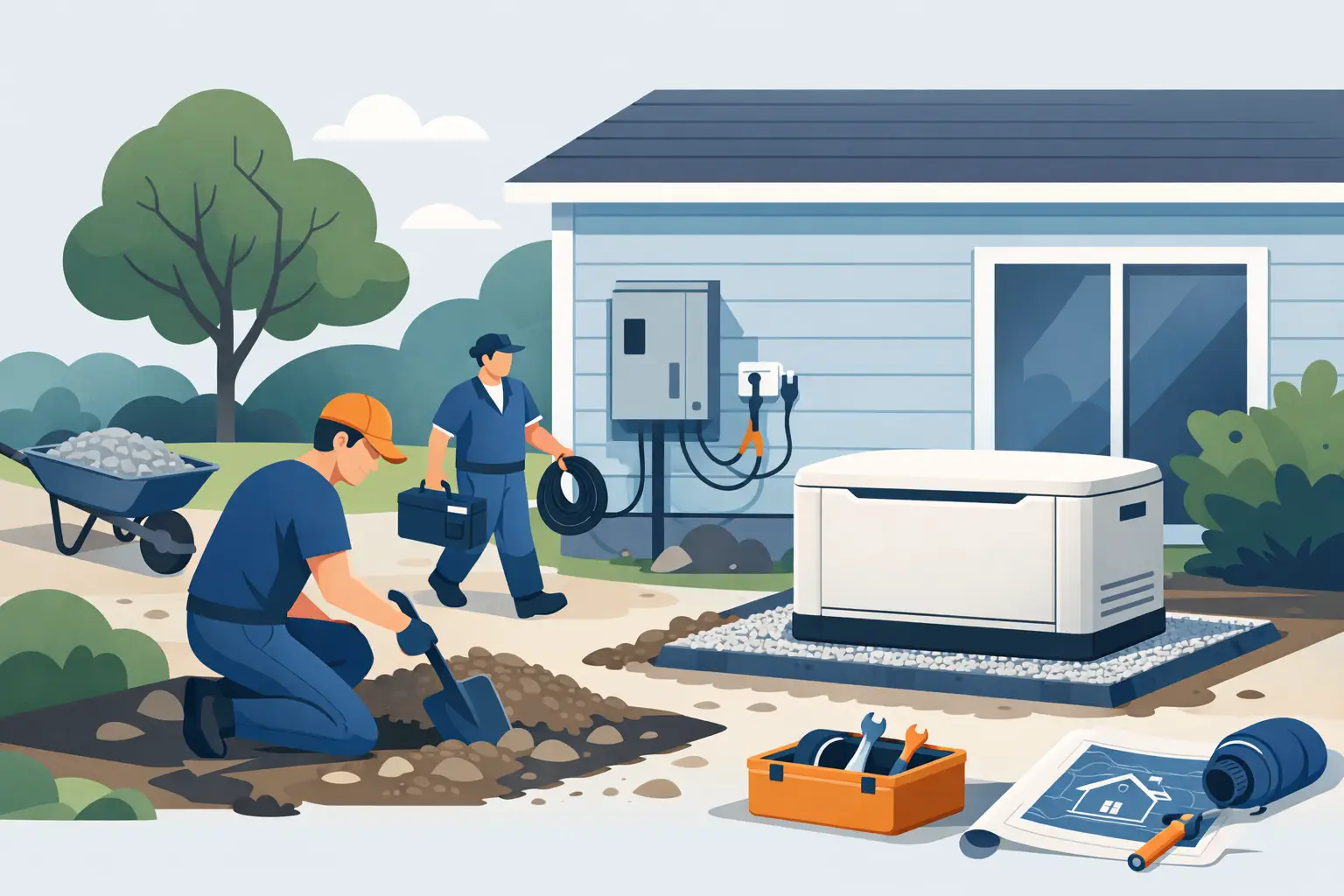
A standby generator is permanently installed outside the home and typically starts automatically when utility power fails. It connects to the home through an automatic transfer switch, so power is restored to the selected circuits without running extension cords or going outdoors in heavy rain. For households that rely on central AC, well pumps, medical devices, electric gates, or frequent remote work, the added convenience can be worth the investment.
Whole-home backup does not always mean every electrical item can run at once. Large loads, such as multiple HVAC systems, electric water heaters, pool equipment, ovens, and electric vehicle chargers, can require a significantly larger generator. A professional load calculation helps determine whether you need a larger unit, load management controls, or a plan that prioritizes essential circuits.
How to Prepare Your Home for a Generator
Before installation begins, take an honest inventory of what your family needs during an outage. Think beyond lights and phone chargers. In Central Florida, cooling can be a health and comfort concern, especially for young children, older adults, pets, and anyone with medical needs.
Write down the appliances and systems you want to operate. Many homeowners prioritize refrigerator and freezer power, lighting, Wi-Fi, garage door access, security equipment, a microwave, and one AC system. If your home has a sump pump, well pump, lift station, or essential medical equipment, those items should be discussed early because they may affect system sizing and circuit design.
It also helps to identify what can stay off temporarily. Pool pumps, decorative landscape lighting, electric dryers, and secondary refrigerators may not need generator power. Being clear about your priorities can prevent overspending on a larger system than your household actually needs.
Review Your Electrical Panel and Service Capacity
Your electrical panel is the command center for a standby generator installation. An electrician will inspect its condition, available space, grounding, service capacity, and whether it can support the transfer equipment needed for backup power.
Older homes may have panels that are undersized, overcrowded, corroded, or no longer appropriate for modern electrical demand. In those cases, a panel upgrade may be the smart first step. Adding a generator to an outdated electrical system can create complications, while addressing the panel first gives you a safer foundation for future needs such as a remodeled kitchen, EV charger, or additional HVAC equipment.
The transfer switch is especially important. It separates your home from utility power when the generator is operating. This protects utility workers and prevents dangerous backfeeding into power lines. Never connect a generator directly to a wall outlet or attempt to power a home without approved transfer equipment.
Choose a Safe, Practical Generator Location
Generator placement affects safety, service access, noise, appearance, and compliance with local requirements. A standby unit must sit outdoors on a stable pad with clear space around it for airflow and maintenance. It should be positioned away from windows, doors, vents, and other openings where exhaust could enter the home.
Carbon monoxide is colorless and odorless, and generator exhaust can be deadly. Portable generators also belong outdoors only, well away from the home, garage, carport, and open windows. Running one in a garage, even with the door open, is not a safe workaround during a storm.
Walk your property with the installation in mind. Look for low spots that collect water, overhanging branches, sprinkler heads, dryer vents, pool equipment, fences, and areas that may be difficult for a technician to access later. Florida’s intense rain and wind matter here. A location that seems convenient on a clear day may be exposed to flooding or falling debris during severe weather.
If you live in an HOA community, check architectural restrictions before settling on a location. Some communities have rules about screening, setbacks, sound, and where equipment can be visible from the street. Addressing those questions before equipment is ordered can avoid delays.
Plan the Fuel Supply Before You Select the Unit
Most standby generators use natural gas or propane. Natural gas can be convenient because it provides a continuous supply during many outages, but the existing gas line must be correctly sized for the generator’s demand. A line that is too small can prevent the unit from performing as expected when it is needed most.
Propane gives homeowners another reliable option, particularly where natural gas is unavailable. The trade-off is that your available run time depends on tank size and fuel level. You will need a plan for refills before a major storm and after an extended outage.
Diesel generators are more common for certain commercial applications, while gasoline is generally used for portable units. Gasoline has a limited storage life and must be handled carefully. If you choose a portable generator, store fuel in approved containers, away from ignition sources, and follow the manufacturer’s instructions for fuel stabilization and storage.
Account for Permits, Codes, and Professional Installation
Generator installation often requires electrical permits and inspections. Depending on the project, gas piping permits, site requirements, or local zoning considerations may also apply. These details are not paperwork to skip. Permits and inspections help verify that wiring, transfer equipment, grounding, fuel connections, and clearances meet applicable safety requirements.
A licensed professional can also coordinate the work across the systems involved. That matters when an installation includes electrical panel modifications, new wiring, a transfer switch, equipment placement, and a gas line connection. A carefully installed system is more likely to start reliably, protect sensitive electronics, and be easier to service over its lifespan.
Prepare Your Household for the Installation Day
Once the project is scheduled, clear access to the electrical panel, generator location, and any fuel connection area. Move patio furniture, storage items, vehicles, and landscaping obstacles that could slow down the work. If pets use the yard, make arrangements to keep them safely away from the work area.
You should also expect that electrical work may require a temporary interruption in power. Ask your installer what to plan for, especially if someone in the home depends on powered medical equipment or if you work from home. Confirm where the generator will sit, which circuits will receive backup power, and how the system will operate during an outage.
Before the technician leaves, make sure you understand these four basics:
- How the generator starts and transfers power automatically or manually
- Which appliances and circuits are covered by backup power
- What warning lights, alerts, or maintenance messages mean
- Who to call if the system does not run properly during an outage
A generator should also be exercised and maintained according to its manufacturer requirements. Regular testing helps catch battery, fuel, electrical, and control issues before storm season. Keep the area around the unit clear, and do not stack lawn equipment, mulch, or storage items against it.
Reliable backup power starts with thoughtful preparation, not a last-minute purchase. If you are considering a generator for your Central Florida home, ACS Home Services can help evaluate the electrical and fuel considerations so your family has a safer, more dependable plan when the lights go out.