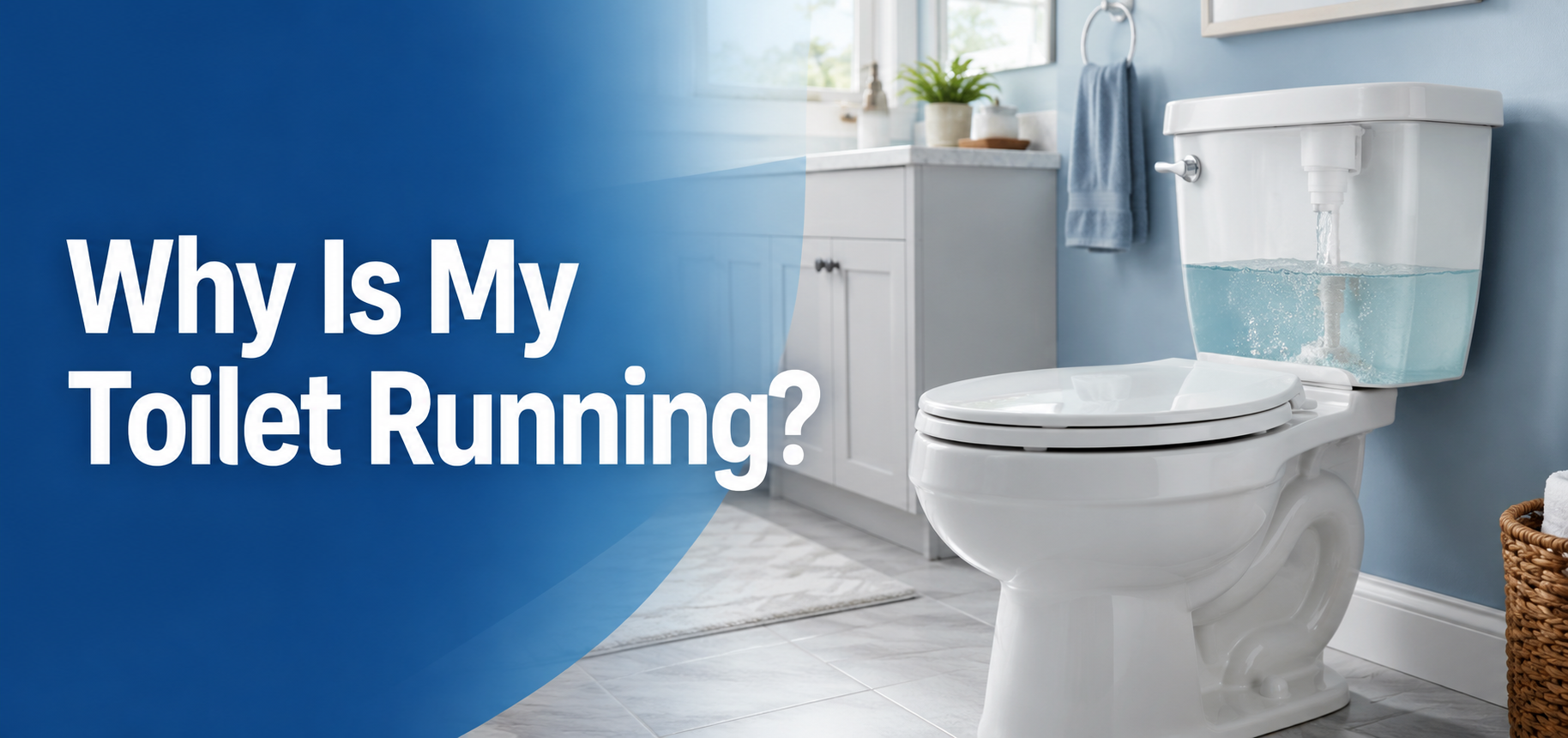


Running toilet problems in Tampa homes usually trace back to a worn flapper, a float set too high, or a fill valve that no longer shuts off. Most causes are easy to spot with a quick look inside the tank. This guide explains how each part works, which simple checks you can try yourself, and when it makes sense to bring in a licensed plumber.
What It Means When Your Toilet Keeps Running
A toilet should refill for about a minute after a flush and then go quiet. If you keep hearing water trickle or hiss long after that, water is escaping from the tank into the bowl and the fill valve is working nonstop to replace it.
Sometimes the sound is constant. Other times the toilet refills on its own every few minutes, which plumbers call phantom flushing. Both point to the same basic issue: the tank isn’t holding water the way it should.
How the Parts Inside Your Toilet Tank Work Together
Lifting the tank lid reveals a handful of parts that control every flush. Knowing what each one does makes it much easier to figure out where the trouble starts.
- Flapper: A rubber seal at the bottom of the tank that lifts when you flush and drops back down to hold water in.
- Flush chain: The small chain linking the handle lever to the flapper.
- Fill valve: The tall assembly on one side that lets fresh water into the tank after each flush.
- Float and overflow tube: The float tells the fill valve when to stop, and the overflow tube sends extra water into the bowl so the tank can’t spill over.
When any one of these parts wears out or falls out of adjustment, the whole system can get stuck in a loop of draining and refilling.
Common Reasons Your Toilet Keeps Running
Plumbers see the same handful of causes again and again. Here’s what usually turns out to be behind that endless trickle.
A Worn or Warped Flapper
The flapper is the most common culprit. Rubber breaks down over time, especially with chlorinated city water, and a flapper that has stiffened or warped can’t form a tight seal. Water slowly leaks into the bowl, and the fill valve kicks on to top off the tank.
You might notice the flapper feels slimy, cracked, or misshapen. Flappers are inexpensive and usually need replacing every few years.
A Float Set Too High
If the float sits too high, the tank fills past the top of the overflow tube. The extra water drains straight into the bowl, so the fill valve never gets the signal to shut off.
Look for water level sitting at or above the overflow tube opening. The water line should rest about an inch below the top of that tube.
A Faulty Fill Valve
Fill valves contain small seals and moving parts that can wear out or get clogged with debris. When that happens, the valve may keep letting water in even after the tank is full.
A hissing sound that continues while the float is already at its proper height is a strong hint that the fill valve needs attention.
Flush Chain Trouble
A chain that’s too short holds the flapper slightly open. One that’s too long can get caught underneath the flapper and keep it from sealing.
The fix is often as easy as adjusting the chain so it has just a little slack when the flapper is closed.
Why Tampa Homes Run Into This Problem
Water across much of the Tampa Bay area runs on the hard side, which means it carries dissolved minerals like calcium and magnesium. Over time those minerals leave scale buildup on flapper seats and inside fill valves, and that buildup can stop parts from closing fully.
Many neighborhoods, from South Tampa to Carrollwood, also have older homes with original or long-serving fixtures. Parts that have been working for a decade or more simply wear out, and Florida humidity doesn’t do rubber components any favors either.
How to Check for a Silent Toilet Leak
Not every leak makes noise. A slow leak can go unnoticed for months while quietly raising your water bill. A simple dye test can tell you whether water is slipping past the flapper.
- Remove the tank lid and add a few drops of food coloring to the tank water.
- Avoid flushing for at least 15 to 20 minutes.
- Check the toilet bowl for any colored water.
- Flush afterward so the dye doesn’t stain the porcelain.
If color shows up in the bowl, the flapper or its seat is leaking. That tells you exactly where to focus your attention.
Simple Checks You Can Try Before Calling a Plumber
Plenty of running toilets can be sorted out in a few minutes with no special tools. Before you do anything, turn off the water supply valve behind the toilet so you can work without water flowing in.
- Jiggle the handle to see whether the flapper reseats itself.
- Adjust the flush chain so it hangs with a small amount of slack.
- Lower the float by turning the adjustment screw or sliding the clip down the rod.
- Gently clean mineral deposits off the flapper and the drain seat with a soft scrub pad.
- Inspect the flapper for cracks, warping, or a slimy feel that signals worn rubber.
- Replace the flapper with one sized to match your toilet model.
If none of these steps stops the running, the issue is likely deeper inside the fill valve or the flush valve assembly. That’s usually the point where a professional repair saves time and frustration.
What a Running Toilet Really Costs You
A running toilet may seem like a minor annoyance, but it adds up quickly. According to the EPA’s WaterSense program, a running toilet can waste as much as 200 gallons of water every day.
That wasted water shows up on your monthly bill, and constant cycling also puts extra wear on the fill valve itself. Fixing the problem early is almost always cheaper than letting it continue.
When to Call a Professional Plumber
Some toilet problems go beyond a quick adjustment. Our technicians handle these repairs every day as part of our full range of plumbing services for Tampa homeowners.
It’s a good idea to reach out for help if you notice any of the following:
- The toilet still runs after you’ve replaced the flapper and adjusted the float.
- Water is leaking around the base of the toilet or onto the floor.
- The shutoff valve behind the toilet is stuck, corroded, or dripping.
- The tank or bowl has visible cracks.
If water is overflowing, pooling on the floor, or you can’t get it shut off, don’t wait. Our team offers emergency plumbing in Tampa around the clock to help limit water damage to your home.
Get Your Toilet Fixed by ACS Home Services
A running toilet doesn’t have to drain your wallet or your patience. Our licensed, background-screened plumbers can find the cause, explain your options, and get things working quietly again.
Call us today at (833) 903-5299 or reach out through our contact page to schedule service. You can also read what your neighbors say about ACS Home Services and see why so many Tampa families trust us. Our people make the difference.
FAQ
Why does my toilet keep running after I flush?
Most of the time, the flapper isn’t sealing properly or the float is set too high. Both let water escape from the tank, so the fill valve keeps running to replace it.
Is a running toilet an emergency?
Usually not, but it shouldn’t be ignored for long because it wastes a lot of water. If the toilet is overflowing or leaking onto the floor, treat it as urgent and shut off the water supply right away.
Can I fix a running toilet myself?
Many homeowners can handle simple fixes like adjusting the chain, lowering the float, or replacing a flapper. Problems with the fill valve, supply line, or cracked porcelain are better left to a licensed plumber.
How much water does a running toilet waste?
A toilet that runs constantly can waste up to 200 gallons per day. Even a slow, silent leak can add hundreds of gallons to your monthly water use.
Why does my toilet refill by itself every few minutes?
This is often called phantom flushing. It happens when water slowly leaks past the flapper, dropping the tank level until the fill valve turns on to top it off.
Does hard water cause toilet problems in Tampa?
Hard water can leave mineral deposits on the flapper seat and inside the fill valve. Over time, that buildup keeps parts from sealing or shutting off the way they should.
How often should toilet flappers be replaced?
Flappers typically last a few years, depending on water quality and how often the toilet is used. If yours feels stiff, warped, or slimy, it’s probably time for a new one.
What should I do if my toilet won't stop running and I can't fix it?
Turn off the water supply valve behind the toilet to stop the flow. Then call a professional plumber to diagnose the problem and make the repair.