

A toilet bubbling while the shower drains is more than an inconvenience. It can be an early warning that wastewater has nowhere to go. This homeowner guide to sewer backups explains how to recognize the problem, protect your household, and make informed decisions before a small drain issue becomes contaminated water inside your home.
For Central Florida homeowners, sewer backups can happen after heavy rain, from aging or damaged sewer lines, or when a blockage builds up over time. Fast action matters, but so does safe action. Sewage can contain bacteria and other contaminants, so this is not a problem to solve by repeatedly flushing, plunging, or pouring chemicals down every drain.
A Homeowner Guide to Sewer Backups: First Steps
If sewage, gray water, or dirty water is coming up through a toilet, shower, floor drain, or tub, stop using water throughout the home immediately. Do not flush toilets, run the dishwasher, start laundry, or take a shower. Every gallon sent into your plumbing system can add to the backup.
Keep children and pets away from the affected area. Avoid touching the water or walking through it without proper protection. If water is near electrical outlets, appliances, or your electrical panel, stay clear of the area and do not attempt to move electrical equipment. Turn off power only if you can do so safely without entering standing water.
A sewer backup that is actively overflowing calls for professional help right away. A qualified plumbing technician can identify whether the issue is confined to a branch drain, affecting the main sewer line, or connected to an outside sewer problem. The right diagnosis prevents wasted time and helps protect flooring, walls, and personal belongings from further damage.
Signs Your Sewer Line May Be Backing Up
A single slow sink does not always mean you have a sewer backup. It may be a localized clog caused by soap, hair, food waste, or buildup in that fixture’s drain. The warning signs become more serious when multiple drains behave strangely at the same time.
Watch for toilets that gurgle when a sink, washer, or shower drains. Water rising in a tub or shower after flushing a toilet is another common sign. You may also notice several fixtures draining slowly, foul odors near drains, or wastewater appearing at a floor drain. These symptoms often point to a blockage or restriction farther down the system, where the home’s drain lines connect to the main sewer line.
Outdoor clues matter, too. A wet, unusually green, or foul-smelling patch of lawn near the sewer line can indicate a leak or break underground. If your home has a sewer cleanout and water is pushing out around it, the line may be obstructed downstream. Do not remove a cleanout cap on your own when the system is under pressure. Wastewater can release suddenly.
What Causes Sewer Backups in Florida Homes?
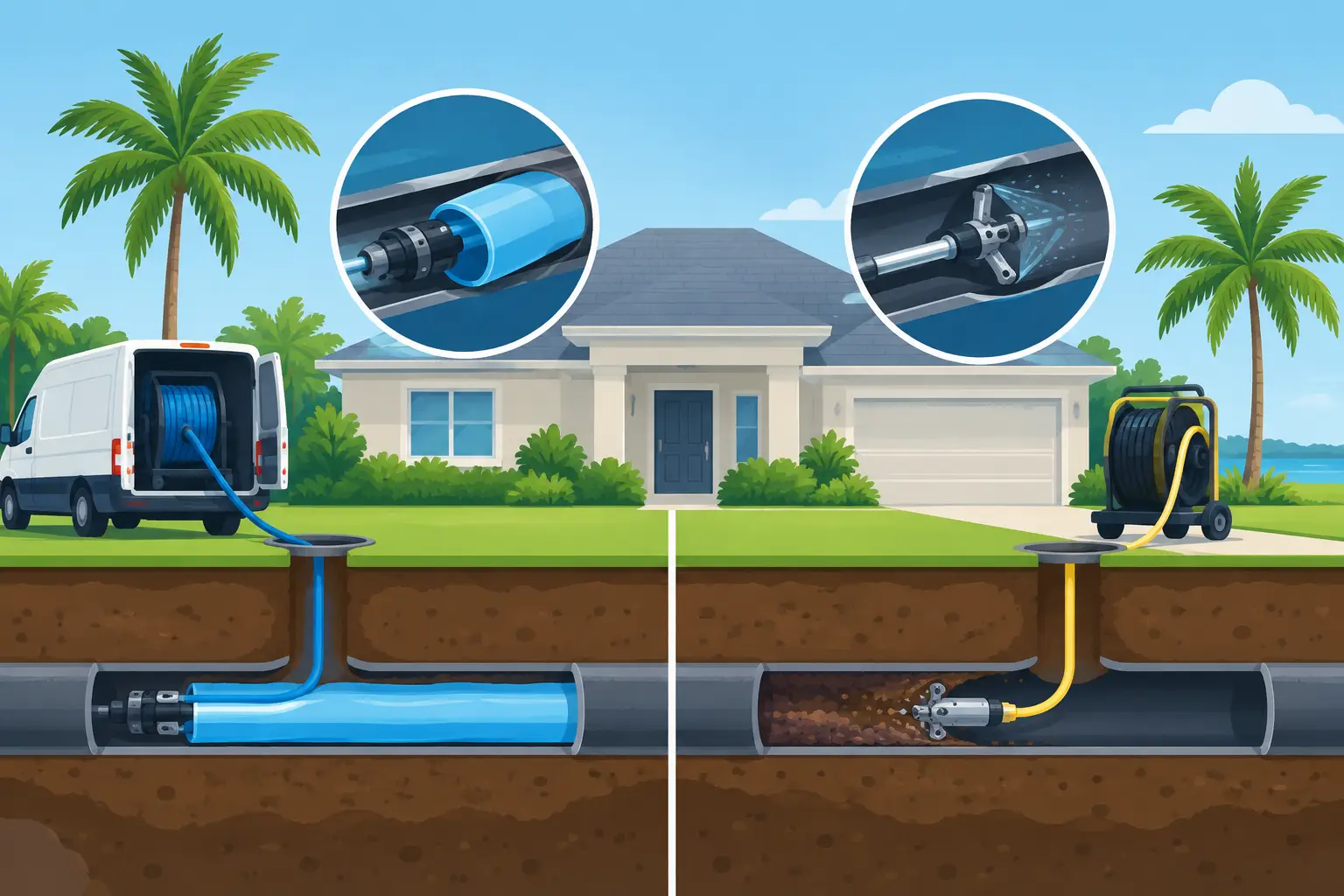
The cause determines the proper repair. Drain cleaning may solve a buildup or obstruction, while a cracked, separated, or sagging pipe may require sewer repair. A camera inspection is often the clearest way to see what is happening inside the line before approving a larger repair.
Common causes include:
- Grease, wipes, paper towels, hygiene products, and other materials that should never enter a drain
- Tree roots growing into small openings in older sewer pipes
- Pipe damage from shifting soil, corrosion, age, or prior construction work
- A belly or low section in the line where waste and water repeatedly collect
- Heavy rainfall or a municipal sewer issue that overwhelms parts of the system
Florida’s wet season can make an existing sewer weakness show up quickly. Saturated soil, intense rain, and groundwater pressure may expose cracks, root intrusion, or poor drainage around a home’s plumbing system. However, rain is not always the root cause. If backups keep returning, it is worth investigating the line itself rather than treating each event as a one-time clog.
What Not to Do During a Backup
When drains are backing up, many homeowners understandably reach for a chemical drain opener. That can make the situation worse. Chemical products rarely clear a main sewer blockage, can damage certain pipes, and create a safety hazard for anyone who later works on the drain.
Avoid running more water to “test” whether the problem has cleared. Do not use a plunger on a toilet that is already close to overflowing, and do not attempt to snake a main sewer line unless you have the right equipment and experience. Main-line cleaning equipment can be powerful, and improper use can damage pipes or cause injury.
Do not assume a backup is safe because the water looks clear. Wastewater may be diluted, especially after rain, but it can still carry contaminants. Porous items such as carpeting, padding, drywall, insulation, and upholstered belongings may need professional evaluation after contact with sewage.
Who Is Responsible for the Sewer Line?
Responsibility often depends on where the problem is located. Homeowners are commonly responsible for the sewer lateral, which is the pipe that runs from the house to the public sewer connection. The city or utility may be responsible for the public main, but local rules and property layouts vary.
A plumbing inspection can help establish whether the blockage is on your side of the connection or farther out in the public system. If neighbors are reporting similar backups, the issue may involve the municipal main. Contact your local utility in that situation, but do not delay calling a plumber if sewage is entering your home. You may need immediate help containing the damage even while the source is being determined.
If you have homeowners insurance, review your policy before an emergency happens. Standard coverage does not always include damage from sewer or drain backups. A separate water backup endorsement may be available, and it can make a meaningful difference after a covered event. Keep photos, notes, and receipts if a backup causes property damage.
Preventing Future Sewer Backups
Prevention starts with what goes down the drain. Toilets should handle only human waste and toilet paper. Even products labeled “flushable” can catch on rough pipe interiors, roots, or existing buildup. In the kitchen, allow cooking grease to cool in a container and dispose of it in the trash instead of washing it into the sink.
Regular drain and sewer maintenance is especially valuable if your home has mature trees, older plumbing, a history of slow drains, or previous backups. A professional can recommend whether routine cleaning makes sense for your system. Cleaning too aggressively or too often is not automatically better, particularly for older or compromised pipes. The goal is to match the service to the condition of the line.
For homes with recurring exterior water issues, drainage improvements may also help protect underground systems. Keep roof runoff directed away from the foundation and avoid planting large trees directly over known sewer routes when possible. If a camera inspection finds roots, cracks, or offsets, addressing the underlying defect is usually more dependable than repeatedly clearing the same obstruction.
A backwater valve can be another consideration for some homes, particularly where municipal sewer surcharging is a known concern. This device is designed to help prevent sewage from flowing backward into the house. It is not right for every plumbing configuration and requires maintenance, so ask a licensed professional whether it is appropriate for your property.
When to Schedule Emergency Plumbing Service
Call for emergency plumbing help when wastewater is entering the home, multiple fixtures are backing up, a toilet overflows and will not stop, or you smell persistent sewage odors with widespread drainage problems. These are situations where waiting can increase health risks and property damage.
For a slow drain affecting one fixture, scheduling a standard service visit may be reasonable if there is no overflow or cross-drain backup. The key difference is scope. One slow bathroom sink may be a minor drain issue. A toilet, tub, and laundry drain all reacting to each other deserves prompt attention.
ACS Home Services provides professional drain cleaning, sewer diagnostics, and repair support for homeowners throughout Tampa and Central Florida. Clear recommendations, the right equipment, and same-day availability can make a stressful plumbing problem far more manageable.
The best time to think about a sewer backup is before wastewater reaches the floor. Pay attention to early warning signs, use your drains carefully, and act quickly when several fixtures begin sending the same message: your plumbing system needs help.