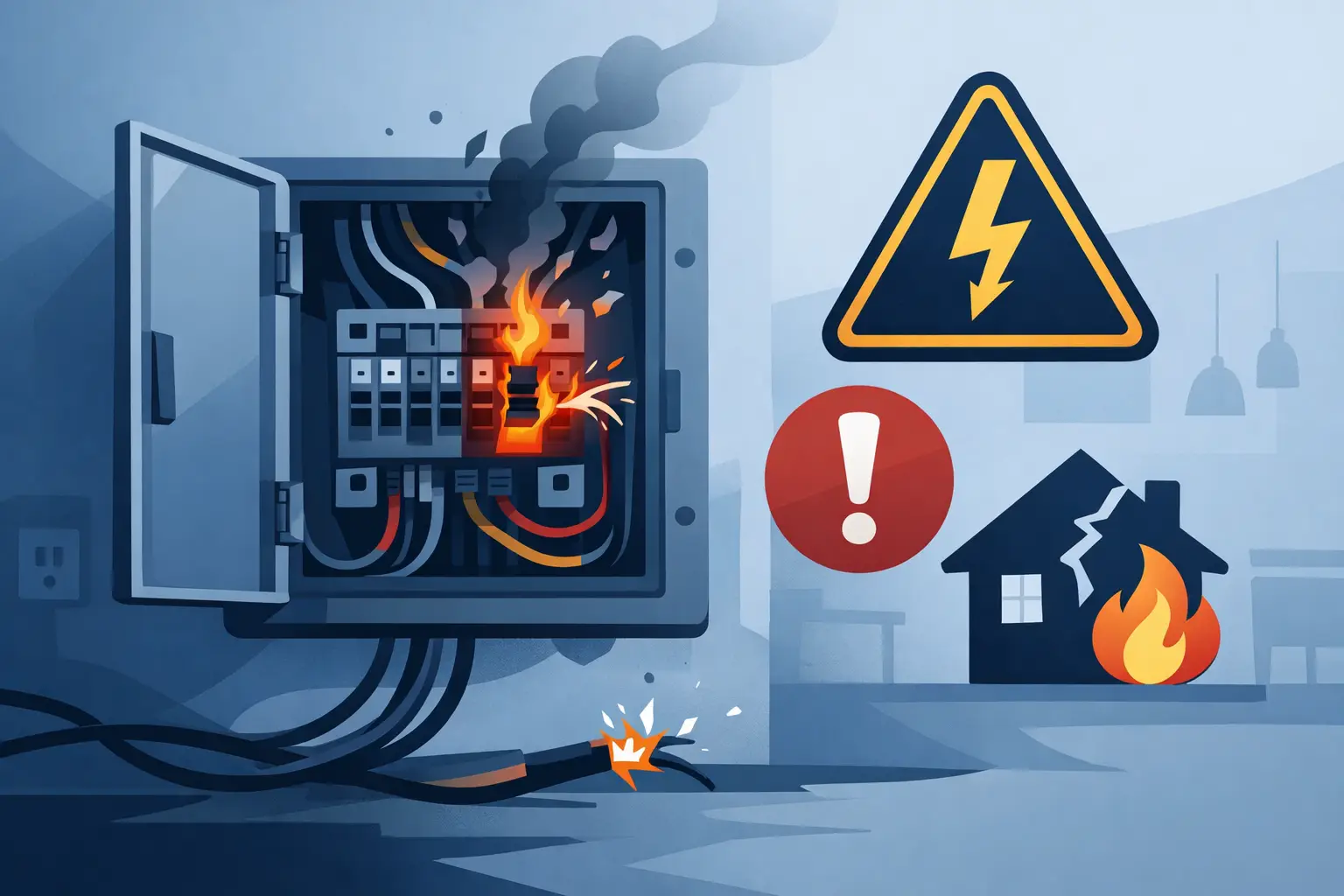


Electrical emergencies are dangerous problems involving wiring, outlets, electrical panels, lighting, or appliances that require immediate attention. Warning signs such as smoke, sparks, burning odors, electric shocks, or a hot electrical panel should never be ignored. Knowing how to respond can help protect your family and reduce the risk of fire or serious injury.
Some electrical problems are inconvenient but can safely wait for a scheduled appointment. Others require you to turn off the power, leave the affected area, and contact a professional immediately. When you are uncertain, it is safer to speak with a qualified electrician than to continue using a potentially dangerous electrical system.
What Is Considered an Electrical Emergency?
An electrical emergency is any electrical problem that creates an immediate risk of fire, shock, injury, or significant property damage. The danger may be obvious, such as smoke coming from an outlet, or it may begin with a quieter warning sign like buzzing inside the electrical panel.
An electrical problem should be treated as an emergency when it creates heat, smoke, sparks, shocks, or a persistent burning smell. These symptoms can indicate damaged wiring, loose electrical connections, overloaded circuits, or failing equipment.
Common electrical emergencies include:
- Smoke, flames, or sparks coming from an outlet, switch, appliance, or electrical panel
- A burning odor that appears to originate behind a wall or near electrical equipment
- An electrical panel, outlet, or switch that feels unusually hot
- Repeated electric shocks or tingling sensations when touching fixtures or appliances
- Crackling, popping, or loud buzzing noises coming from wiring or the electrical panel
- Power loss affecting part of the home when neighboring homes still have electricity
- Water entering an outlet, light fixture, appliance, or electrical panel
- A circuit breaker that repeatedly trips and will not remain reset
What Should You Do During an Electrical Emergency?
Your first priority is keeping everyone away from the electrical hazard. Do not touch smoking equipment, exposed wiring, standing water near electrical components, or a person who is still in contact with an electrical current.
If you can reach the electrical panel safely, turn off the affected circuit. When you cannot identify the correct circuit, shut off the main breaker. Do not approach the panel if it is smoking, sparking, buzzing loudly, wet, or hot.
During a suspected electrical emergency:
- Move children and pets away from the affected area
- Turn off power only when the panel can be reached safely
- Unplug an appliance only if its plug and surrounding area are cool and dry
- Call emergency services if there is a fire, smoke, or an immediate threat to anyone’s safety
- Use an appropriate fire extinguisher for an electrical fire if the fire is small and you have a safe exit
- Never throw water on an electrical fire
- Leave the home if smoke, heat, or flames begin spreading
- Contact a licensed emergency electrician in Tampa for urgent diagnosis and repair
Burning Smells, Smoke, and Discolored Outlets
A burning smell without an obvious source can be a sign that wire insulation, an electrical connection, or another component is overheating. The odor may resemble melting plastic, hot rubber, or scorched material.
Outlets and switches may also develop brown marks, black discoloration, melted areas, or unusual warmth. These symptoms can occur when connections become loose or electrical components are overloaded.
Stop using any outlet or switch that smells burned, looks scorched, or feels hot. Shut off the circuit if you can do so safely and arrange for an electrical inspection. Replacing the visible outlet without finding the underlying cause may leave a dangerous wiring problem inside the wall.
Professional outlet and switch services can identify damaged devices, loose connections, incorrect wiring, and circuits that are carrying more power than they should.
Sparks, Buzzing Sounds, and Electrical Arcing
A tiny, brief spark can sometimes occur when a plug is inserted into an outlet while an appliance is already switched on. Large sparks, repeated sparking, visible flashes, or sparks accompanied by heat and odor are not normal.
Buzzing and crackling sounds also deserve immediate attention. Electricity should move through a properly installed residential system without producing loud or persistent noise.
Potential warning signs include:
- Sparks coming from an outlet after the plug is fully inserted
- Crackling sounds behind a wall or ceiling
- Buzzing that becomes louder when an appliance turns on
- Flashes of light near the electrical panel
- Loose plugs that move or fall out of an outlet
- Lights that flicker when unrelated appliances are operating
These symptoms may indicate electrical arcing, a loose wire, a damaged receptacle, or a failing breaker. Avoid testing the outlet repeatedly. Turn off the circuit and have the problem professionally evaluated.
Electric Shocks and Tingling Sensations
An electric shock should never be dismissed, even when it feels minor. A tingling sensation from a switch, appliance, faucet, or metal fixture can indicate improper grounding, damaged wiring, moisture exposure, or electrical current traveling where it should not.
Do not touch the object again to determine whether the shock happens twice. Stop using the affected equipment and keep others away from it. If someone has received a serious shock, call emergency services and do not touch the person until the electrical source has been disconnected.
An electrician should inspect the circuit before it is used again. The inspection may include the outlet, grounding system, connected appliance, wiring, and electrical panel.
Repeated Circuit Breaker Trips
A circuit breaker is designed to shut off electricity when it detects an unsafe condition. A single trip can result from using too many high-demand devices on one circuit. A breaker that trips repeatedly may indicate an overload, short circuit, ground fault, damaged appliance, or wiring problem.
Signs that a tripping breaker may require urgent service include:
- The breaker trips immediately after being reset
- The electrical panel smells burned or feels hot
- You hear buzzing or crackling inside the panel
- The breaker handle appears damaged or will not move normally
- Lights dim dramatically before the breaker trips
- The problem continues after appliances have been unplugged
Do not keep resetting a breaker that repeatedly trips. The breaker may be preventing wires or electrical equipment from overheating. Leave the circuit off and contact an electrician for diagnosis.
Water and Electricity Are a Dangerous Combination
Plumbing leaks, roof leaks, flooding, and storm damage can expose electrical components to water. Even a small amount of moisture inside an outlet, fixture, appliance, or electrical panel can create a serious shock hazard.
Do not stand in water to unplug equipment or reach the electrical panel. If the main breaker can be accessed without entering a wet area, turn off the power. Otherwise, stay away and contact emergency professionals.
Water-related electrical hazards may involve:
- A ceiling leak entering a recessed light or ceiling fixture
- Floodwater reaching outlets or extension cords
- Rain entering an outdoor outlet or electrical enclosure
- A plumbing leak dripping near the electrical panel
- Wet appliances following a kitchen or laundry room leak
- Landscape lighting damaged by standing water or storms
Water-damaged electrical equipment should be inspected before power is restored. Some components may require replacement even if they appear dry from the outside.
Lighting Problems That May Signal an Emergency
A burned-out light bulb is normally a routine maintenance issue. Lighting problems become more concerning when they affect several fixtures, produce heat or odors, or appear alongside buzzing and breaker trips.
Warning signs include flickering throughout the home, lights becoming unusually bright or dim, melted fixture components, and smoke coming from a ceiling box. These problems can indicate a loose connection, damaged wiring, an overloaded fixture, or trouble with the home’s electrical service.
Turn off any fixture that sparks, smokes, smells burned, or repeatedly causes a breaker to trip. ACS Home Services provides professional indoor and outdoor lighting services to diagnose unsafe fixtures, switches, wiring, and lighting connections.
What Is Usually Not an Electrical Emergency?
Some electrical issues need professional attention but may not present an immediate danger. Examples include a nonworking outlet without heat or discoloration, a ceiling fan that has stopped operating, or plans to add new lighting.
A scheduled electrical appointment may be appropriate when:
- There is no smoke, heat, sparking, or burning odor
- The affected circuit can remain safely turned off
- No one has received an electrical shock
- The problem is limited to an upgrade or nonurgent repair
Conditions can change, so continue watching for warning signs. If an outlet becomes hot, a burning odor develops, or a breaker begins tripping, treat the problem with greater urgency.
How Can Homeowners Prevent Electrical Emergencies?
Electrical problems cannot always be predicted, but many emergencies provide warnings before they become severe. Paying attention to unusual changes can help you arrange repairs sooner.
Homeowners can reduce electrical risks by following these practices:
- Avoid using extension cords as permanent household wiring
- Replace damaged cords, plugs, switches, and outlets promptly
- Keep electrical devices away from sinks, tubs, and wet outdoor areas
- Do not force a three-prong plug into an incompatible outlet
- Use light bulbs that match the fixture’s approved wattage
- Schedule an inspection when breakers frequently trip or lights regularly flicker
- Do not cover chargers, power strips, or electrical equipment with fabric
- Have older or questionable wiring evaluated by a qualified electrician
Electrical work is not an appropriate place for guesswork. Repairs inside panels, walls, outlets, and switches should be completed by a trained professional who can identify the full cause of the problem.
Call ACS Home Services for Electrical Help in Tampa
If you notice sparks, burning odors, electrical shocks, hot outlets, or repeated breaker trips, stop using the affected circuit and contact ACS Home Services. Our electricians can locate the source of the problem and explain the repair options clearly.
Call (833) 278-8886 for help, or use the ACS Home Services contact page to request service. You can also visit the Google Maps profile for ACS Home Services to find additional business information.
FAQ
What are the most common signs of an electrical emergency?
The most common signs include smoke, sparks, burning odors, hot outlets, buzzing from the electrical panel, repeated breaker trips, and electric shocks. Turn off the affected circuit when it is safe to do so and contact an electrician.
Should I call an electrician if I smell something burning?
Yes. A burning smell near an outlet, switch, fixture, appliance, or electrical panel can indicate overheating or damaged wiring. Stop using the affected equipment, turn off the circuit if possible, and arrange for prompt professional service.
Is a sparking outlet always an emergency?
A large spark, repeated sparking, or a spark accompanied by heat, smoke, noise, or discoloration should be treated as an emergency. Do not continue plugging items into the outlet to test it.
What should I do if my electrical panel is buzzing?
Keep your distance if the panel is hot, smoking, sparking, or producing a strong burning odor. Do not remove the cover. Contact an emergency electrician, and call emergency services if there is an active fire or an immediate safety threat.
Why does my circuit breaker keep tripping?
A breaker may repeatedly trip because of an overloaded circuit, short circuit, ground fault, faulty appliance, or wiring problem. Do not keep resetting it. Leave the circuit off until an electrician identifies the cause.
Can I use water to put out an electrical fire?
No. Water conducts electricity and can increase the risk of shock. Leave the area and call emergency services. If the fire is small, you have the correct fire extinguisher, and you can maintain a clear exit, follow the extinguisher’s operating instructions.
Is a partial power outage an electrical emergency?
A partial outage may indicate a tripped breaker, damaged circuit, loose service connection, or another electrical problem. Check whether neighbors have also lost power. If only part of your home is affected or you notice flickering, heat, buzzing, or burning odors, contact an electrician promptly.
When should I call an emergency electrician in Tampa?
Call an emergency electrician when an electrical problem creates a possible fire, shock, or property-damage risk. This includes smoking equipment, exposed live wiring, hot electrical components, water near energized devices, repeated shocks, and breakers that will not remain reset.