

Florida heat does not give an air conditioner much time to ease into the season. When the first long stretch of 90-degree afternoons arrives, your system may suddenly run for hours at a time. Knowing how to prepare AC for summer before that demand hits can reduce the chance of an uncomfortable breakdown, help manage energy costs, and give your household more confidence heading into the hottest months.
A little homeowner attention goes a long way, but it does not replace professional maintenance. The goal is to handle the safe, simple checks early and schedule service before a small issue becomes an urgent repair call.
Start With a Real-World Cooling Test
Choose a warm afternoon and set the thermostat several degrees below the current indoor temperature. Your AC should start within a few minutes and produce noticeably cool air from the supply vents. Let it run long enough to see whether it cools the home steadily without unusual cycling.
Pay attention to what you hear and feel. Rattling, grinding, buzzing, a burning odor, weak airflow, or warm air from the vents all deserve attention. So does an AC that starts and stops repeatedly without reaching the thermostat setting. In Central Florida, delaying a repair because the system is still cooling “well enough” can leave you without cooling when demand is highest.
Check that every room feels reasonably consistent, too. One warmer bedroom may be a simple airflow issue, but it can also point to a blocked vent, duct leak, insulation concern, or an incorrectly sized system. Closing multiple vents to force air elsewhere is rarely the answer and can increase pressure in the ductwork.
Replace the Air Filter Before Summer
A clogged filter is one of the most common and preventable causes of poor AC performance. It restricts airflow, makes the blower work harder, and allows dust to build up where it should not. In Florida’s long cooling season, many homes need filter changes more often than the package’s maximum interval suggests.
Check the filter monthly during heavy use. Homes with pets, allergies, construction dust, or frequent open doors may need a new filter every 30 to 60 days. A typical household may be able to go longer, depending on the filter type and system recommendations.
Use the correct size and install it in the direction of the airflow arrow. More filtration is not always better. An overly restrictive filter can reduce airflow if your system is not designed for it. If you are unsure which filter rating fits your equipment and indoor air quality needs, ask an HVAC technician during maintenance.
Clear the Outdoor Unit and Give It Room to Breathe
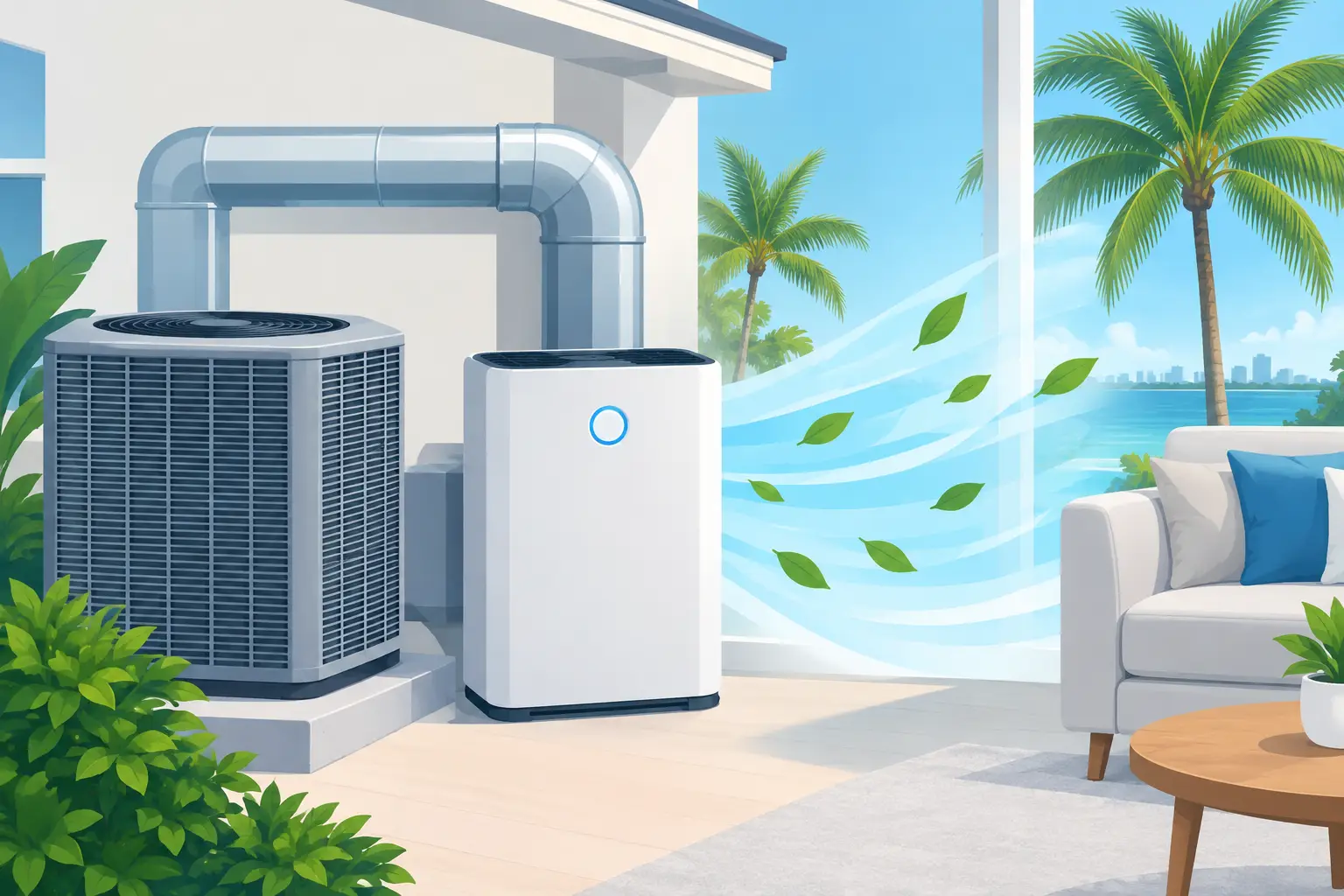
Your outdoor condenser releases the heat removed from your home. It needs open space around the cabinet to do that job efficiently. Leaves, grass clippings, mulch, vines, and patio items can trap heat and restrict airflow around the coil.
Turn off the system at the thermostat before checking the area. Remove loose debris from around the unit and keep plants trimmed back, ideally allowing about two feet of open clearance on all sides and above it. Do not cover the unit while it is operating, and do not use a pressure washer on the delicate coil fins.
If the coil looks heavily coated with dirt, or if fins are bent and crushed, schedule professional cleaning. A technician can clean the coil safely, inspect the fan and electrical components, and identify damage that a quick visual check may miss. Keep gutters and roof runoff from draining directly onto the equipment as well.
Check Drainage Before Humidity Builds Up
Air conditioning removes a surprising amount of moisture from Florida homes. That moisture exits through a condensate drain line. When algae, sludge, or debris clogs the line, water can back up into the air handler, trigger a safety switch, damage nearby surfaces, or create a musty odor.
Look around the indoor unit for water, staining, rust, or a full drain pan. If your system has a visible drain termination outdoors, you may see a steady drip while the AC is running on a humid day. No visible water does not automatically mean there is a blockage, but a dry line combined with cooling problems is worth checking.
Avoid pouring harsh chemicals into a drain line unless your equipment manufacturer or HVAC professional recommends it. The wrong product can damage components or create a mess indoors. A maintenance visit is the right time to have the drain line cleared and the safety controls tested.
Set the Thermostat for Comfort, Not Constant Catch-Up
The lowest setting on the thermostat will not cool the house faster. It simply tells the system to run longer, which can increase wear and utility use. A practical summer setting is one your family can maintain consistently, often around 76 to 78 degrees when home. The best setting depends on your comfort preferences, home insulation, humidity, and whether anyone in the household has health needs affected by heat.
If you have a programmable or smart thermostat, use modest adjustments rather than extreme setbacks. Raising the temperature a few degrees when the house is empty can save energy, but allowing a Florida home to become very hot and humid may make it harder for the AC to recover comfortably. Keep the fan setting on Auto in most cases. Leaving it set to On can circulate air continuously, but it may also reintroduce moisture from the system after a cooling cycle ends.
Schedule Professional AC Maintenance Early
A seasonal tune-up is where preparation becomes prevention. A qualified technician can inspect electrical connections, test capacitors, check refrigerant-related performance, clean key components, verify airflow, inspect the blower, clear the condensate drain, and look for signs of wear before they lead to a shutdown.
Professional maintenance does not guarantee that a component will never fail. AC systems contain mechanical and electrical parts that can wear unexpectedly, especially in hot, humid conditions. It does, however, give you a clearer picture of your system’s condition and an opportunity to plan repairs on your schedule rather than during an emergency.
For older equipment, ask direct questions about reliability, repair costs, and expected remaining service life. Replacing an aging system is a significant decision, and repair is often sensible when the issue is isolated and the system is otherwise in good condition. If breakdowns are recurring, cooling is uneven, or repairs are becoming expensive, an honest replacement evaluation can help you compare the trade-offs before summer pressure builds.
ACS Home Services provides HVAC maintenance, repair, and replacement support for homeowners across Tampa and surrounding Central Florida communities, with same-day service available when urgent cooling issues cannot wait.
Watch for These Signs Your AC Needs Attention
Do not wait for a complete shutdown if you notice several changes in performance. Call for service if your system is showing any of the following signs:
- Air from the vents is warm, weak, or inconsistent between rooms.
- The system runs almost constantly but cannot reach the thermostat setting.
- You hear grinding, squealing, repeated clicking, or loud rattling.
- Water is pooling near the indoor unit or a musty smell appears near vents.
- Your electric bill rises sharply without a clear change in weather or household use.
- Ice forms on refrigerant lines or the indoor equipment.
Ice is not a sign that the AC is working extra hard. It often indicates an airflow problem or another condition that needs professional diagnosis. Turn the cooling system off and contact a technician rather than continuing to run it.
Simple Habits That Help All Summer
Preparing the AC is only part of keeping a home comfortable. Keep supply vents open and unobstructed by furniture or rugs. Use ceiling fans to create a wind-chill effect, but remember they cool people, not rooms, so turn them off when a room is empty. Close blinds or curtains during the strongest afternoon sun, and seal obvious gaps around doors and windows.
These habits reduce the load on your equipment, but they cannot correct a failing compressor, leaking ductwork, or a clogged drain. If your home feels sticky even when the temperature looks normal, feels unusually dusty, or has persistent hot spots, bring those details up during service. They help the technician diagnose the whole comfort system, not just the thermostat reading.
The best time to schedule AC service is when your home is still comfortable enough to make a thoughtful decision. Give your system a test now, handle the easy checks, and get professional help at the first sign that Florida summer is asking more of your AC than it can reliably deliver.