

A Tampa AC system rarely picks a convenient time to fail. It may start blowing warm air after a long afternoon of 95-degree heat, quit overnight when humidity is at its worst, or run constantly without ever making your home feel comfortable. When you need ac repair tampa homeowners can depend on, fast action matters. A small issue can quickly become a complete loss of cooling, higher utility bills, or added strain on expensive equipment.
The good news is that many air conditioning problems give you warning signs before the system stops altogether. Knowing what to watch for can help you make a clear decision: monitor the issue, schedule a repair soon, or request emergency service right away.
When AC Repair in Tampa Should Not Wait
Florida heat is not just uncomfortable. For young children, older adults, pets, and anyone with certain health concerns, a hot indoor home can become a safety issue quickly. Call for prompt professional help if your AC will not turn on, is blowing warm air, is leaking heavily, or keeps tripping the breaker.
A burning smell, smoke, sparking, or a breaker that repeatedly trips deserves immediate attention. Turn the system off if it is safe to do so. Electrical problems should never be treated as a do-it-yourself repair, especially when they involve an HVAC system that draws significant power.
It is also wise to act quickly when your system is running but cannot keep up. If the thermostat is set to a reasonable temperature and your home continues getting warmer, the issue could involve refrigerant, airflow, the compressor, a failing capacitor, or another component that needs proper testing. Continuing to force the system to run can increase wear and turn a manageable repair into a larger expense.
Common Signs Your Air Conditioner Needs Service
Not every AC problem is dramatic. Some begin as small changes that are easy to dismiss during a busy week. Paying attention early gives you more scheduling flexibility and may reduce the risk of an after-hours breakdown.
Warm air or weak airflow
Warm air from the vents is one of the clearest signs that something is wrong. The cause may be as simple as a thermostat setting or dirty filter, but it can also point to refrigerant loss, a frozen evaporator coil, ductwork trouble, or a mechanical failure.
Weak airflow is different from warm air, though the two can happen together. If certain rooms are stuffy while others cool normally, restricted ducts, a clogged filter, a blower issue, or poorly balanced airflow may be involved. Closing too many vents can also affect system performance, so it is best to leave supply vents open unless a technician recommends otherwise.
Unusual sounds and odors
Your AC should make a steady operating sound, not banging, grinding, squealing, rattling, or buzzing. A loose part may be a relatively straightforward repair. Grinding can signal a more serious motor or compressor concern. Because the exact cause is not always obvious from sound alone, shutting the system down and having it inspected is the safer choice when noises are loud or new.
Musty odors can indicate moisture or microbial growth near the indoor coil, drain system, or ductwork. A burning odor may be electrical. Neither should be ignored, particularly in Tampa’s humid climate, where moisture problems can develop fast.
Water around the indoor unit
Condensate is normal. Water pooling around the air handler is not. Florida AC systems remove a great deal of humidity, and a clogged condensate drain line can cause water to back up into the unit or home. Depending on the installation, it may trigger a safety switch that shuts the system down.
Turning off the unit can help prevent more water damage, but clearing the line is only part of the job. A technician can check why the clog formed and inspect the drain pan, safety switch, and surrounding components for damage.
Rising bills and longer run times
A higher electric bill is not always proof that your AC is failing. Tampa weather, thermostat habits, insulation, and household activity all affect energy use. But if costs rise sharply while comfort falls, your system may be losing efficiency.
An air conditioner that runs almost continuously might be undersized, poorly maintained, low on refrigerant, restricted by a dirty coil, or struggling with duct leakage. The right repair depends on the diagnosis. Replacing parts without identifying the underlying issue is rarely the best value.
What You Can Check Before Calling
There are a few safe checks homeowners can make before scheduling service. Confirm that the thermostat is set to cool and that its temperature setting is below the current indoor temperature. Check that the electrical disconnect has not been turned off and that the breaker is not tripped. If it has tripped once, reset it only once. If it trips again, leave it off and call a professional.
Next, inspect the air filter. A severely dirty filter can limit airflow, contribute to freezing, and make the system work harder than necessary. Replace it with the correct size and type for your equipment. Avoid installing an overly restrictive filter if your system is not designed for it, since high filtration can also reduce airflow.
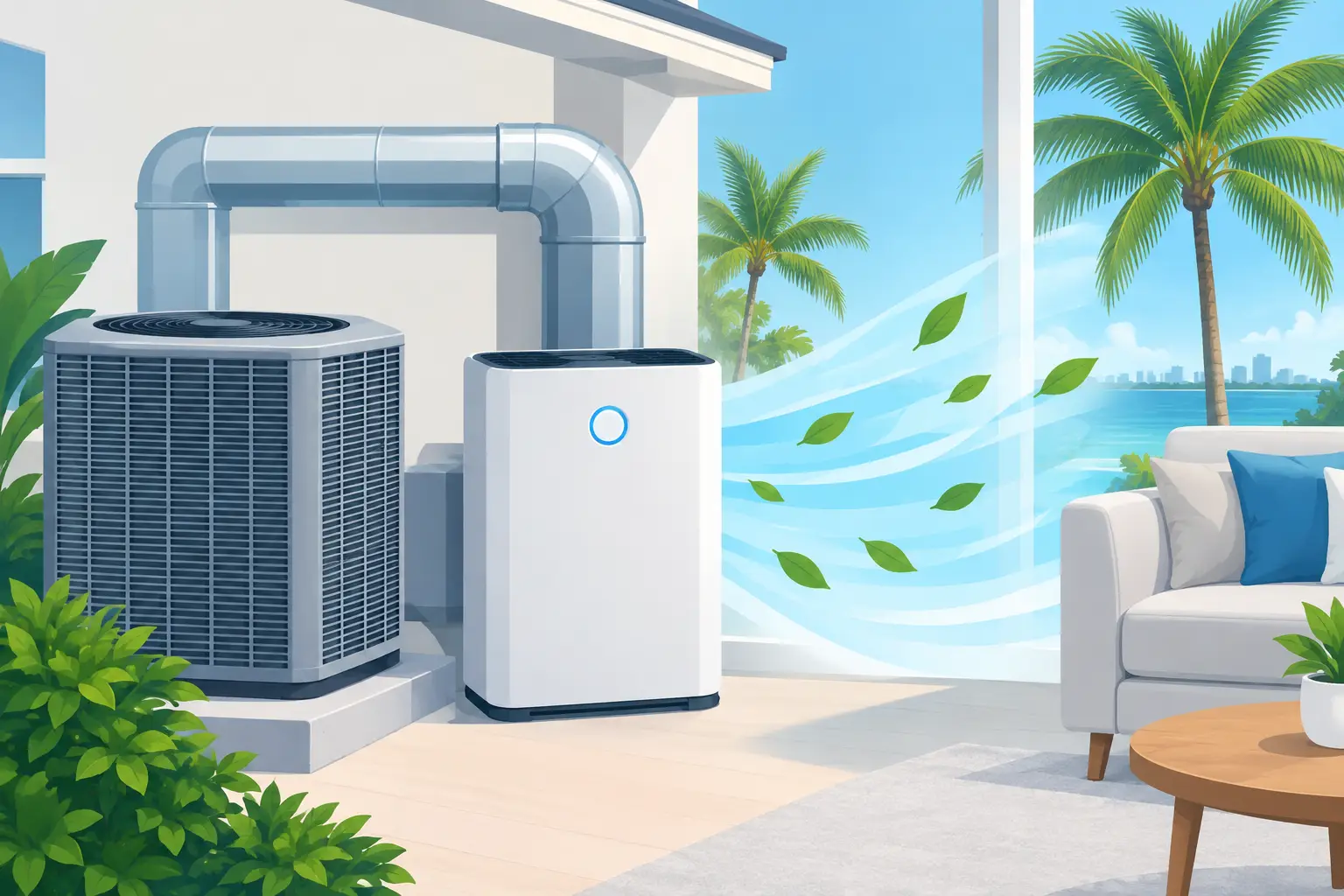
Look at the outdoor unit from a distance. Remove leaves, grass clippings, and other debris around it, keeping shrubs and storage items away from the equipment. Do not spray components with chemicals, open electrical panels, or attempt to add refrigerant. Refrigerant handling and electrical repairs require trained technicians and specialized equipment.
If these basic checks do not restore normal operation, scheduling service is the next practical step. Describe what you noticed, when the problem began, and whether the system is making sounds, leaking, freezing, or tripping a breaker. Those details can help the service visit start more efficiently.
What a Professional AC Diagnosis Should Include
A dependable repair starts with more than replacing the first part that seems likely to fail. A trained HVAC technician should evaluate the system’s operation, thermostat communication, electrical components, airflow, drain function, and cooling performance. If refrigerant is low, the technician should look for the source of the loss rather than simply adding more refrigerant.
You should receive clear recommendations that explain the problem, the repair options, and the likely impact of waiting. In some cases, a repair is the right answer. In others, especially with an older system facing a major compressor or coil issue, it may make sense to compare repair costs with replacement options.
That decision depends on the system’s age, condition, efficiency, repair history, and your plans for the home. A lower upfront repair cost is not automatically the better long-term choice, and replacement is not always necessary just because a system has reached a certain age. The goal should be dependable comfort and an informed decision, not pressure.
Preventing the Next Breakdown
Tampa air conditioners work hard for much of the year. Regular maintenance gives technicians an opportunity to catch worn electrical parts, drainage concerns, dirty coils, refrigerant issues, and airflow problems before they interrupt your comfort.
Homeowners can support that work by changing filters regularly, keeping the outdoor unit clear, monitoring humidity and hot spots, and scheduling maintenance before peak summer demand whenever possible. If your home has recurring comfort problems, ductwork, insulation, thermostat placement, and indoor air quality may deserve attention too. The AC unit is only one part of the comfort system.
For homeowners who prefer one trusted resource for HVAC, plumbing, and electrical needs, ACS Home Services provides same-day availability when possible and 24/7 emergency support for urgent comfort concerns. Clear communication, professional diagnosis, and practical options matter when your home’s essential systems are on the line.
If your AC is showing early warning signs, do not wait for the next heat wave to make the decision for you. Schedule service while you still have options, protect your equipment from unnecessary strain, and give your household the comfort it needs when Tampa temperatures climb.