

A new air conditioner may look much like the one it replaces, but what runs inside it is changing quickly. Refrigerant trends are reshaping the equipment available to Florida homeowners, the way technicians service AC systems, and the questions worth asking before approving a major repair or replacement.
For Tampa Bay and Central Florida households, this is not just an industry conversation. Your AC works through long stretches of heat, humidity, and storm-season demand. Choosing the right system today can affect repair options, operating costs, and long-term peace of mind for years to come.
Why Refrigerants Are Changing
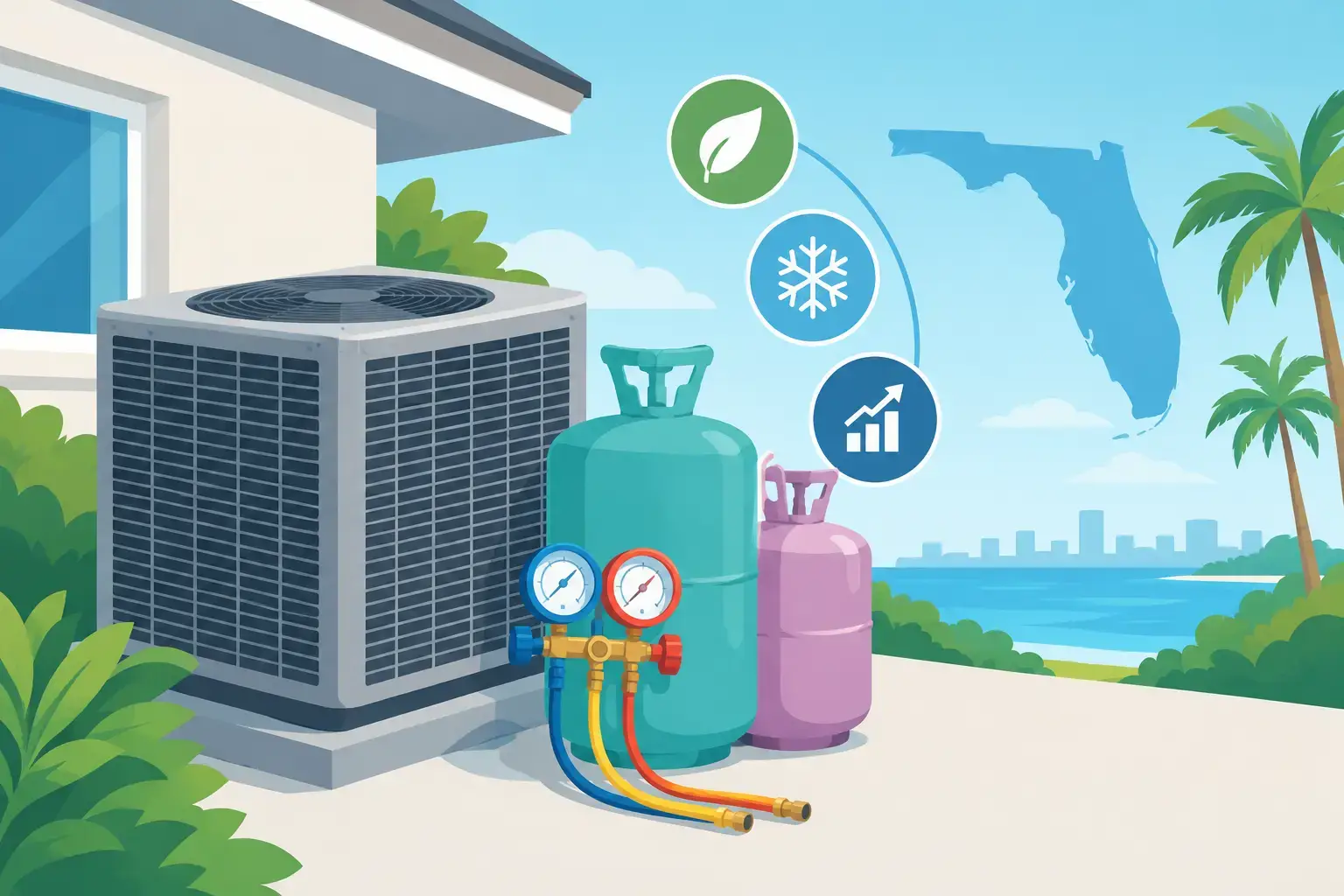
Refrigerant is the fluid that moves heat out of your home. Your AC does not create cold air so much as it removes indoor heat and releases it outside. The refrigerant carries out that process as it circulates between the indoor and outdoor portions of the system.
For many years, residential systems used R-22. That refrigerant was phased out because of its ozone-depleting properties. Most homes with newer central AC systems use R-410A, which does not damage the ozone layer but has a relatively high global warming potential if released into the atmosphere.
Federal rules are now driving the HVAC industry toward refrigerants with lower global warming potential. Manufacturers have responded by designing new residential air conditioners and heat pumps around alternatives such as R-454B and, in some equipment categories, R-32. The exact refrigerant depends on the system manufacturer and model, so there is no single replacement refrigerant for every home.
The practical takeaway is simple: older AC systems are not suddenly unusable, but new equipment is moving in a different direction. That makes an informed decision especially valuable when your current system needs a costly repair.
The Refrigerant Trends Affecting Florida AC Systems
R-410A remains common, but new systems are shifting
R-410A equipment is still installed and serviced in many homes. If your system uses R-410A and is operating reliably, you do not need to replace it simply because newer refrigerants are entering the market.
However, availability will change over time as manufacturers focus on new compliant equipment. R-410A will continue to be available for servicing existing systems, but its cost and supply can fluctuate. A major leak repair on an aging R-410A system may become harder to justify when compared with investing in a new, lower-impact system with a full warranty.
This does not mean every R-410A repair should lead to replacement. A properly maintained system that is relatively new, has no major compressor issues, and needs a straightforward repair can still be a reasonable candidate for service. The right answer depends on the condition of the equipment, the size of the leak, repair cost, system efficiency, and expected remaining lifespan.
New refrigerants require new equipment
One of the most common misunderstandings is the idea that a new refrigerant can simply be added to an older AC unit. In most cases, it cannot.
New systems using refrigerants such as R-454B are engineered specifically for those refrigerants. Their compressors, coils, controls, charging requirements, and safety components are designed as a matched system. Converting an existing R-410A unit by adding a different refrigerant is not a standard or safe upgrade path.
If you are replacing only part of your system, such as the outdoor condenser or indoor air handler, compatibility matters even more. Mixing unmatched components can reduce efficiency, create performance problems, and affect warranty coverage. A trained HVAC professional should confirm what equipment can work together before installation begins.
A2L refrigerants change service practices
Some next-generation refrigerants are classified as A2L, meaning they have lower toxicity and are mildly flammable. “Mildly flammable” can sound concerning, but these systems are built with specific safety requirements and are installed under updated equipment standards and building codes.
For homeowners, this change reinforces the value of professional installation and repair. Technicians need proper training, tools, leak detection procedures, and recovery equipment for the refrigerant used in your system. The work should never be treated as a do-it-yourself task, and refrigerant should never be intentionally released.
When comparing contractors, ask whether their technicians are prepared to service the refrigerant in the equipment being recommended. A qualified company should be able to explain the refrigerant type, the manufacturer requirements, and how the installation will be completed safely.
What These Changes Mean for Repairs
A refrigerant leak is not normal maintenance. Your AC is a sealed system, so if refrigerant is low, there is usually a leak that should be found and repaired. Simply adding refrigerant without addressing the source may restore cooling temporarily, but it often leads to another service call and more expense.
For a newer system, leak detection and repair may be the clear choice. For an older system with a significant leak, a failing compressor, or recurring breakdowns, replacement may offer better value. Florida homeowners should also consider whether an older unit is struggling to control humidity. Comfort is about more than temperature, especially during long humid summers.
Before making a decision, request a clear explanation of the issue. You should understand where the leak is located if it can be identified, whether the repair is expected to last, how much refrigerant is needed, and whether other major components show signs of wear. A dependable technician will present options without pressuring you into a one-size-fits-all answer.
How Refrigerant Trends Influence New AC Purchases
If you are planning an AC replacement, the refrigerant is one important part of the decision, not the only one. Proper system sizing, ductwork condition, insulation, thermostat controls, and indoor humidity needs all affect performance.
An oversized system can cool quickly but cycle off before removing enough moisture. An undersized system may run continuously during peak heat and still leave rooms uncomfortable. Installing a high-efficiency unit without addressing damaged ductwork or airflow restrictions can also limit the results you expect.
When reviewing replacement options, ask your HVAC provider about the following:
- Which refrigerant the proposed system uses and why it is appropriate for your home
- Whether the indoor and outdoor equipment are properly matched
- The system’s efficiency rating and projected comfort benefits
- Any electrical, ductwork, drain line, or thermostat updates needed for dependable operation
- Warranty details, maintenance recommendations, and financing options
A complete evaluation matters because the least expensive equipment quote is not always the lowest-cost choice over the life of the system. A correctly installed system that manages humidity, drains properly, and receives regular maintenance is more likely to deliver dependable comfort when Florida temperatures climb.
Maintenance Matters More During the Transition
Refrigerant changes do not eliminate the basics of AC care. In fact, routine maintenance helps protect any system, regardless of refrigerant type. Dirty filters, clogged condensate drains, weak capacitors, coil buildup, and poor airflow can all make an AC work harder than necessary.
Homeowners can replace filters regularly and keep the outdoor unit clear of leaves, grass clippings, and stored items. Beyond that, professional maintenance should include a close look at electrical components, drainage, airflow, refrigerant performance, and overall operation.
If your AC starts blowing warm air, runs much longer than usual, freezes up, makes unfamiliar noises, or allows indoor humidity to rise, schedule service promptly. Waiting can turn a manageable issue into a larger repair, particularly during the summer when the system is under its heaviest load.
ACS Home Services helps Central Florida homeowners evaluate AC repairs and replacements with clear recommendations based on the condition of the system and the comfort needs of the home. Same-day service can make a meaningful difference when cooling problems arrive during a hot Florida afternoon.
Plan for Your System Before It Fails
The best time to learn what refrigerant your system uses is before it stops cooling. Check the equipment data plate on the outdoor unit, keep records from past service visits, and pay attention to the age of your AC. Most systems provide clues well before a complete breakdown, including higher energy bills, uneven temperatures, frequent repairs, and reduced humidity control.
Refrigerant trends will continue to shape the HVAC market, but homeowners do not need to make decisions based on headlines alone. A careful inspection, an honest repair-versus-replacement discussion, and a properly matched system can keep your home comfortable through Florida’s hottest days and help you plan with confidence rather than urgency.