

A Florida outage can turn serious quickly. Without power, the AC stops, refrigerated food begins warming, sump or well pumps may quit, and a home can become uncomfortable fast. Choosing the best backup generator size means deciding what your household truly needs to keep running, then planning for the extra power certain equipment requires at startup.
Generator sizing is not one-size-fits-all. A compact portable unit may keep essentials running for a few hours, while a permanently installed whole-home generator can support major systems during an extended storm outage. The right choice depends on your electrical loads, your comfort priorities, and whether you want to power selected circuits or nearly the entire house.
How to Find the Best Backup Generator Size
Start by identifying the appliances and systems you want available during an outage. Every device has a running wattage, which is the power it uses while operating. Motors in equipment such as air conditioners, refrigerators, pool pumps, and well pumps also need a higher burst of power to start. That is called starting wattage or surge wattage.
Your generator must handle the combined running load of everything operating at once, plus the largest anticipated starting load. This is why adding the wattage listed on every appliance in the house is not a reliable sizing method. Most homeowners do not need every light, outlet, appliance, and entertainment system powered during an outage.
Think in terms of priorities. For many Central Florida households, those priorities include refrigeration, lighting, internet, a few outlets, garage access, a microwave, and either a portable or central cooling solution. If you rely on an electric well pump, medical equipment, a sump pump, or a home office, those loads deserve special attention.
Typical Generator Size Ranges
These ranges offer a useful starting point, but the final recommendation should be based on a load calculation for your home.
| Generator size | Common use during an outage | | — | — | | 3,000-5,000 watts | Refrigerator, lights, chargers, television, microwave, and a few small appliances | | 5,000-8,500 watts | Essential circuits plus a freezer, portable AC unit, small well pump, or selected kitchen appliances | | 8,500-14,000 watts | Larger essential-load setup, potentially including some central AC configurations, depending on startup demand | | 14,000-22,000 watts | Many whole-home generator installations for average homes with selected major loads | | 22,000+ watts | Larger homes, multiple AC systems, electric appliances, pools, well pumps, or broader whole-home coverage |
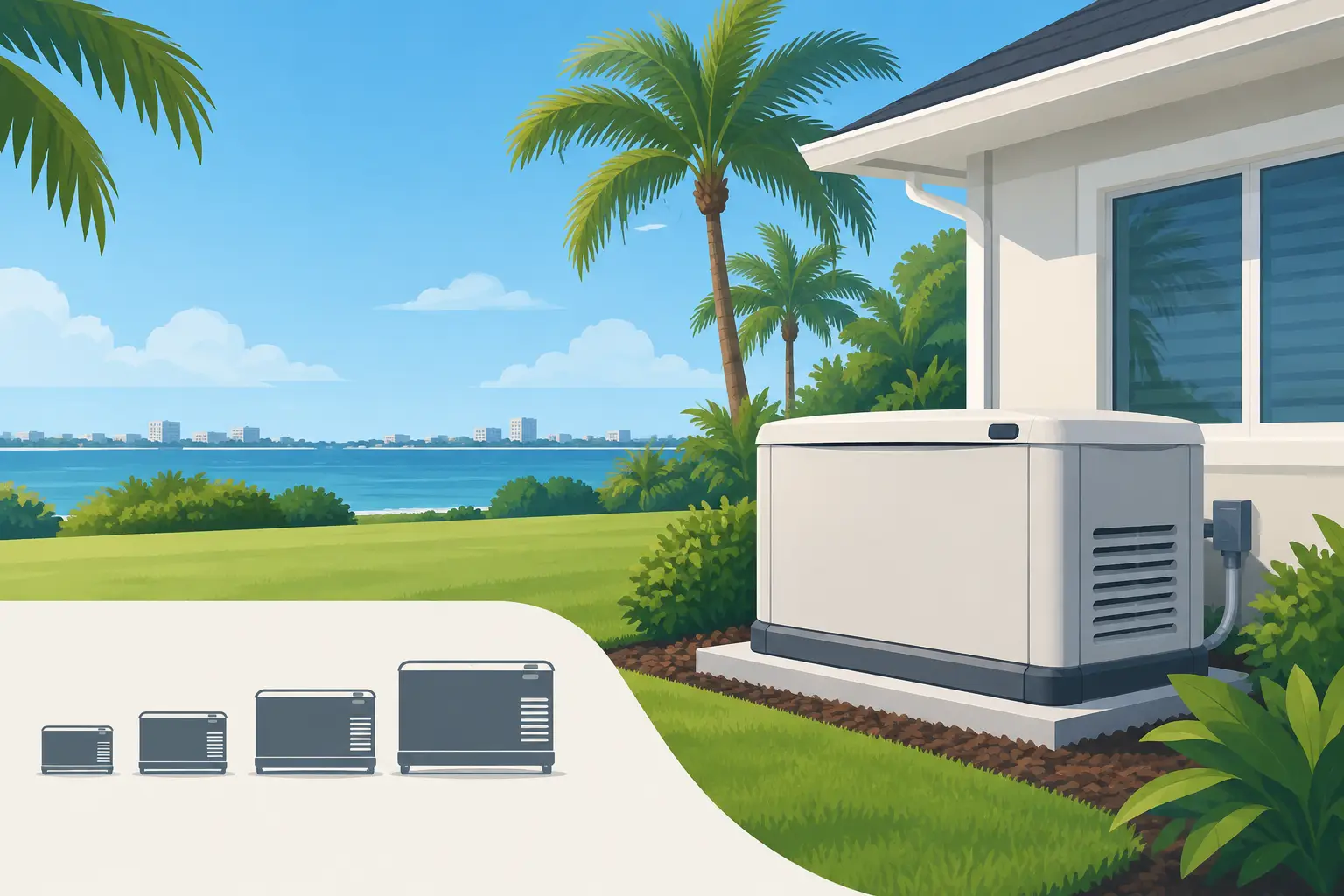
A 3,500-watt portable generator and a 22-kilowatt standby generator serve very different purposes. The smaller unit can be an effective short-term solution for essentials. A standby system is designed to automatically restore power to designated circuits or much of the home when utility service fails.
The Biggest Factor: Your Air Conditioner
For Florida homeowners, air conditioning often determines the best backup generator size. Central AC systems can draw substantial power, especially when the compressor starts. The size of the unit, its age, efficiency rating, electrical configuration, and any installed soft-start equipment all affect generator requirements.
A generator that runs lights and refrigerators may not have enough capacity to start a central AC system. Even if it starts the system once, it may struggle when other appliances cycle on. Overloading a generator can damage connected equipment, cause shutdowns, and leave you without the power you were counting on.
If central cooling is essential, have an electrician evaluate the AC equipment and calculate its actual electrical demand. In some cases, a soft-start device can reduce starting demand and allow a more manageable generator size. In others, the better plan is to power a portable AC unit or selected rooms during shorter outages rather than size a system around whole-home cooling.
Other High-Wattage Loads to Consider
Electric water heaters, electric ranges, clothes dryers, pool equipment, and EV chargers can quickly push a generator beyond its capacity. These loads are often left off the emergency power plan, even in homes with large standby generators.
That is not necessarily a compromise. It is smart load management. A properly designed installation can prioritize the systems that protect your comfort, food, safety, and daily routine while preventing unnecessary strain on the generator. If your home uses natural gas or propane for water heating, cooking, or heating, those appliances may require far less generator capacity because the electrical load is limited to controls, blowers, or ignition.
Portable vs. Standby Generator Sizing
Portable generators are flexible and generally cost less upfront, but they require hands-on operation. You must place the unit outdoors, protect it from rain as directed by the manufacturer, refuel it safely, and connect it correctly. A portable generator can power appliances through heavy-duty cords or supply selected circuits through a professionally installed inlet and transfer switch.
Standby generators are permanently installed outside the home and connected to a fuel source, typically natural gas or propane. When utility power goes out, an automatic transfer switch starts the generator and moves the home to backup power. When utility service returns, the system transfers back and shuts down safely.
For a portable system, it often makes sense to size for a short list of critical loads. For a standby unit, homeowners may choose a larger capacity for automatic operation, broader coverage, and less disruption during a hurricane or extended outage. The best option depends on how long you expect to need backup power and how much manual work you are comfortable handling.
Why a Load Calculation Matters
The wattage label on an appliance is useful, but it does not tell the entire story. Electrical panels, circuit layouts, HVAC equipment, motor loads, fuel type, and household habits all affect the calculation. Two homes with the same square footage can need very different generator sizes.
For example, a 2,000-square-foot home with gas appliances and one efficient AC system may need less standby capacity than a smaller home with electric heat, an electric water heater, a pool pump, and a well. A home with two AC systems may also need load-shedding controls that prevent both compressors from starting at the same time.
A professional assessment identifies which circuits should receive backup power and how those circuits will be transferred safely. It can also reveal electrical upgrades needed before installation, such as panel work, dedicated generator connections, grounding, or transfer equipment.
Safety Is Part of Generator Sizing
Never connect a generator directly to a wall outlet or backfeed power through your electrical panel. This unsafe practice can send electricity onto utility lines, creating a severe hazard for utility workers and neighbors. It can also damage your home’s electrical system and violate local code requirements.
A transfer switch or approved interlock is the safe way to connect a generator to home circuits. It isolates utility power from generator power and gives you control over which loads are energized. Carbon monoxide safety matters just as much: portable generators must always operate outdoors, well away from doors, windows, vents, and attached garages.
Fuel planning also matters in a long outage. A portable gasoline generator may need frequent refueling, while standby systems depend on a reliable natural gas supply or adequately sized propane tank. Your backup plan should account for realistic outage length, not just the generator’s wattage rating.
When to Call a Generator Professional
Call for an electrical evaluation if you want central AC, a well pump, medical equipment, automatic backup power, or a connection to your panel. It is also the right step if you are unsure whether your home can support a standby generator or if you want to compare essential-load and whole-home options.
ACS Home Services can help homeowners evaluate their electrical needs and make clear recommendations for a generator setup that fits the home, the budget, and the way the household lives. A properly sized system is not about buying the biggest unit available. It is about having dependable power for the moments when Florida weather makes it matter most.
Before the next storm season, write down the systems your family cannot comfortably go without. That simple list gives a qualified electrician the information needed to build a backup power plan that feels practical, safe, and ready when the lights go out.