

When a summer storm knocks out power, the generator in your garage only matters if it can keep the systems you rely on running. For Central Florida homeowners, comparing generator brands is not just about choosing a recognizable name. It is about finding a standby power solution that can handle your home’s electrical demands, fuel setup, weather exposure, and long-term service needs.
A whole-home generator is a major electrical investment. The right choice can keep your air conditioning, refrigerator, lighting, internet, medical equipment, and security systems operating through an outage. The wrong choice can leave you with an undersized unit, inconvenient limitations, or a system that is difficult to maintain when you need it most.
What Separates Generator Brands?
Most established standby generator manufacturers offer automatic operation, weather-resistant enclosures, remote monitoring options, and models powered by natural gas or propane. The differences become clearer when you look at the details: available sizes, engine design, load-management capabilities, warranty terms, local parts availability, and whether trained service professionals support the equipment in your area.
Brand reputation matters, but it should not be the only deciding factor. A well-supported generator that is correctly sized and professionally installed is generally a better investment than a premium model that does not fit your home’s fuel supply or electrical panel configuration.
For homes in Tampa, Clearwater, Sarasota, Lakeland, and nearby communities, corrosion resistance and reliable service support deserve special attention. Florida heat, humidity, salty coastal air, heavy rain, and hurricane-season outages can place real demands on outdoor equipment.
Leading Generator Brands Homeowners Often Consider
Generac
Generac is one of the most recognized names in residential standby power. Its product range gives homeowners options for smaller essential-load systems as well as larger units designed to support much of the home. Generac generators are widely installed, which can make it easier to find technicians familiar with the equipment and obtain common replacement parts.
Many homeowners are drawn to the brand’s automatic transfer switches and monitoring capabilities. Depending on the system, you may be able to check generator status from a phone or receive maintenance alerts. Still, model selection matters. A generator should be matched to your expected electrical load, not selected based on brand recognition alone.
Kohler
Kohler has a long-standing reputation in both residential and commercial backup power. Homeowners often consider Kohler for its engine performance, build quality, and quiet-operation features on select models. The brand offers standby generators across multiple capacity ranges and can be a strong choice for homes with higher electrical demands.
The trade-off may be upfront cost and local installer availability, which can vary by community. Before choosing a Kohler unit, ask whether qualified local technicians can provide startup, annual maintenance, warranty support, and repairs. A strong warranty is valuable only when dependable service is available close to home.
Briggs & Stratton
Briggs & Stratton is a familiar name in engines and portable power equipment, and it also offers home standby generator systems. Its residential units can be a practical option for homeowners who want automatic backup power without necessarily running every major appliance at the same time.
As with any generator, compare the available kilowatt ratings, transfer switch options, and warranty coverage for the specific model you are considering. The best fit may be an essential-circuits setup rather than a whole-home configuration, especially when a property has limited gas capacity or a tighter budget.
Cummins
Cummins is widely associated with dependable engines and larger-scale power systems. Its residential standby line is often worth considering for homeowners who want a durable system with a reputation for serious power-generation expertise. Cummins may be especially appealing for larger homes, properties with substantial electrical loads, or homeowners who want specific performance features.
However, a larger-capacity unit is not automatically the right answer. Oversizing can add unnecessary purchase, installation, and fuel costs. A professional load calculation helps determine what your home actually needs during an outage.
Choose the Generator Size Before You Choose the Brand
The generator size should guide your shortlist. A small unit may cover lighting, refrigeration, outlets, and a few selected circuits. A larger standby generator may run one or more air conditioning systems, pool equipment, electric appliances, and other high-demand loads, depending on the home and the load-management plan.
Air conditioning is often the biggest factor for Florida homeowners. Starting an AC system requires significantly more power than keeping it running. Electric water heaters, ovens, clothes dryers, well pumps, EV chargers, and pool equipment can also increase your required capacity quickly.
An electrical professional should review your panel, major appliances, and priorities. You may decide you want whole-home coverage, or you may prefer to power critical systems and leave nonessential loads off during an outage. Neither approach is universally better. It depends on your comfort expectations, budget, fuel availability, and the layout of your home.
Fuel Options Can Narrow Your Choices
Most residential standby generators run on natural gas or liquid propane. Natural gas can be convenient because the utility supply eliminates the need to refill a tank during many outages. But the existing gas line must be properly sized for the generator and other gas appliances in the house.
Propane offers flexibility where natural gas is unavailable, but tank capacity becomes part of the planning process. A small propane supply may not provide the runtime you expect when the generator is supporting a heavily loaded home for several days. Your installer should evaluate fuel consumption at different load levels, tank placement, local requirements, and access for refueling.
Portable gasoline generators have a different role. They can be useful for limited, short-term backup power, but they require manual setup, safe fuel storage, and constant attention to carbon monoxide safety. They should never be operated in a garage, enclosed patio, or near doors, windows, or vents. For automatic, longer-duration protection, a permanently installed standby generator is usually the more convenient solution.
Installation Quality Matters as Much as the Generator
A standby generator system involves more than placing equipment on a pad. Proper installation includes electrical load planning, transfer switch selection, panel connections, fuel piping, safe clearances, permits, inspections, and startup testing. The work should be completed by qualified professionals who understand local codes and manufacturer requirements.
The automatic transfer switch is central to the system. It safely separates your home from the utility grid during an outage and directs generator power to selected circuits or the entire electrical system. Some setups use load management to prevent too many high-demand appliances from starting at once. That feature can let homeowners protect more essentials without purchasing an unnecessarily large generator.
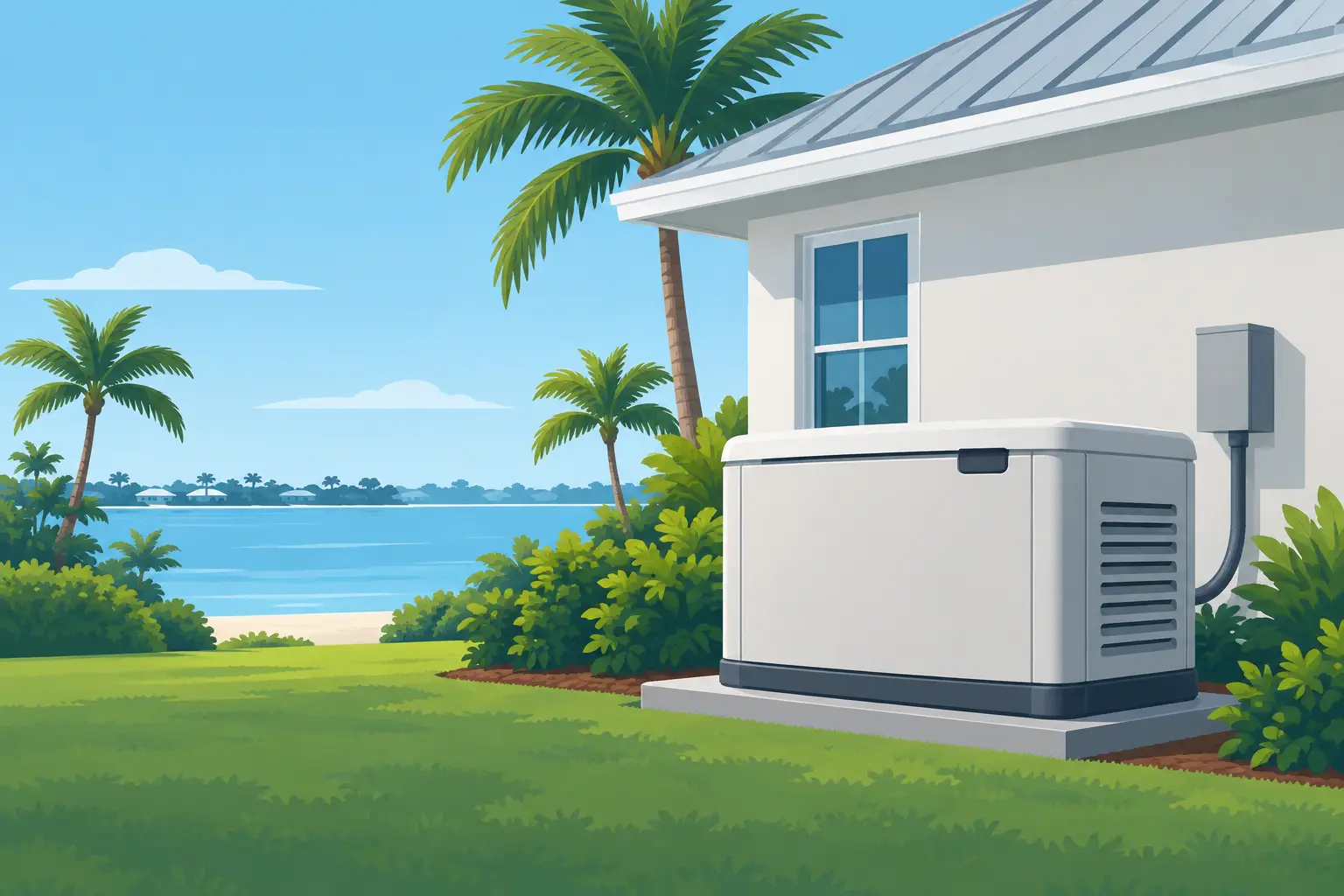
Placement also deserves careful attention. The unit needs adequate airflow, accessible service clearance, and a location that complies with manufacturer guidelines and local regulations. In coastal and high-humidity areas, installers should also consider drainage, exposure, and how the unit will be protected from landscaping debris and flooding.
Compare Warranty, Maintenance, and Local Support
Do not compare generator brands using the warranty length alone. Read what the warranty covers, what maintenance is required, and how service claims are handled. Some warranties have different terms for parts, labor, and major components. Others require registration or scheduled maintenance to remain valid.
Standby generators need periodic exercise cycles, oil and filter service, battery checks, inspection of electrical connections, and fuel-system review. A unit that starts itself every week is helpful, but it does not replace professional maintenance. Small issues such as a weak battery, low oil level, or fault code can become major problems during the next storm if they are ignored.
Local service access is one of the most practical factors in your decision. Ask who will perform future maintenance and repairs, whether emergency support is available, and whether the company stocks common parts. ACS Home Services can help homeowners evaluate the electrical requirements of a professionally installed standby generator and create a plan that fits the home, not just the brochure.
Make the Decision Around Your Home, Not the Logo
The best generator brand is the one that offers the right capacity, fuel compatibility, warranty, and service support for your property. A trusted manufacturer is a good starting point, but a careful assessment prevents expensive surprises after installation.
Before hurricane season arrives, take stock of what your household cannot comfortably go without. A professionally designed generator system gives you more than backup electricity – it gives your family a clearer plan when the grid goes down.