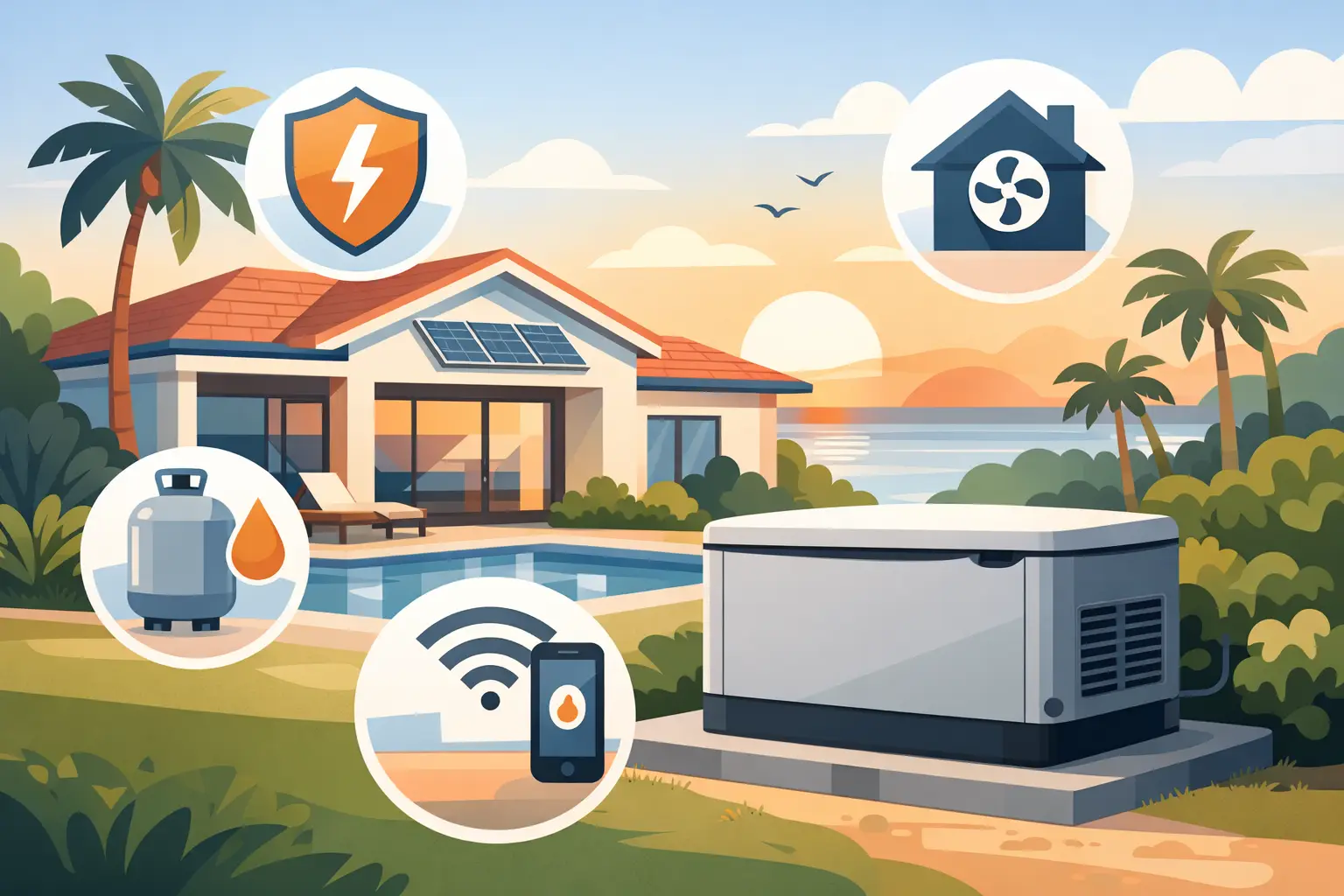

A Florida outage is rarely a minor inconvenience. When a summer storm takes down the grid, your home can lose air conditioning, refrigeration, lighting, internet, and the ability to power essential medical equipment. The best home generator features are the ones that restore the right parts of your household safely, automatically, and for as long as the outage lasts.
A generator is not a one-size-fits-all purchase. The right equipment for a condo, a family home with central AC, or a property with a well pump and pool equipment can look very different. Before comparing brands or sizes, focus on the features that affect comfort, safety, fuel availability, and long-term dependability.
Best Home Generator Features That Matter Most
Automatic transfer switch operation
For many homeowners, the most valuable generator feature is an automatic transfer switch, often called an ATS. This device detects a utility outage, starts the standby generator, and transfers selected home circuits to generator power. When utility power returns, it transfers the load back and shuts the generator down according to its programmed sequence.
That means you do not need to go outside in heavy rain, connect cords, or manually start equipment during a storm. It also helps protect utility workers and your home by preventing generator power from feeding back into the electrical grid.
An automatic transfer switch can be configured for either whole-home power or selected essential circuits. Whole-home coverage is convenient, but it requires a properly sized generator and may cost more. An essential-load setup powers the priorities, such as the refrigerator, lights, internet equipment, garage door, security system, a few outlets, and possibly one air conditioning system. The best choice depends on how you live during an outage and what your electrical system can support.
Correct power capacity, not just a large number
Generator capacity is measured in watts or kilowatts. Bigger is not automatically better. An oversized unit can add unnecessary purchase, installation, and fuel costs, while an undersized unit may struggle with major appliances or shut down when loads start.
Central Florida homeowners should pay close attention to air conditioning. An AC system can require a significant amount of power, especially at startup. Electric ranges, water heaters, clothes dryers, pool pumps, and multiple HVAC systems can also raise the required capacity quickly.
A professional load calculation is more useful than guessing based on square footage alone. It considers the appliances and systems you want to run, their starting and running demands, your electrical panel, and whether you want to power the entire home or only critical circuits. If your priority is keeping the home cool during a hurricane-related outage, make that clear from the beginning. It can change the generator size, transfer-switch design, and installation plan.
Fuel options built for extended outages
Fuel is one of the biggest practical differences between portable and standby generators. A permanently installed standby generator commonly runs on natural gas or propane. Natural gas is convenient where service is available because it does not require on-site refueling. However, homeowners should understand that gas availability can still be affected by major emergencies or local service conditions.
Propane offers dependable on-site storage and is a strong option for homes without natural gas service. The trade-off is tank size. A generator can run only as long as the available propane supply allows, so fuel planning should match the expected electrical load and the kind of outages your area experiences.
Portable units generally use gasoline, and some models can use propane as well. They can be useful for short-term essential power, but safely storing enough gasoline for a multi-day outage takes planning. Gasoline also has a limited storage life and must be handled carefully.
Automatic exercise and remote monitoring
A standby generator should test itself regularly. Automatic exercise scheduling starts the unit at a set interval, allowing it to run briefly and confirm that key components are operating. This feature helps identify problems before a storm, rather than after the lights go out.
Remote monitoring adds another layer of reassurance. Depending on the system, homeowners may receive status updates and maintenance alerts through an app, email, or service platform. You can see whether the generator exercised properly, has an active fault, or is running during an outage.
Monitoring does not replace professional maintenance. It does make it easier to catch warnings early and schedule service before a small issue becomes a no-start condition. For seasonal residents and property managers, this visibility can be especially useful.
Clean power for modern electronics
Today’s homes rely on sensitive electronic equipment. Computers, Wi-Fi systems, smart appliances, televisions, variable-speed HVAC components, and charging equipment all benefit from stable power.
Look for a generator designed to maintain consistent voltage and frequency. While every electrical system should be evaluated individually, quality standby equipment and a correctly designed installation help reduce the risk of power fluctuations that may affect electronics. Whole-home surge protection is also worth discussing during generator installation, especially in storm-prone areas where utility surges can occur when power is restored.
Weather-ready construction and smart placement
Florida weather makes generator placement more than a cosmetic decision. A permanently installed unit needs a stable pad, required clearances from windows, doors, vents, and combustible materials, and a location that supports safe service access. Local codes, manufacturer instructions, flood considerations, and utility requirements all affect where it can go.
The enclosure should be designed for outdoor conditions, but it still needs clear airflow. Never place a portable generator in a garage, shed, enclosed porch, or near open doors and windows. Carbon monoxide can build up quickly and become fatal. Portable units should be operated outdoors, well away from the home, with exhaust directed away from occupied areas.
For standby systems, professional installation also includes correctly sized wiring, proper grounding and bonding, fuel connections, permits where required, and final testing. A generator is connected to your home’s electrical system, so it is not a project to leave to guesswork.
Features to Compare Before Choosing a Generator
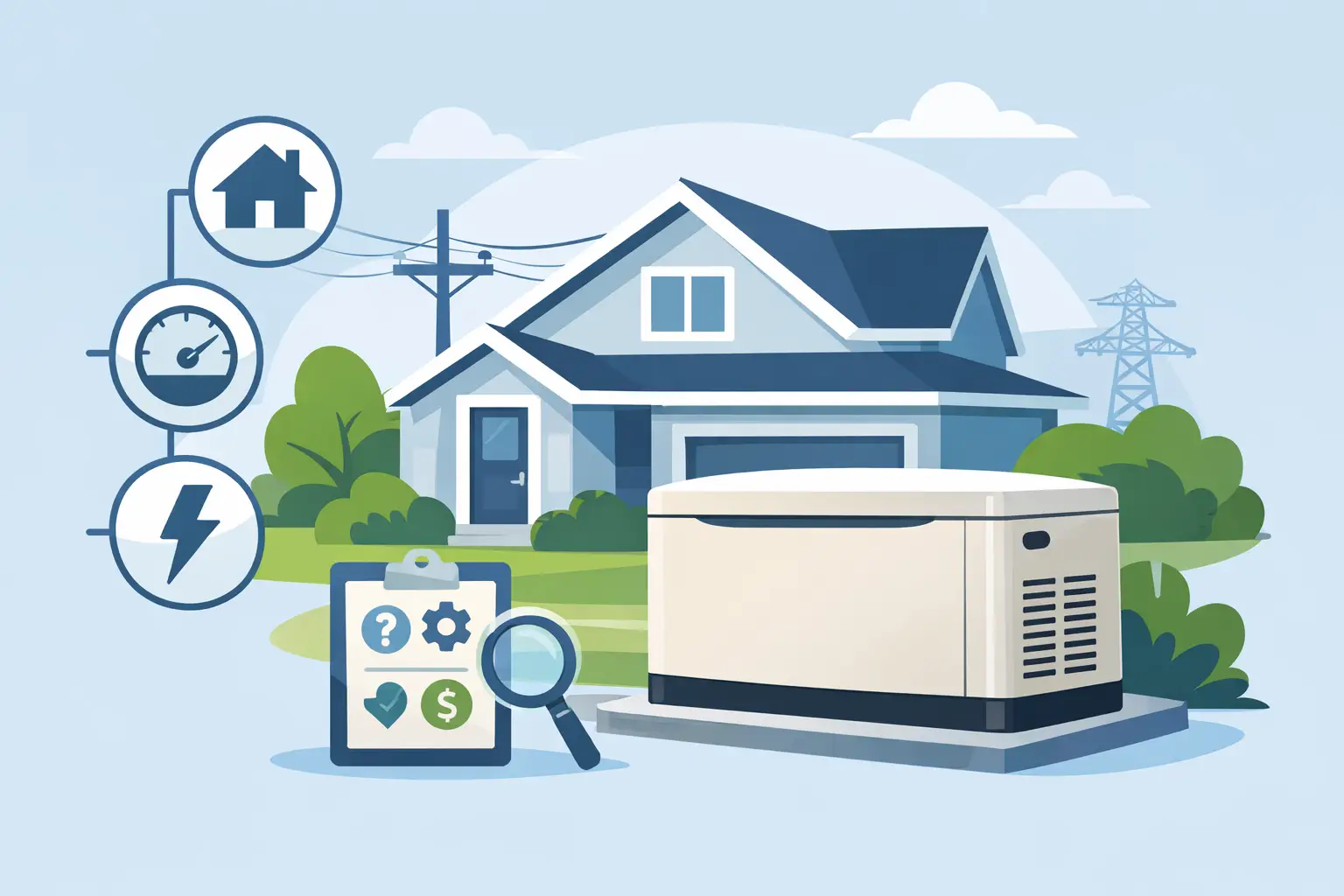
When you speak with an electrical professional, these questions can help narrow the options:
- Do you want whole-home coverage or power for selected essential circuits?
- Is keeping one or more air conditioning systems running a priority?
- Does your home have natural gas, propane, or another practical fuel source?
- How long do outages typically last in your neighborhood?
- Are there medical devices, a well pump, a sump pump, security equipment, or other critical loads to protect?
Your answers help determine whether a compact essential-power system or a larger standby generator makes more sense. They also reveal whether an electrical panel upgrade, load-management equipment, or additional surge protection should be included in the project.
Load Management Can Reduce Generator Size
Load-management technology is one of the most overlooked home generator features. It allows the system to prioritize certain appliances and temporarily delay others when demand is high. For example, a generator may be able to support the AC and refrigerator while pausing a less critical high-demand appliance.
This approach can make a whole-home-style experience possible without installing the largest available generator. Still, it requires careful planning. A household that expects to run several HVAC systems, electric cooking appliances, a pool heater, and a dryer all at once may need more capacity than load management can reasonably provide.
The goal is not to promise that every appliance will operate exactly as it does on a normal day. The goal is to keep the home safe, comfortable, and functional during an interruption.
Generator Maintenance Is a Feature You Need to Plan For
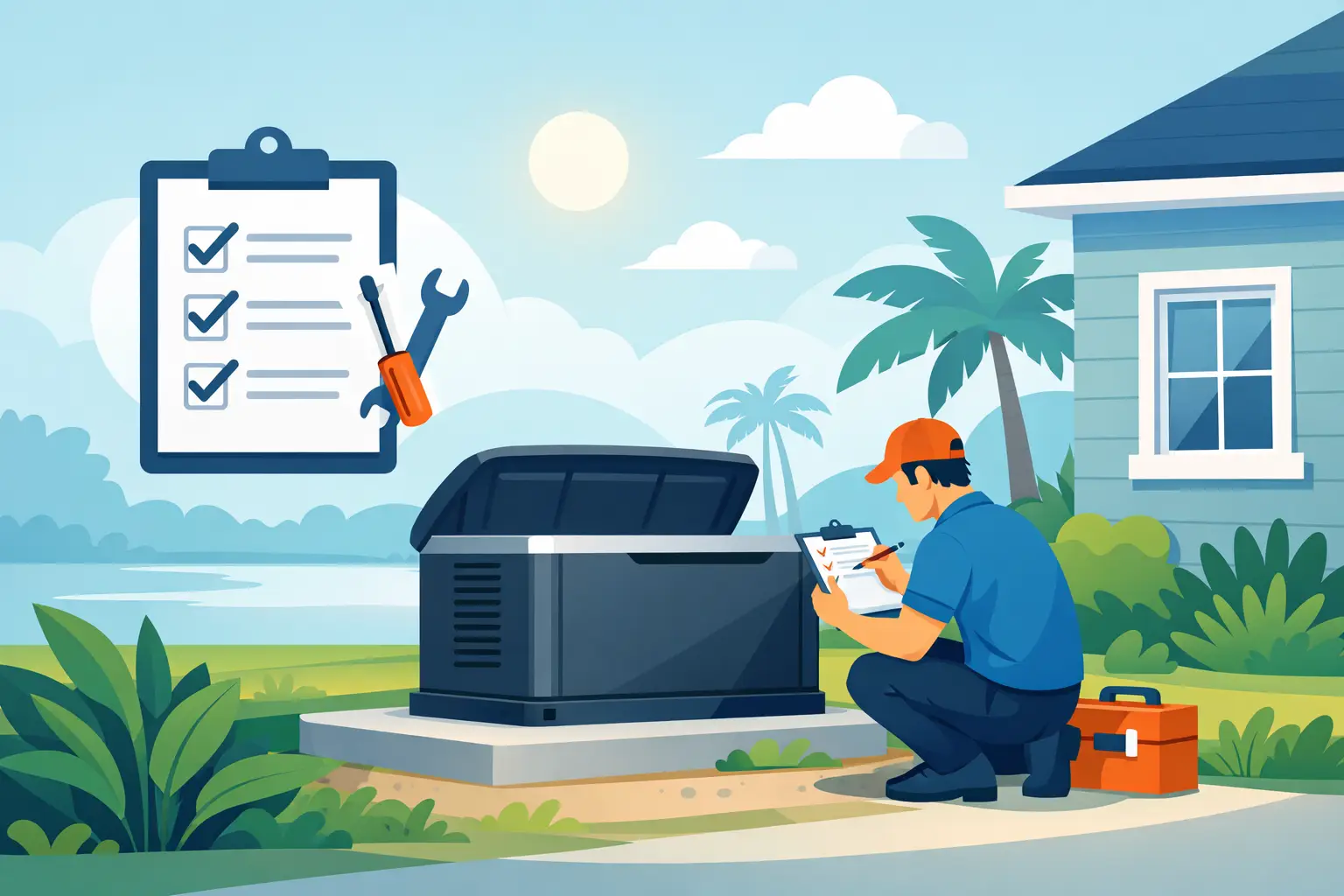
A generator that is never serviced may fail at the exact moment it is needed. Standby systems need periodic inspections, oil and filter service according to manufacturer guidelines, battery checks, exercise verification, and a review of fault codes. Portable generators also need routine oil changes, fresh fuel management, battery care if equipped, and test runs.
Homeowners should also pay attention to changes in their electrical needs. Adding a new air conditioner, remodeling a kitchen, installing an EV charger, or converting appliances from gas to electric can affect what the generator can support. A system that was properly sized five years ago may need to be reevaluated after major home upgrades.
At ACS Home Services, trained electrical professionals can help homeowners evaluate backup power needs alongside panel capacity, wiring, surge protection, and other essential electrical improvements. A clear recommendation should explain what the generator will power, what it will not power, and why the proposed setup fits your home.
The right generator should make an outage feel manageable, not create another emergency to solve. Start with the loads that protect your comfort and safety, choose dependable automatic operation, and have the system installed and maintained by qualified professionals before storm season puts it to the test.