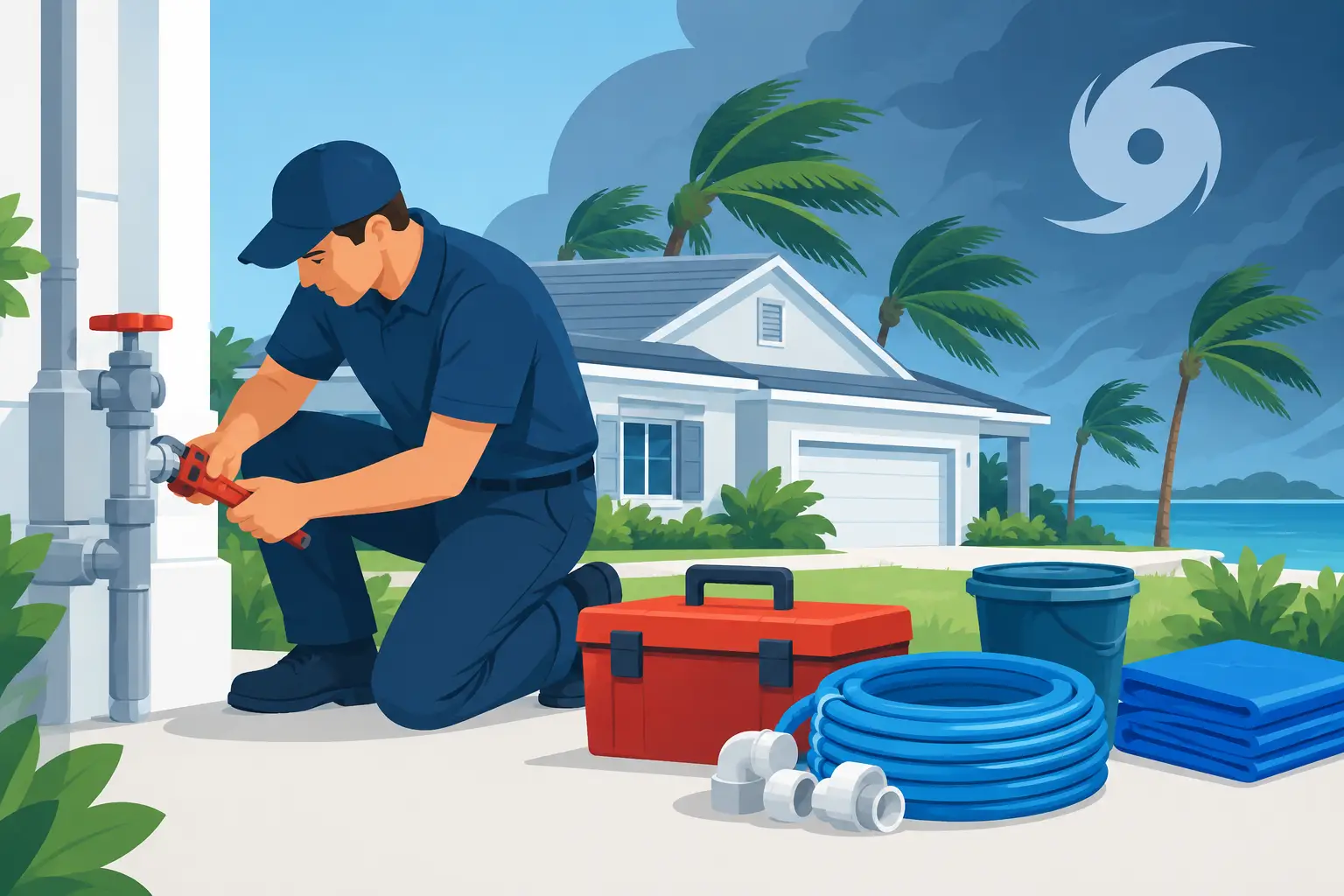


A hurricane does not have to make landfall in Tampa Bay to put your plumbing at risk. Wind-driven debris, days of heavy rain, flooding, and power outages can turn a small drain issue or aging supply line into a major cleanup. These hurricane plumbing preparation tips help Florida homeowners protect their water supply, drains, fixtures, and water heater before conditions make service difficult.
Start With Hurricane Plumbing Preparation Tips Before the Forecast Tightens
The best time to inspect your plumbing is before a storm is named, not while you are trying to finish preparations the day before it arrives. Start by locating your home’s main water shutoff valve. It is often near the water meter, where the water line enters the home, or beside the water heater. Make sure every adult in the household knows where it is and how to operate it.
A working shutoff valve can limit water damage if a pipe breaks, a fixture is damaged, or you need to leave the property. If the valve is corroded, difficult to turn, or has not been tested in years, have it inspected before hurricane season. Do not force a stuck valve. A worn valve can fail when you need it most.
Walk through the home and check under sinks, around toilets, behind the washing machine, and near the water heater for moisture, corrosion, or staining. Even a slow leak deserves attention before a storm. High winds and shifting structures can worsen weak connections, while a power outage may keep a sump pump or well pump from doing its job.
Clear Drains Before Heavy Rain Arrives
Indoor plumbing and outdoor drainage work together during Florida’s wettest weather. Slow sinks, tubs, or toilets may point to a developing blockage in a branch line or main sewer line. When the ground is saturated and rain is falling hard, wastewater has fewer places to go. A partial clog can become a backup into showers, tubs, or lower-level fixtures.
Have recurring slow drains, gurgling toilets, sewage odors, or frequent clogs checked before the storm season. Chemical drain cleaners are not a dependable storm-preparation solution. They can damage some pipes, create hazards for technicians, and rarely remove the underlying obstruction.
Outside, clear leaves, mulch, and debris from yard drains, gutter downspouts, and drainage swales. Downspouts should direct water away from the foundation rather than dump it beside the home. If your property has a drainage pump, confirm it runs and consider how it will operate during a power outage.
Protect Your Water Heater and Water Supply
Your water heater is easy to overlook during hurricane preparation, but it holds dozens of gallons of water and depends on safe utility connections. Check the area around the unit for leaks and make sure it is securely strapped if required by local code or the installation location. A water heater that shifts during severe weather can damage water lines, gas connections, or electrical wiring.
If you plan to turn off the main water because you are evacuating, use caution with the water heater. For an electric water heater, turn off power at the breaker if the unit will not have a reliable water supply. Electric elements can burn out if they heat an empty tank. For a gas water heater, follow the manufacturer’s shutoff instructions or ask a qualified professional before making changes to the gas supply.
Do not drain a water heater just because a hurricane is approaching. Draining can introduce complications, and an empty tank may be more vulnerable if it is located in an area that could flood or shift. The right approach depends on the type of unit, its location, flood risk, and whether you are staying home or evacuating.
Store clean drinking water before the storm. Municipal water systems are generally reliable, but outages, boil-water advisories, or loss of pressure can happen after severe weather. Use clean, food-safe containers and keep enough water for drinking, basic food preparation, hygiene, and pets. Do not rely on bathtub water for drinking unless it has been properly treated.
Prevent Sewer Backups and Contaminated Water Problems
Heavy rain can overwhelm public sewer systems, private septic systems, and stormwater infrastructure. If your home has a sewer cleanout outside, make sure its cap is secure and intact. A missing or damaged cap can allow debris and stormwater into the line.
Homes with a history of sewer backups may benefit from a professionally installed backwater valve. This device can help prevent sewage from flowing backward into the home when the public sewer is overloaded. It is not right for every property, and it must be installed and maintained correctly, but it can be a valuable layer of protection for homes in vulnerable areas.
If you use a septic system, reduce water use during and immediately after prolonged rainfall. Avoid multiple loads of laundry, long showers, and unnecessary dishwasher cycles. Saturated drain fields cannot absorb wastewater as efficiently, and pushing more water into the system can lead to backups or unpleasant odors.
Never use a toilet, sink, shower, or floor drain if sewage is coming back up through it. Keep children and pets away from the area. Sewage-contaminated water can contain harmful bacteria and should be handled with proper protective equipment and professional cleanup procedures.
Know When to Shut Off the Main Water
Turning off the main water is not necessary for every storm. If you are staying home, your plumbing is in good condition, and there is no active leak risk, keeping water available may be more practical. However, shutting it off can make sense if you are evacuating, have an older home with questionable pipes, or discover a leak before leaving.
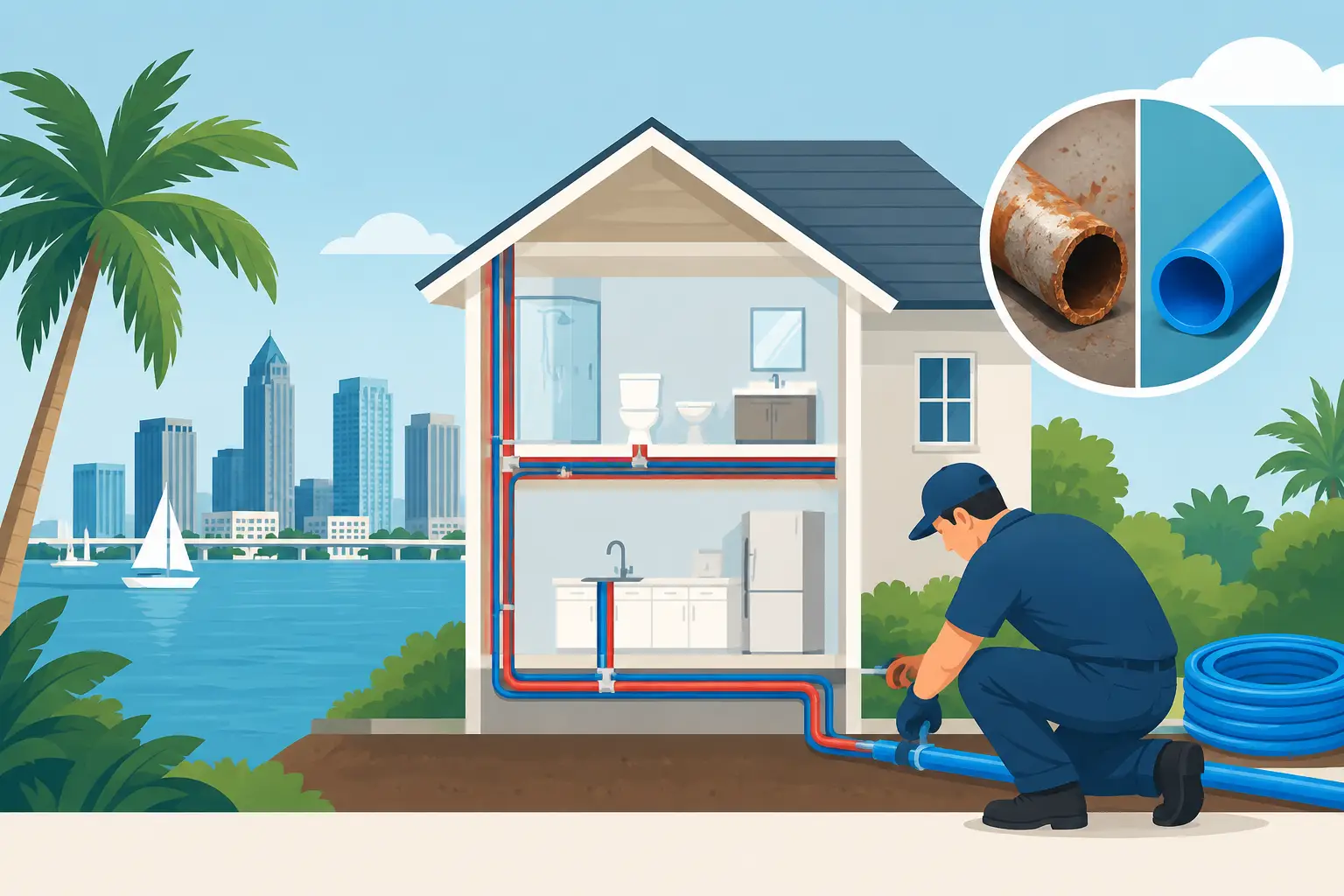
Before you go, turn off water to appliances with individual shutoff valves, especially the washing machine. Inspect flexible supply hoses for cracks, bulges, rusted fittings, or signs of wear. Replacing aging rubber hoses with quality braided lines is a relatively small upgrade that can prevent a damaging failure.
If your home uses a well, remember that the well pump needs electricity. Fill clean containers ahead of time, but do not run the well dry or overwork equipment as the storm approaches. Homes with plumbing pumps, lift stations, or sump pumps should also have a power-outage plan. A properly sized generator can support essential equipment, but it must be installed and operated safely. Never run a portable generator indoors, in a garage, or near open windows.
What to Do After the Storm Passes
Do not assume your plumbing is safe just because the lights are back on. Start with a careful visual inspection. Look for standing water near the water heater, damaged exterior pipes, wet cabinets, ceiling stains, and water around toilets or appliances. Listen for running water when all fixtures are off. Your water meter may also indicate a hidden leak if it continues moving when no water is being used.
If floodwater entered your home, avoid using electrical appliances or plumbing equipment that was submerged until it has been evaluated. Floodwater can damage wiring, contaminate fixtures, and affect gas or water connections. If you smell gas, leave the area immediately and contact the utility provider or emergency services from a safe location.
Use water conservatively until local officials confirm that water and sewer service are operating normally. Follow any boil-water advisory exactly as issued. If your taps have been unused for several days and there are no advisories, run cold water briefly to refresh the lines, then check for unusual color, odor, or reduced pressure.
For homeowners in Tampa and throughout Central Florida, a pre-storm plumbing inspection can remove one more major uncertainty from hurricane season. ACS Home Services can help identify leaks, drainage concerns, water heater issues, and aging plumbing components before a storm puts your home to the test. A little preparation now can protect the place your family returns to when the weather clears.