

A light flickers when the air conditioner starts, a breaker trips again after you reset it, or you catch a faint burning smell near the garage. These are not household quirks to ignore. Knowing how to know if panel is unsafe can help you address an electrical hazard before it becomes a damaging outage, equipment failure, or fire.
Your electrical panel is the control center for the circuits that power your home. It is designed to safely distribute electricity and shut off power when a circuit is overloaded or develops a fault. When the panel, breakers, wiring, or connections are failing, the warning signs can be subtle at first. A prompt evaluation by a licensed electrician is the safest way to understand what is happening and what repairs are necessary.
How to Know If Your Electrical Panel Is Unsafe
An unsafe panel does not always look damaged from the outside. In many cases, changes in how your electrical system performs are the first clue. Pay attention to repeat problems, especially if they occur when high-demand equipment such as an AC system, dryer, water heater, range, or pool equipment is running.
Breakers trip repeatedly or will not reset
A breaker that trips once after a clear overload may be doing its job. For example, running a space heater, hair dryer, and vacuum on the same circuit can exceed the circuit’s capacity. But a breaker that trips repeatedly, trips without an obvious reason, or immediately trips again after being reset needs professional attention.
The issue could be an overloaded circuit, damaged wiring, a failing breaker, or a problem with an appliance. Do not keep forcing the breaker back on. Repeated resets can allow a serious issue to continue, and a breaker that will not stay on is signaling that something needs to be checked.
The panel feels warm, buzzes, or smells like it is burning
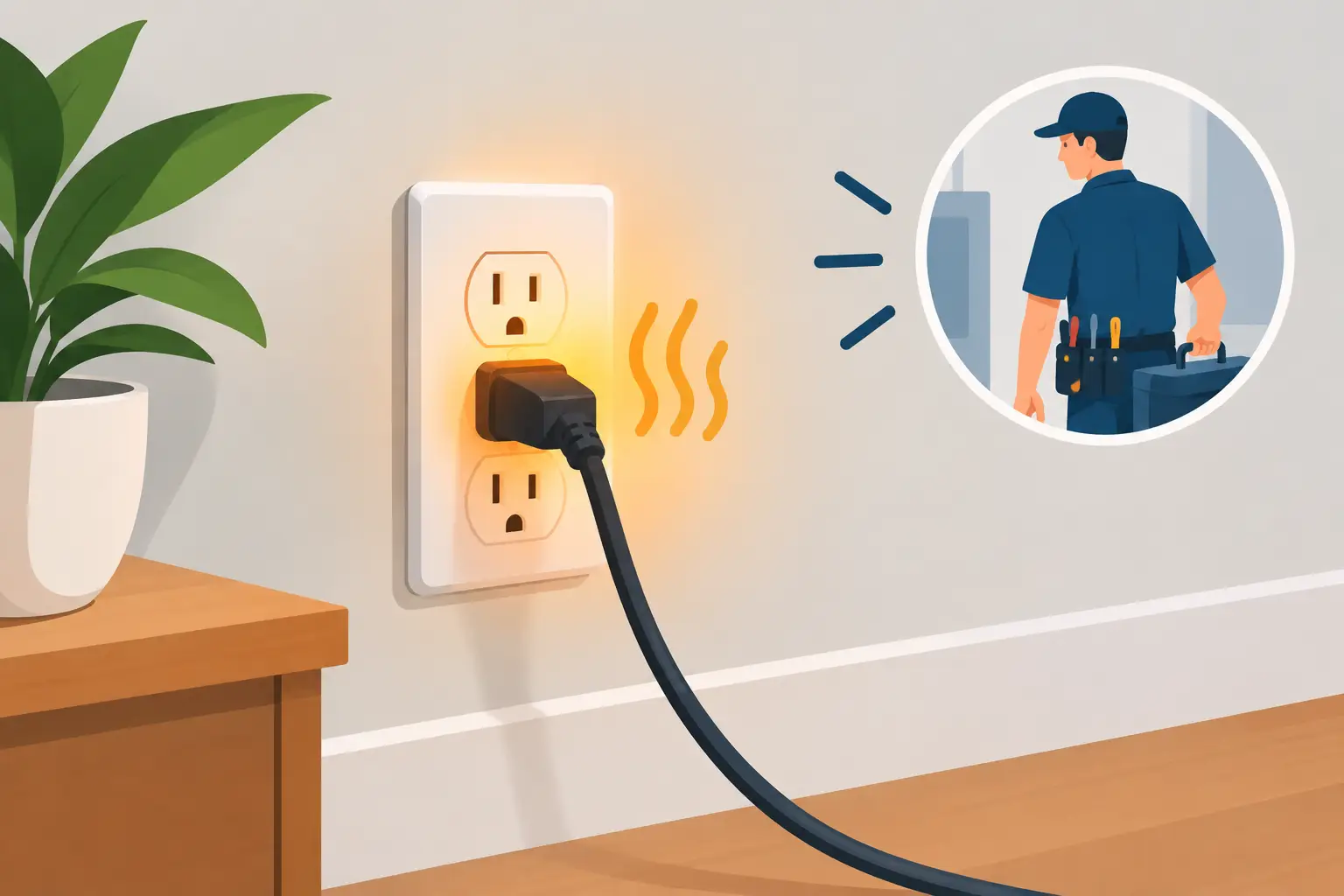
Your electrical panel should not be hot to the touch. Mild warmth can occur around electrical equipment under load, but noticeable heat at the panel door, a hot breaker, crackling or buzzing sounds, or a burning plastic odor are all urgent warning signs.
These symptoms may indicate a loose connection, arcing, overloaded components, or a damaged breaker. Turn off power at the main breaker only if you can do so safely and there are no signs of active sparking or fire. Then call for emergency electrical service. Never remove the panel cover or touch wires inside the panel yourself.
Lights flicker, dim, or surge throughout the home
A single light that flickers may have a loose bulb or fixture issue. Multiple lights dimming when a major appliance starts, lights brightening unexpectedly, or flickering in several rooms can point to a larger electrical problem.
Voltage fluctuations can be caused by loose connections, an undersized electrical service, a failing panel component, or an issue at the utility connection. These conditions can also put sensitive electronics and appliances at risk. If the problem is widespread or worsening, schedule an electrician rather than assuming it is just an aging light fixture.
You see corrosion, rust, discoloration, or water near the panel
Florida humidity, storm exposure, roof leaks, plumbing leaks, and garage moisture can all affect electrical equipment. Rust or corrosion around the panel enclosure, water stains, condensation, or white residue should be taken seriously. Water and electricity are a dangerous combination, even when the panel appears to be working normally.
Dark marks around breakers, melted plastic, or scorch marks are especially concerning because they can indicate overheating or arcing. Keep the area around the panel dry and clear, and arrange an inspection as soon as possible. If water is actively entering the panel or you see smoke or sparks, stay away from it and call for emergency help.
Your home still uses fuses or an outdated, undersized panel
Older homes may have fuse boxes, panels with limited capacity, or electrical systems that were never designed for modern demand. Today, a home may support central air conditioning, multiple TVs and computers, kitchen appliances, electric vehicle charging, pool equipment, smart devices, and more. An older 60-amp or 100-amp service may not provide the capacity a larger or updated household needs.
Age alone does not prove a panel is unsafe. A well-maintained panel can remain serviceable, while a newer panel may have an installation or connection issue. Still, an electrician should evaluate older equipment when you are planning a renovation, adding major appliances, installing a generator, or noticing frequent electrical problems.
Certain panel brands and models have known safety concerns or may be difficult to insure or service because replacement breakers are not readily available. A licensed electrician can identify your panel and explain whether its condition, age, capacity, and available replacement parts support repair or make a panel upgrade the better long-term choice.
What to Do When You Notice an Electrical Warning Sign
Start by treating the issue cautiously. Avoid using appliances or circuits that seem connected to the problem, and do not place storage items in front of the panel. Your electrical panel needs clear access, both for safety and so an electrician can inspect it without delay.
Call for immediate professional help if you notice any of these conditions:
- Smoke, sparks, flames, or a strong burning odor near the panel
- A hot panel door, hot breakers, or loud buzzing and crackling sounds
- Water entering the panel or water damage around electrical equipment
- Repeated breaker trips accompanied by dimming lights, shocks, or damaged outlets
For an active fire, get everyone out of the home and call 911. Do not use water on an electrical fire. For non-fire emergencies, a qualified electrician can isolate the problem, inspect the panel and connected circuits, and recommend the safest repair.
Why Electrical Panel Problems Are Common in Florida Homes
Central Florida homes place heavy demands on electrical systems. Air conditioning often runs for long stretches during hot, humid weather, and many homes also have pool pumps, outdoor equipment, garage refrigerators, and surge-sensitive electronics. Severe weather can add another layer of risk through power surges, lightning, water intrusion, and utility interruptions.
That does not mean every flicker is a panel failure. Sometimes the source is a loose outlet, a failing appliance, damaged branch wiring, or a utility-side issue. The key is avoiding guesswork. A professional diagnosis helps determine whether the concern is limited to one circuit or whether the panel itself needs repair, replacement, or a service-capacity upgrade.
An electrical panel upgrade can be a practical investment when a home needs more capacity, lacks space for new circuits, has unreliable breakers, or is being prepared for a remodel, generator, EV charger, or major HVAC replacement. It can also give homeowners a safer, more organized system that better matches the way the home is used now.
What an Electrician Checks During a Panel Inspection
A thorough panel inspection goes beyond looking at the breakers. An electrician evaluates the panel’s condition, service rating, grounding and bonding, breaker compatibility, signs of overheating, circuit loading, wire connections, and available capacity. They may also inspect related components such as the meter area, disconnect, outlets, switches, and major appliances when needed.
The goal is not to recommend a replacement automatically. In some cases, a loose connection, damaged breaker, moisture issue, or overloaded circuit can be repaired. In others, the safest recommendation is a panel replacement or upgrade. Clear findings and options allow you to make a decision based on your home’s actual condition, budget, and future electrical needs.
If your panel is showing warning signs, do not wait for a total loss of power to find out what is wrong. ACS Home Services provides professional electrical evaluations for homeowners across the Tampa area, with same-day availability for many concerns and emergency support when the situation cannot wait.
A safe electrical system should fade into the background while your home stays comfortable and powered. If yours is demanding attention through heat, noise, repeated trips, or flickering lights, let a qualified electrician give you a clear answer and a safe path forward.