

A Tampa home can feel sticky even when the thermostat says 74 degrees. That is because temperature is only part of comfort. High indoor humidity can leave rooms clammy, encourage musty odors, make bedding feel damp, and force your cooling system to work harder than it should.
So, do heat pumps dehumidify homes? Yes – when a heat pump runs in cooling mode, it removes moisture from the air as part of the cooling process. But whether it keeps your home comfortably dry depends on the equipment, installation, thermostat settings, ductwork, and Florida’s demanding humidity levels.
How a Heat Pump Removes Moisture
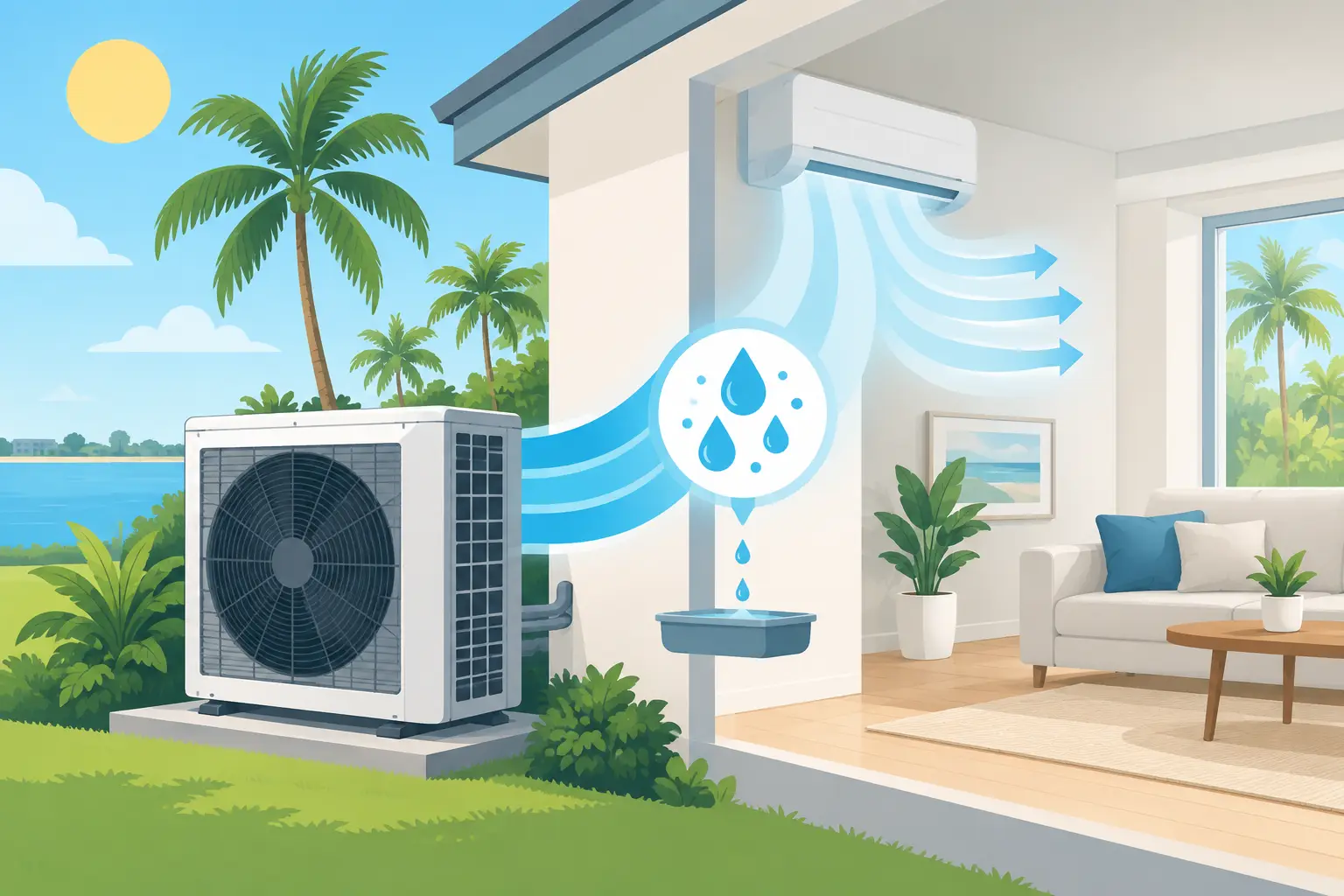
In cooling mode, a heat pump works much like a central air conditioner. Warm indoor air passes across the system’s cold indoor coil. As that air cools, water vapor condenses on the coil, much like moisture forming on a cold drink outdoors. The condensate drains away through a dedicated drain line while the cooler, drier air circulates back through your home.
This process removes two types of heat from the air. Sensible heat is the heat that raises the temperature. Latent heat is the energy tied to moisture in the air. A properly operating heat pump handles both, which is why it can make your home feel more comfortable without driving the thermostat lower than necessary.
In Central Florida, a healthy indoor relative humidity level generally falls between 40% and 60%. Many homeowners find their homes feel best closer to the middle of that range. When humidity regularly stays above 60%, the air can feel warmer, and conditions become more favorable for mold growth and dust mites.
Do Heat Pumps Dehumidify Homes Well Enough?
Sometimes they do. During a hot Florida afternoon, a correctly sized heat pump may run long enough to cool the home and remove a meaningful amount of moisture. Longer cooling cycles give humid air more time to contact the coil, allowing more water to drain from the system.
The challenge is that a heat pump is primarily designed to manage temperature. It does not always run long enough to manage moisture, especially during mild but muggy weather. On a rainy 76-degree day, for example, your thermostat may be satisfied before the system has removed enough humidity. The home is technically cool, but it still feels uncomfortable.
That is why the answer depends on your home and your system. A heat pump can provide effective everyday dehumidification, but it is not automatically a complete humidity-control solution for every Florida property.
System Size Makes a Major Difference
An oversized heat pump can cool a home too quickly. This is called short cycling. The system turns on, drops the temperature rapidly, and shuts off before it has had enough time to pull moisture from the air. Homeowners may notice cool rooms, high humidity readings, and frequent starts and stops.
An undersized system creates a different problem. It may run continuously in extreme heat yet struggle to reach the set temperature, particularly if the home has air leaks, inadequate insulation, duct issues, or an aging system. Continuous operation can remove moisture, but an overworked unit may still fail to deliver the comfort and efficiency you expect.
Proper sizing requires more than matching a new unit to the old unit’s capacity. A qualified HVAC professional should consider square footage, insulation, windows, orientation, duct condition, occupancy, and local climate conditions.
Fan Settings Can Raise Indoor Humidity
Many thermostats offer an Auto and an On setting for the indoor fan. In humid climates, Auto is usually the better choice.
When the cooling cycle ends, moisture remains on the indoor coil. With the fan set to Auto, the fan stops and that moisture can drain away. With the fan set to On, the blower may keep moving air across the wet coil and re-evaporate some moisture back into the house. The result can be higher humidity without any obvious cooling problem.
Fan speed matters, too. A lower blower speed can sometimes improve dehumidification because air moves more slowly across the coil. That adjustment should be made by a trained technician. Changing settings without checking airflow, equipment specifications, and drainage can create other performance issues.
Why Florida Homes May Still Feel Humid
A working heat pump is only one part of your home’s moisture-control system. Humidity can enter through unsealed doors, leaky windows, attic gaps, poorly insulated ductwork, bathroom exhaust problems, plumbing leaks, and frequent traffic in and out of the home.
Duct leakage is particularly important in Florida. If return ducts pull hot, humid attic air into the system, your heat pump has to condition moisture it should never have encountered. Supply duct leaks can also send conditioned air into unconditioned areas rather than the rooms where you need it.
A clogged condensate drain can create trouble as well. Your system may remove moisture from the air, but that water needs a clear path out of the home. A blocked drain line can trigger a safety switch, cause water damage, or lead to a shutdown at the worst possible time.
When a Whole-Home Dehumidifier Makes Sense
A whole-home dehumidifier works alongside your HVAC system to remove moisture independently of cooling demand. It is often a practical option for homes where the heat pump cools effectively but humidity remains high during shoulder seasons, rainy periods, or overnight.
It may be worth discussing with an HVAC professional if you are dealing with four or more of these concerns:
- Indoor humidity regularly above 60%
- Musty odors, damp closets, or condensation on windows
- Cool indoor temperatures that still feel sticky
- Mold or mildew returning in bathrooms, around vents, or near exterior walls
- An AC or heat pump that short cycles frequently
A dedicated dehumidifier gives you more precise moisture control. It can help protect wood furnishings, reduce the burden on your cooling system, and improve comfort without forcing you to set the thermostat excessively low. Still, it should not be used to hide a larger issue such as improper equipment sizing, duct leakage, poor drainage, or a refrigerant problem.
Heat Pump Maintenance Supports Better Humidity Control
Even a high-quality heat pump cannot dehumidify efficiently when it is dirty, restricted, or poorly maintained. A clogged air filter limits airflow. A dirty evaporator coil reduces the system’s ability to transfer heat and collect moisture. Drain line buildup can prevent condensate from leaving properly. Refrigerant concerns, electrical issues, and blower problems can also affect cooling and moisture removal.
Regular maintenance gives a technician the opportunity to inspect these components before a minor issue becomes a comfort problem or an unexpected breakdown. During a professional visit, the technician can evaluate system operation, verify drainage, inspect the coil and filter condition, review thermostat settings, and look for performance concerns that may be contributing to indoor humidity.
If humidity has changed suddenly, do not assume it is simply the weather. A new musty smell, water near the indoor unit, weak airflow, rising utility bills, or a system that runs in short bursts all deserve attention. Prompt service can help protect your equipment and your home from moisture-related damage.
Heating Mode Is Different
When a heat pump runs in heating mode, it generally does not dehumidify your home the way it does during cooling. In fact, heated air can feel drier because warm air can hold more moisture, but the heat pump is not actively condensing and draining water from the indoor air during normal heating operation.
That distinction matters for Florida homeowners who notice humidity at night or during cooler, wet weather. If the system is not calling for cooling, a separate dehumidification strategy may be needed to maintain the indoor conditions you prefer.
For dependable answers about high humidity, system performance, and the right equipment for your home, ACS Home Services can assess the full picture – not just the thermostat reading. A properly maintained, correctly configured heat pump should make your home feel cool and dry, not merely cool. If it does not, addressing the cause early can bring back the comfort you expect from your Florida home.