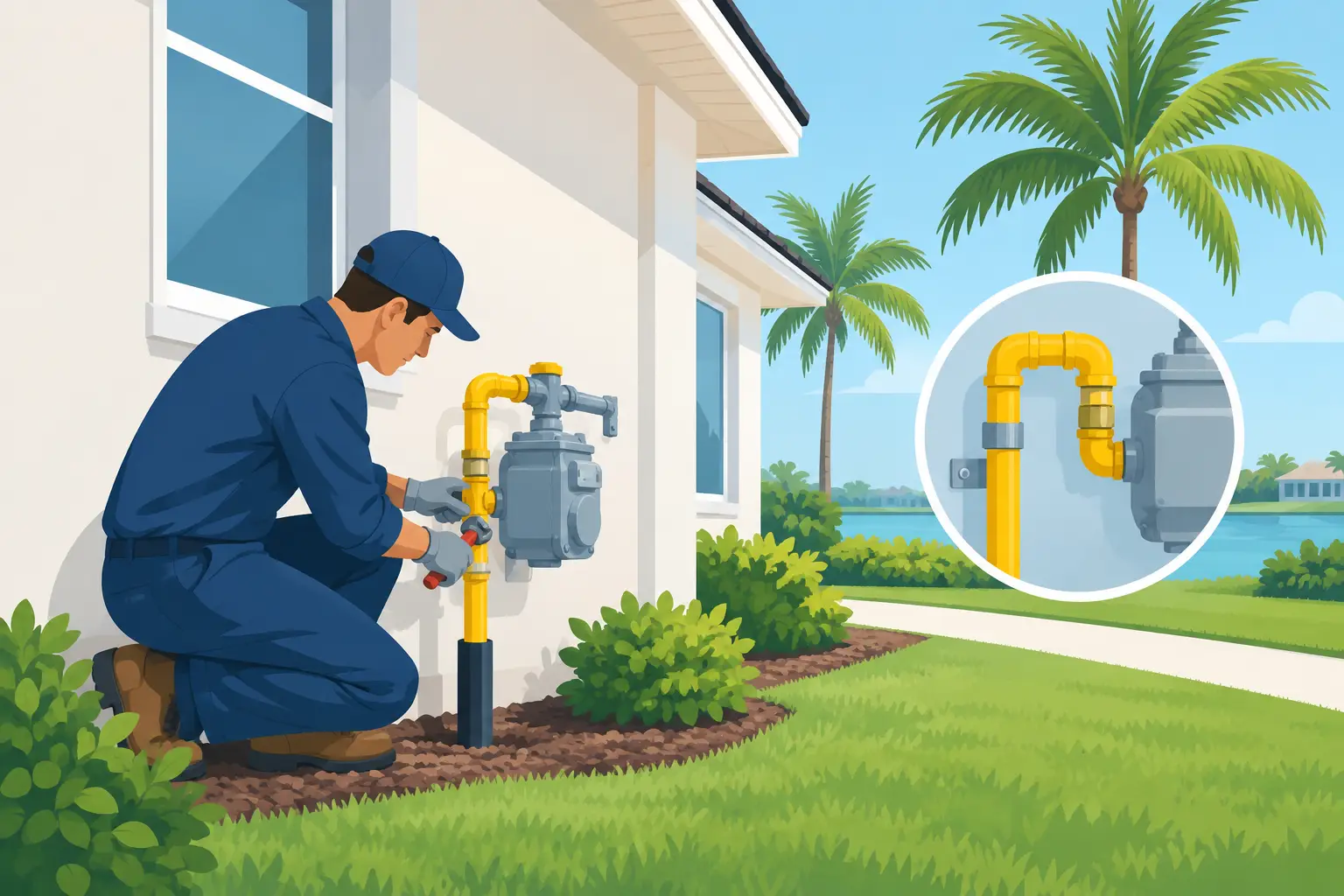


A new gas appliance should make life more convenient, not introduce uncertainty into your home. Whether you are adding a gas range, replacing a water heater, installing an outdoor kitchen, or planning a standby generator, this gas line installation guide explains what Central Florida homeowners should expect from a safe, code-conscious project.
Gas work is not a place for trial and error. A properly designed system delivers the right fuel supply to each appliance, protects against leaks, and meets local permitting and inspection requirements. The right plumbing professional can also help you plan for future upgrades, so you do not have to redo major portions of the work later.
What a Gas Line Installation Actually Involves
Gas line installation is more than connecting a pipe from Point A to Point B. Your contractor first evaluates the fuel source, the appliances being supplied, the distance of each run, the pipe route, and the total demand on the system. That evaluation determines whether your existing gas meter, piping, and shutoff valves can support the project.
Homes may use natural gas supplied by a utility or propane stored in an on-site tank. The two fuels have different operating requirements, appliance settings, and safety considerations. A range or water heater that is designed for natural gas cannot simply be connected to a propane supply without the appropriate conversion and professional verification.
For most projects, the work includes planning the route, selecting approved materials, installing accessible shutoffs where required, pressure testing the line, coordinating permits, and completing the final inspection. If an appliance is part of the project, proper connection, startup, and combustion-related checks also matter.
When Your Home May Need a New Gas Line
A new gas line is often needed when an appliance is being added in a location without an existing connection. Common examples include a gas cooktop, dryer, tankless water heater, pool heater, fireplace, generator, or outdoor grill and kitchen.
Sometimes the issue is not the lack of a line but a lack of capacity. A home that originally had only a gas water heater may not have enough available supply to support a generator and pool heater at the same time. Adding appliances without accounting for the total load can lead to poor appliance performance or unsafe operating conditions.
Older piping deserves special attention as well. Corrosion, unsupported sections, outdated connections, prior alterations, or a line that does not meet current code may affect the scope of work. A professional inspection helps separate a straightforward extension from a project that needs upgrades for safety and reliability.
A Safe Gas Line Installation Guide Starts With Planning
The best installations begin with a clear conversation about how you use your home now and what you may add later. For example, if you are remodeling a kitchen today but expect to install a whole-home generator in a few years, mentioning that early can influence pipe sizing and routing decisions.
Your technician will assess several practical details:
- The type of fuel serving the property and the capacity available from the meter or propane tank
- The BTU demand of each connected appliance and the likely simultaneous usage
- The length of pipe runs, fittings, elevation changes, and routing limitations
- The best locations for shutoff valves, appliance connections, and outdoor equipment
- Local code, permit, and inspection requirements for your municipality
Sizing is especially important. Gas piping is sized based on more than the appliance label. Pipe length, the number of fittings, the fuel type, and the total connected load all affect the calculation. A line that looks adequate can still be undersized for a high-demand appliance or multiple appliances operating at once.
In a Florida home, routing also needs to account for heat, humidity, storm exposure, landscaping, and other systems already occupying the space. An experienced contractor looks for a route that is protected, accessible for future service, and practical without creating unnecessary disruption to walls, ceilings, or exterior finishes.
Permits and Inspections Protect Your Home
Permits can feel like an extra step, but they are a meaningful safeguard when fuel gas is involved. Requirements vary by city and county, so a project in Tampa may not follow the exact same process as one in Clearwater, Sarasota, or Lakeland. A licensed contractor can identify the applicable requirements and handle the permitting process when it is part of the scope of work.
An inspection verifies that the installation meets the standards enforced by the local authority. This may include confirming approved piping materials, proper support and protection, shutoff access, correct appliance connections, and successful pressure testing.
Skipping permits may seem tempting for a small appliance addition, but it can create larger problems later. Unpermitted gas work can complicate a home sale, insurance claim, renovation, or future service call. More importantly, it can leave hidden safety issues unaddressed.
Why Pressure Testing Matters
Every new or modified gas line needs to be tested before it is placed into service. The test verifies that the piping system holds pressure and that leaks are not present in the newly installed section. This is not something to rush or assume is unnecessary because the run is short.
After testing and inspection, the contractor completes the final connection and checks appliance operation. For gas-burning appliances, that may include confirming ignition, burner performance, venting where applicable, and proper clearances. The exact steps depend on the appliance and installation location.
If you smell gas at any time, leave the area immediately, avoid switches, flames, and electrical devices, and contact your gas utility or emergency services from a safe location. Once the immediate hazard has been addressed, schedule a qualified professional to inspect and repair the system. Never try to locate or repair a suspected leak yourself.
Choosing the Right Pipe Material and Route
There is no single material that is right for every home. Approved options may include black steel pipe, corrugated stainless steel tubing, or other code-compliant materials appropriate for the application and jurisdiction. The correct choice depends on where the line will run, what it will serve, how it must be protected, and local code requirements.
For example, a line routed through an attic, beneath a raised floor, inside a wall, or outdoors may require different installation methods. Exterior piping may need protection from physical damage and corrosion. Piping concealed behind finished surfaces must be planned carefully because future access is limited.
The lowest upfront price is not always the best value. A poorly planned route can lead to avoidable drywall repairs, inconvenient shutoff locations, difficult appliance servicing, or expensive changes when you expand the system. A thoughtful design keeps safety first while making future maintenance easier.
Questions to Ask Before Scheduling Gas Work
Before approving a proposal, ask what appliances the line is sized to support and whether the estimate includes permits, testing, inspections, and appliance connection. It is also reasonable to ask where the line will run, whether any wall or landscape restoration is needed, and what access the technicians will need on installation day.
If you are comparing estimates, make sure you are comparing the same scope of work. One quote may include permit coordination, shutoff valves, testing, and final connection, while another may only cover a portion of the project. Clear details help prevent surprise costs and delays.
For generator projects, ask whether the gas line design is coordinated with the generator’s fuel demand. For a tankless water heater, ask whether the existing gas supply and venting arrangement are suitable. For outdoor kitchens and pool equipment, confirm how the piping will be protected from weather, lawn equipment, and accidental impact.
Professional Gas Line Service for Central Florida Homes
Gas piping connects to some of the most important equipment in your home, from hot water and cooking to backup power and outdoor comfort. That is why professional installation is the smart choice. A trained technician can evaluate the entire system instead of treating the new appliance as an isolated connection.
ACS Home Services helps homeowners throughout Central Florida coordinate gas line projects with related plumbing, electrical, water heating, and generator needs. When one trusted team understands the broader project, it is easier to avoid conflicts between trades and keep your home running with less disruption.
If you are planning a gas appliance upgrade or have concerns about an existing line, schedule a professional evaluation before materials are purchased or walls are opened. A clear plan, correct sizing, and verified testing give you confidence every time you turn on the appliance.